Category: Uncategorized

  • Interview with Sunny Lu, Co-Founder and CEO of VeChain

    Interview with Sunny Lu, Co-Founder and CEO of VeChain

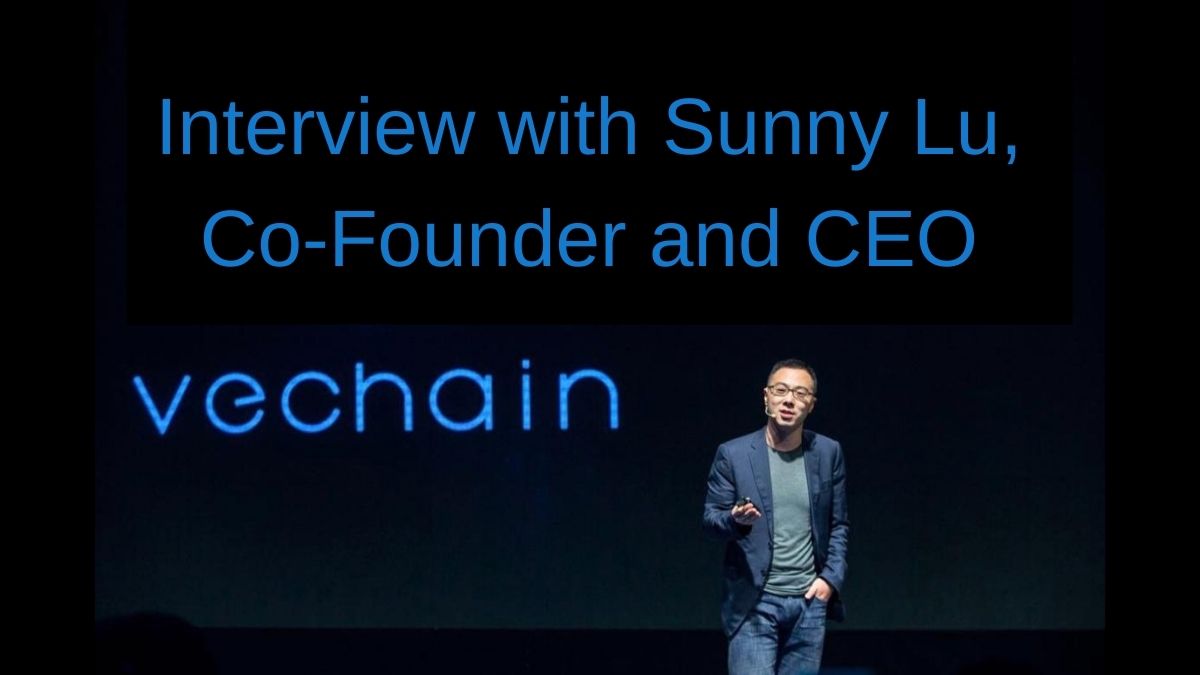
    Sunny Lu, Co-Founder and CEO of VeChain went on a live interview with Boxmining on 20th July 2020 to talk about what’s happening with VeChain recently and their grand objectives. It was also a great opportunity for Lu to directly speak to and answer questions from the community. Here are some key takeaways from this interview.

    VeChain is a smart contract platform mainly focused on enterprise adoption. The platform allows for the creation of decentralised applications to solve problems such as anti-counterfeiting, cold-chain logistics and maintaining tamper-proof records.

    Learn more about VeChain

    Watch the full interview here:

    VeChain interview with Sunny Lu

    What is VeChain?

    Lu said that VeChain is a “next-generation” smart contract platform devoted to providing blockchain solutions to different enterprises.

    In terms of adoption, VeChain is at the top of all the blockchain developments in the field, having been adopted by prominent clients such as BMW, Givenchy, and Walmart. Lu also said that the project has done a lot globally and they are very proud of their achievements.

    Blockchain can create a trust-free world

    He said that the innovation brought about by blockchain technology enables us to create trustless machines. With its decentralized structure and immutability, it can establish a unique trust features that may or may not be available in centralized systems.

    Blockchain creates a trust-free world because it does not rely on flawed humans in operating the whole system. Furthermore, you do not have to worry about people deciding to play “something dirty or evil” with blockchain.

    Lu also stated that if we “aim for the better world, blockchain has to be there.”

    Post COVID-19 developments need blockchain

    He said that “digitization is the new black.” True enough, a lot of people are now starting to be aware of its use cases.

    When COVID-19 shook the world, many enterprises had to digitize their business, or put them up online, in order to continue to remain afloat. According to him, that meant “relying on the digital version of the world”. If that is to be the case, he said that “blockchain is the first fundamental infrastructure technology you got to do.”

    Furthermore, a blockchain allows a business operation that is completely secure and transparent from end-to-end. With it, every data relevant to each transaction can be safely stored and accessed by anyone since it is a distributed database.

    Continuous improvements on the blockchain infrastructure

    Lu also shared that to maintain VeChain’s growth, they are continuously increasing the capacity and capability of their platform. This is what they have devoted themselves to doing for the past three to four years.

    Before, the procedure required for an enterprise to establish an e-commerce platform was extremely difficult. That was the case if we look back 25 or 30 years ago. But with blockchain technology, we don’t have to work everything out from scratch anymore.

    Blockchain has enabled us to easily build an e-commerce platform with all the new tools that can help enterprises innovate their Proof of Concept (PoC), production, and skill amplification. Other parts of the supply chain could also heavily benefit from blockchain technology.

    Adoption is increasing at a massive scale

    He said that a lot of people are now starting to use the blockchain as an essential part of transitioning to e-commerce. Just a year and a half ago, VeChain underwent numerous upgrades.

    They now have new fundamental modules that seek to provide specific solutions to enterprises. The first module provides a standard template for different kinds of businesses based on the industries that have used VeChain successfully.

    For example, you can imagine establishing a supermarket chain. With VeChain, the standard template would be to refer to Walmart China (Learn about what VeChain is doing for Walmart China) you can easily refer to China’s Walmart case. Or in the case of a pharmaceutical company looking into conducting clinical trials for new drugs, they can refer to Bayer China (Learn about VeChain’s partnership with Bayer China).

    This saves a lot of time for the user because they can start production in just a few weeks after setting it up.

    He said that looking back, it had been too time-consuming to establish a business on a blockchain platform. A project that he observed in the United States was developing a food safety platform on the blockchain. It took them 14 months, however, to set up on-chain for just a 12-month period PoC.

    VeChain helped make the process a whole lot easier. He also shared their experience in Walmart China, which only took them three months to finish everything.

    “If you are starting to use a template, it would be easier. You would just need a couple of days or a week maximum to create something. No need to wait nine months or more just to create a PoC,” he said.

    A second module accessible to them provides templates to different companies based on which practice that might fit their model. They can build on these templates, and transfer their infrastructure model to the blockchain within just a few weeks.

    The third module that they use allows the user to gather and understand data on the blockchain. It provides the user with the tools to reveal the value of the data that they have stored. In the case of Walmart China, for example, Lu explained that consumers can still easily trace the movement of their purchases with the data accessible in its public blockchain.

    Blockchain needs more business people to flourish

    He said that while blockchain is mainly a technological innovation, the entire blockchain space needs more business experts to complement its technological value with business value. That way, people can maximize the benefits of the blockchain while maintaining sustainability.

    This benefit is shared by every enterprise in the VeChain platform, even the small and medium-sized enterprises.

    What’s next for VeChain and $VET?

    Six months after they first launched the VeChain mainnet in 2018, the total number of transactions was almost half a million. But in 2019, this number shot up to 36 million. And in 2020, they were already processing a hundred thousand transactions per day.

    The growth rate is increasing consistently. But when asked about his plans on listing VeChain’s token $VET on other crypto exchanges such as Coinbase, he said that he has no comments yet.

  • DeFi Money Market and DMM Governance ($DMG) guide

    DeFi Money Market and DMM Governance ($DMG) guide

    Decentralized finance (DeFi) has come a long way since it was first conceptualized. Now, the market has nearly $4 billion worth of assets locked up. And DeFi Money Market (DMM) is one of the most promising protocols that is gaining a lot of traction.

    The DMM platform allows users to earn annual yields of 6.25 percent for holding Ethereum-based tokens like USDC and DAI. What makes it even more interesting is that it is backed by real-world assets that create passive income that is greater than the interest owed.

    These real-world assets will be tokenized and launched on the Ethereum blockchain tracked by Chainlink’s decentralized oracle network.

    Background: Who is the team behind DMM?

    DeFi Money Market is a product of the DMM Foundation, which was established in the UAE. The members are a team of veteran experts hailing from academia, the legal and regulatory sector, and fintech.

    It is one of the few projects backed by top Silicon Valley venture capitalist Tim Draper.

    What is the DeFi Money Market (DMM) Ecosystem?

    The DeFi Money Market Ecosystem (DMME) is a decentralized protocol that allows users to earn interest on any Ethereum-based tokens by lending them for real-world assets like real estate, jewelry, automobiles, etc. as collateral. The goal of this ecosystem is to enable anyone in the world to earn consistent and stable interest on their money. Furthermore, their rates are higher than traditional competitors. They currently have an APY (Annual Percentage Yield) of 6.25% for DAI and USDC accounts, which is above most traditional alternatives.

    DMME aims to seize the trillion-dollar opportunity that is currently resting on centralized finance (CeFi) companies. And it does this by blending real-world assets with digital assets, which enables them to create a more robust and transparent system.

    DMM Protocol: What is it and how does it work?

    The DMM Protocol can be split into three parts: an array of Ethereum smart contracts, a treasury management system, and a data feed that allows off-chain data to stream into the smart contract.

    These three components blend to form the DMM Ecosystem and allow the creation of DMM tokens backed by off-chain real-world assets.

    The DMM protocol currently supports DAI and USDC. For this walkthrough, let’s use USDC. First, a user deposits USDC to the protocol. Then mUSDC is minted. The dollar amount will be used to provide loans collateralized with real-world assets.

    And once the loan gets paid, the interest will be deposited back to the system. Then, users can convert their mUSDC to USDC plus interest.

    DMG Governance ($DMG) token

    $DMG is the governance token of the platform. It allows the community to regulate and grow the DMM ecosystem, as well as its protocol. As the DMM community grows globally, DMG is paramount to encouraging active participation and mitigating centralization risk.

    DMG holders have the capability to govern the parameters of the protocol as well as decisions on asset allocation.

    The token is a fork of Compound Finance’s governance asset $COMP but with extra functionality such as “native burn.”

    DMG token distribution

    The DMM ecosystem has a total of 250,000,000 DMG tokens. The supply distribution is as follows:

    • 40% will be allocated to the DMM Foundation for future development, support, and other general functions
    • 30% will be sold in several public token offerings
    • 30% will be allocated as a reserve for paying developers, partners, as well as other protocols for integration and growth of DMM’s decentralized network

    At present, 60% of the total supply of DMG has been time-locked in smart contracts with different locking periods.

    DeFi Money Market Account

    A DeFi Money Market Account (DMMA) is a new DeFi native asset class that enables any holder of Ethereum-based tokens to earn interest from real-world assets represented on the blockchain.

    In other words, DMMAs are technically ERC-20 tokens that get created when we swap an Ethereum token into DMM tokens called mAssets.

    DMM DAO

    A DAO (decentralized autonomous organization) is an organization where the decisions regarding the rules of the system are written in code and voted on by its members.

    One of the core ideas of the DMME is that every stakeholder in the network should be able to take part in the decision-making process regularly without the need for permission. Initially, the DMM DAO members will consist of the core team and community members. To be part of the DAO, you have to be a holder of $DMG tokens, which gives you voting rights to the system.

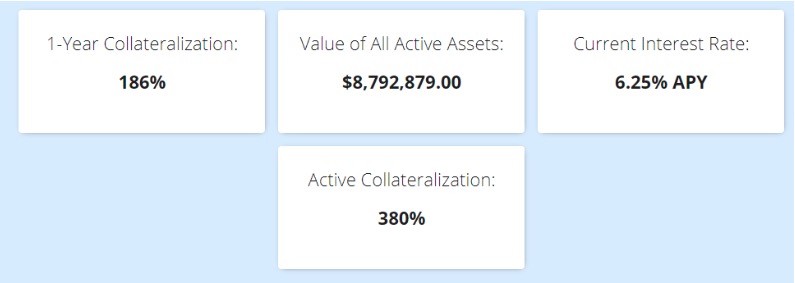
    The DMM DAO is one of the few DAOs that is already generating revenue through its yield taken from real-world asset loans. The value of all assets amounts to roughly $8.7 million with active collateralization of 380%. Furthermore, the team anticipates that DMG tokens, not to mention the entire DMM protocol itself, to be totally distributed and decentralized a year from now.

    DMM DAO collateralization
    DMM DAO collateralization (Image credit: Warlmertt)

    Conclusion

    In order to succeed, DMM ultimately needs to fully decentralize the traditional financial system. Bridging real-world assets to the Ethereum blockchain is no easy task, but DMM is on its way to successfully execute its goal by using the right tools and partnering with the right organizations. The tokenization of physical assets will bolster DeFi and entire crypto space and possibly take a huge bite from the trillions of dollars worth of capital from legacy financial systems.

    Decentralised Finance (DeFi) series: tutorials, guides and more

    With content for both beginners and more advanced users, check out our YouTube DeFi series containing tutorials on the ESSENTIAL TOOLS you need for trading in the DeFi space e.g. MetaMask and Uniswap. As well as a deep dive into popular DeFi topics such as decentralized exchanges, borrowing-lending platforms and NFT marketplaces

    The DeFi series on this website also covers topics not explored on YouTube. For an introduction on what is DeFi, check out Decentralized Finance (DeFi) Overview: A guide to the HOTTEST trend in cryptocurrency

    Tutorials and guides for the ESSENTIAL DEFI TOOLS:

    More videos and articles are coming soon as part of our DeFi series, so be sure to SUBSCRIBE to our Youtube channel so you can be notified as soon as they come out!

    Disclaimer: Cryptocurrency trading involves significant risks and may result in the loss of your capital. You should carefully consider whether trading cryptocurrencies is right for you in light of your financial condition and ability to bear financial risks. Cryptocurrency prices are highly volatile and can fluctuate widely in a short period of time. As such, trading cryptocurrencies may not be suitable for everyone. Additionally, storing cryptocurrencies on a centralized exchange carries inherent risks, including the potential for loss due to hacking, exchange collapse, or other security breaches. We strongly advise that you seek independent professional advice before engaging in any cryptocurrency trading activities and carefully consider the security measures in place when choosing or storing your cryptocurrencies on a cryptocurrency exchange.

  • Walmart China brings VeChain’s Food Traceability Platform to Sam’s Club China

    Walmart China brings VeChain’s Food Traceability Platform to Sam’s Club China

    Around a year ago Walmart China, PwC China dn VeChain jointly announced they were setting up the Walmart China Blockchain Traceability Platform. This Platform would allow Walmart China to make use of blockchain technology to trace its products. Consumers would be able to scan the products on the shelf and have access to detailed information on the product, for example, its source, product inspection reports, and logistics process. Their expectation was that by the end of 2020, 50% of sales of fresh meat, 40% of sales of packaged vegetables, and 12.5% of sales of seafood would be traceable.

    To find out more about Vechain, read our full guide on Vechain (VET).

    Almost a year later, VeChain announced on 2nd June 2020 that Walmart China is committing Sam’s Club China, another of its businesses towards collaboration with VeChain.

    What is Sam’s Club China?

    Owned by Walmart China, Sam’s Club China is branded as a members-only premium supermarket. Currently, Sam’s club has a total of 23 clubs in China. There are plans to expand to have a further 40 to 45 clubs either operational or under construction in China by the end of 2022.

    Its clubs are generally large scale supermarkets averaging around 20,000 square meters and offering groceries in bulk and other goods such as household appliances, home goods, etc. Sam’s Club maintains its premium branding by providing either the best quality product in a particular category or the best-selling brand at its clubs. Sam’s Club also offers its own premium store-brand products called Member’s Mark.

    Launch of Sam’s Club Blockchain Traceability Platform with VeChain

    The launch of the Sam’s Club Blockchain Traceability Platform coincides with Sam’s Club’s “Taste of Sam’s” campaign. This campaign aims at letting customers experience luxury through recipes featuring premium quality foods and products which can be purchased from Sam’s Club.

    The products featured in the campaign include Member’s Mark products which make use of VeChain’s ToolChain technology. Combined with cold-chain IoT and other traditional software and hardware sensors, stakeholders in the supply chain will be able to upload data onto the VeChainThor public blockchain. This data would be contained in a secured QR code which would be tagged onto each product. (https://punandjokes.com/) Hence those involved in the supply chain and even the average consumer would be able to scan the QR code using their smartphones to access information on the product such as its packaging information, its origins, storage requirements, etc. And since this data was stored on the VeChainThor public blockchain, it cannot be tampered with.

    As an example, in the short rib recipe above, customers can pick up a pack of the short-ribs featured in the recipe from Sam’s Club and scan the embedded QR code for more information. The below picture shows the kind of information customers can expect to see. Such as how the product was shipped from its place of origin, the name and location of the manufacturer, best-before times and certification processes.

    Currently there are over 20 product lines, including Member’s Mark products which make use of VeChain’s traceability platform. It is expected that more products will be included in the future.

  • Enjincraft Review: Adding Blockchain to Minecraft

    Enjincraft Review: Adding Blockchain to Minecraft

    EnjinCraft Logo
    EnjinCraft – Enjin Brings Blockchain economies to Minecraft

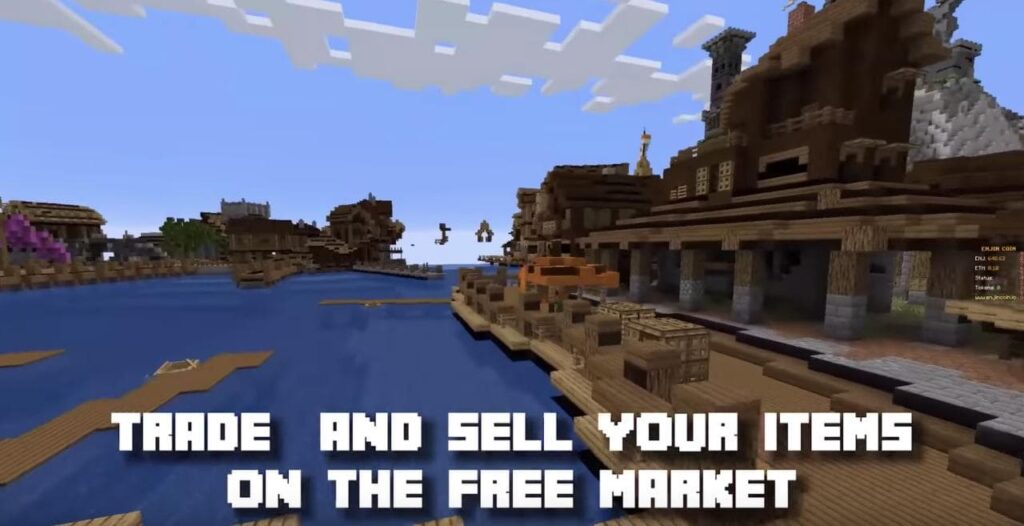
    EnjinCraft breathes new life into Minecraft by bringing the best of digital economies and Non-fungible Token (NFT) collectibles. Whilst Minecraft is the biggest sandbox game in the world, it has always lacked a true economy. Enjin’s new Minecraft integration and SDK allow players to truly own items and move them across servers. With the launch of the Minecraft plugin on the 28th of May 2020, server owners can use a simple plugin to allow blockchain items to be used in their Minecraft worlds.

    With Enjincraft, players can equip ERC-1155 assets directly as Minecraft items. This also allows for the trading of items outside of the game and into the Enjin Wallet. Enjin’s new integration allows for the direct trading of ERC-1155 assets, Ethereum and Enjincoin directly in Minecraft.

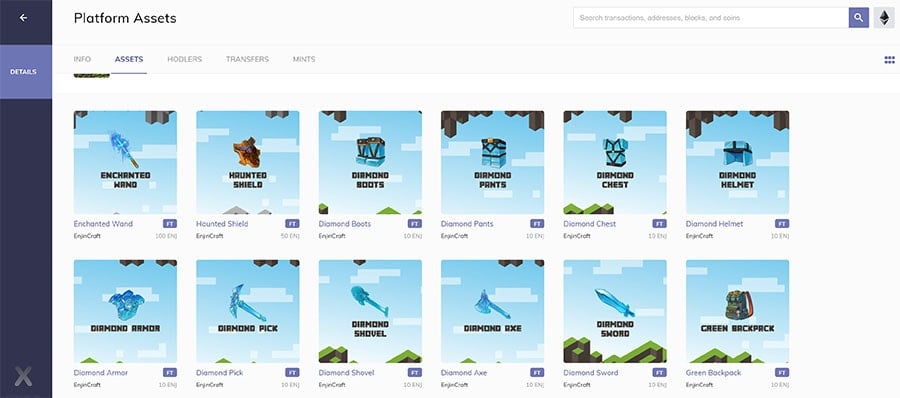
    Players will be able to enter “Enjincraft” and find treasures such as swords, armor, and tools in the game. After finding these items, players can have true item ownership as they are Non-Fungible Assets (ERC-1155 tokens). Items can be directly stored in the Enjin Wallet, allowing for easy trades or even melting.

    First Enjincraft World

    Enjincraft’s first world is filled with quests, stories and many explorable towns and cities. For those daring to explore, the world is packed with treasure chests and mysteries that can be solved. Treasure chests in the game give out real ERC-1155 items that have value based on Enjin Coin.

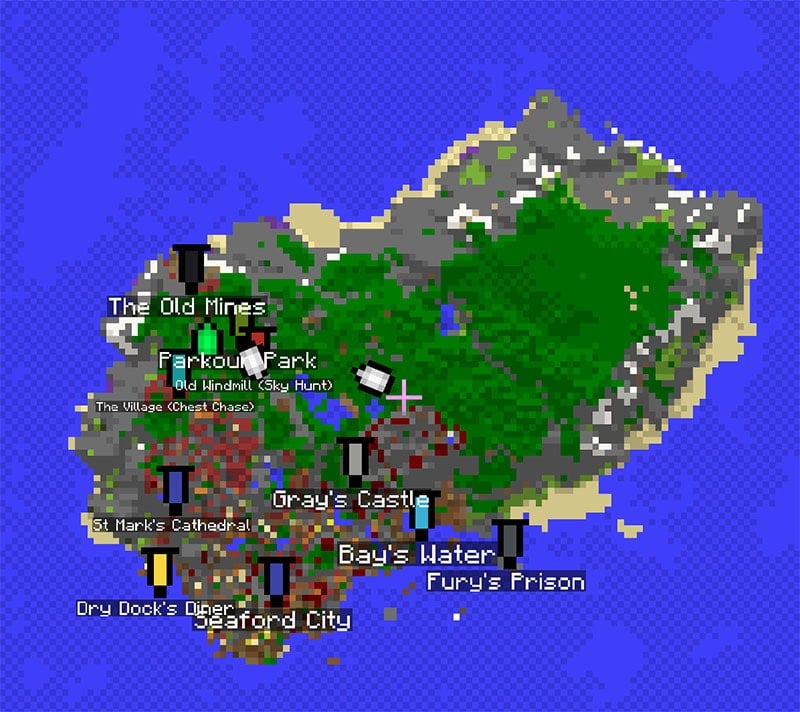
    Map of Enjincraft

    For beginners, the world map is very handy as it marks all the main locations in the game. This map could be discovered in Witek’s House in the first city (follow the main road into the town).

    Binding Enjin Wallet

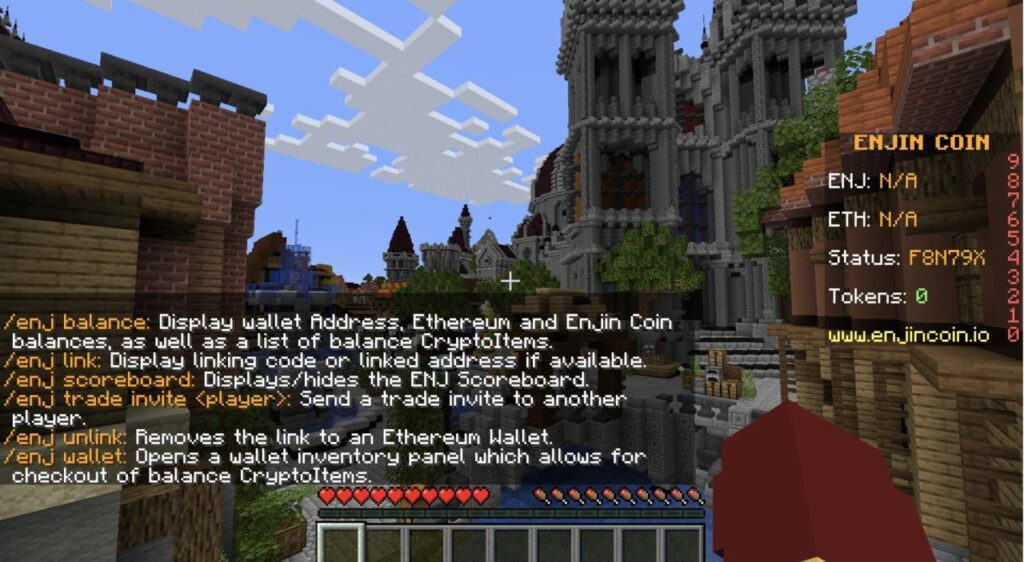
    Players can keep valuable items Enjincraft via the Enjin Wallet. The onboarding process is very simple:

    1. Login to enjincraft.com
    2. Game will give you a 5 character binding code.
    3. Open up Enjin Wallet on your mobile phone
    4. Navigate to “Linked apps”
    5. Select the wallet and enter the binding code
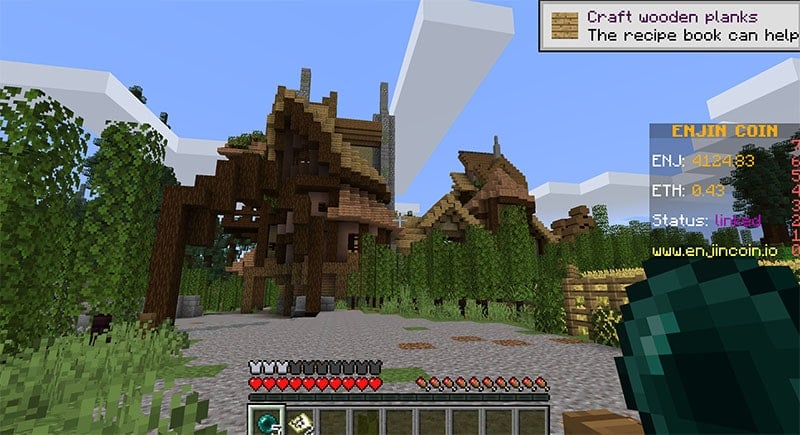
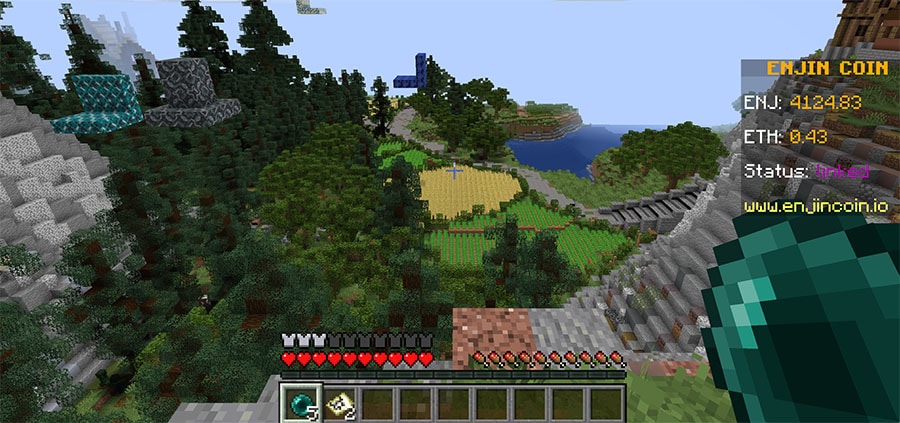
    Enjincraft with linked Wallet

    This process should take around 1 minute and after which the account will be bound and ready to play. The wallet status will display as linked and the Enjin Coin panel will show the ENJ and ETH balance of the wallet. This makes Minecraft very much similar to Massively Multiplayer games like World of Warcraft.

    Enjincraft ERC-1155 Items

    Enjincraft Items are cross server and can move between realms. Currently owners of the items could be explorered using the Enjinx blockchain explorer.

    Check out our Enjin Guide to learn more.

    What is EnjinCraft?

    Enjincraft discussion and interview with Enjin CTO Witek Radomski

    EnjinCraft is Enjin’s newest plugin for Minecraft servers. The EnjinCraft plugin will enable server owners to fully integrate a blockchain economy  into Minecraft.

    This means that Minecraft server owners will be able to provide players with tangible ownership of in-game assets and currencies. The in-game assets can be used in server owners’ chat rooms, websites and the Enjin Multiverse.

    Stormwall is an example of Enjin’s multiverse assets is Stormwall. It is a playable item created by Enjin that can be used in 32 of Enjin’s games.

    DonationCraft was Enjin’s first Minecraft plugin. It allowed MineCraft servers to accept Paypal and credit card payments. According to Enjin, DonationCraft has over 5 million downloads and allowed server owners to make millions of dollars.

    As first reported by Asia Crypto Today, to introduce people to Enjin’s MineCraft plugin, Enjin has launched the closed beta version of EnjinCraft Server One, a Minecraft server built with Enjin’s plugin.

    EnjinCraft Server One has blockchain-based Minecraft weapons, armor, and accessories for players to find and win.

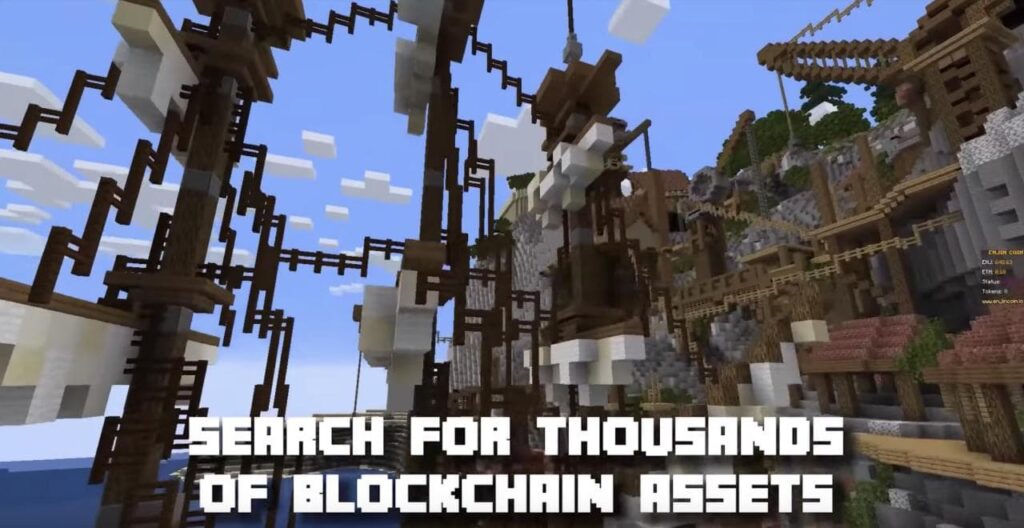
    Search and collect blockchain assets in Minecraft's expansive universe
    Search and collect blockchain assets in Minecraft’s expansive universe

    In-game items are backed with Enjin Coin (ENJ). Players can get Enjin Coin by melting them via the Enjin Wallet. After melting Enjin Coin, it can be transferred into other cryptocurrencies. Enjin Coin can also be used to purchase gift cards from mainstream retailers. For example, Amazon, Apple, and Uber.

    Enjin Blockchain SDK for Java

    The SDK for Java allows Java developers to create and integrate blockchain assets onto their platform.

    For Enjin’s Java SDK, the Company has adopted an open-source codebase. Therefore, Java SDK users can modify and build upon the SDK however they want. Enjin mentions that they encourage the spirit of collaboration and hopes users can use the SDK to build things they could never have imagined.

    Players can convert their in-game assets into real life value.
    Players can convert their in-game assets into real life value.

    Users will be able to use Enjin’s platform to integrate a blockchain economy onto their servers. This will mean users can integrate blockchain economies onto games, web applications and even andriod apps.

    You can start building with the Blockchain SDK by creating an Enjin account here.

    By signing up with the Enjin Spark early adopter program, users will be given various early adopter benefits. This will help them market, fund and monetize their projects.

    You can sign up for the Enjin Spark program here.

    Conclusion

    https://www.youtube.com/watch?v=1EDBs01QvX8&feature=youtu.be
    Introducing EnjinCraft: The World’s First Blockchain-Powered Minecraft Server

    Seeing in-game items as mere pixels is a thing of the past. Enjin is allowing developers to integrate blockchain economies into the online world through with Enjin’s Java SDK.

    And with MineCraft Server One, Enjin is showing how these economies can work in mainstream gaming. We will hopefully finally see a win-win situation for developers and players. Developers are able to generate more profit. Whilst allowing players to earn real life value through in-game items.

    To learn more about check out our Enjin Review.

  • Top 10 Blockchain Security and Smart Contract Audit Companies

    Top 10 Blockchain Security and Smart Contract Audit Companies

    We rank the top 10 performing blockchain security firms offering services such as smart contract audits, blockchain security analysis, penetration testing, formal verification, and security audits. Security audits are extremely important – this year we’re seeing the rise of Decentralized Finance (DeFi)— a new application of decentralized Blockchain technology that is poised to replace the trillion dollars Global Finance industry. However, recent events such as the dForce hack have shown us that hackers can exploit weaknesses in smart contracts and steal money. It’s almost like robbing a bank, except in this case the bank is flush with crypto AND can’t defend itself. In the case with dForce, the hacker stole $25,000,000 USD (talk about a good haul) and with crypto transactions, we know this is not reversible.

    Consequently, security solutions, tailored to the volatile nature of blockchain technology and its components, have started making moves to isolate and neutralize security threats common in the blockchain terrain. In this article, I will highlight and explore the workings of the top companies in the blockchain security niche.

    It is therefore extremely important for security audits of projects, exchanges and blockchains to be done. Users must also know what security tests have been performed and if any red flags were raised.

    Hacken

    Website: https://hacken.io/

    Hacken performs a wide range of security services for its clients. These suites of services include blockchain security consulting, web/mobile penetration testing, coordination of bug bounty programs, crypto exchange ratings, among other things. Although Hacken offers a long list of services targeted at blockchain and crypto firms, its ecosystem, however, encompasses security products ideal for IT companies as a whole. The company has built a commendable reputation as a security risk assessment for companies requiring a digital environment to create or enable services for their consumers.

    Hence, it comes as no surprise that Hacken has provided security services for non-blockchain giants like Air Asia. Furthermore, it has proven its commitment to blockchain technology by sponsoring and engaging security experts worldwide in security meetups.

    Hacken has also created the HackenAI security platform designed to protect the end user from security risks and account compromises. Key features such as Darknet monitoring immediately alerts users of compromised passwords and possible darknet attacks. HackenAI is available on Android and Iphone devices.

    Quantstamp

    Website: https://quantstamp.com/

    Quantstamp is a blockchain security startup unveiled at YCombinator W18 Batch. The security team of Quantstamp has experience in top IT companies like Google, Facebook, and Apple. And this is evident in the platform’s wide array of blockchain security tools and services. For one, Quantstamp has developed a decentralized security network for smart contract auditing. With this solution, users can perform automated smart contract security review on a “global network of decentralized security nodes.”

    Additionally, the platform provides expert security audits for clients blockchain projects and a 24/7 security monitoring software tool.

    Trail of Bits

    Website: https://www.trailofbits.com/

    Trail of Bits prides itself as a network of developers with the capabilities of identifying and fixing loopholes in software, devices, or codes. In other words, the solution provides an array of software security services that encompass smart contract audits, blockchain security research, software development, and so on. Over the years, Trail of Bits has developed formidable security tools for smart contracts. Some of these blockchain-focused solutions are Crytic, Slither, and Echidna.

    Apart from that, Trail of Bits developed the popular AlgoVPN. As well, it has a lot of security publications on GitHub, including public reports for 0x Protocol, Compound, NuCypher, and MakerDAO, which are some of its clients.

    OpenZeppelin

    Website: https://openzeppelin.com/

    The OpenZeppelin team is mostly known for its development of Solidity libraries known as OpenZeppelin Contracts. These libraries are used in most Solidity projects as a tested and standard template for contracts deployable on decentralized applications. Developers can integrate this solution through OpenZeppelin’s native SDK. Besides development, OpenZeppelin has a strong focus on smart contract security and audit services.

    Also, OpenZeppelin was one of the first teams to reinvent blockchain security by introducing elements of gamification to identify loopholes in smart contracts. Another of its products, Ethernaut, is a Web3/Solidity war game, which entails gamers to hack smart contracts to move to the next level.

    ConsenSys Diligence

    Website: https://diligence.consensys.net/

    US-based ConsenSys is one of the biggest and prominent blockchain incubators in the industry. Unlike other security firms mentioned on this list, ConsenSys dedicates its resources and technological know-how to the development of Ethereum blockchain applications and software, especially financial infrastructures. As such, its product, ConsenSys Diligence, offers security analysis for smart contracts. This audit product is at the cutting edge of sophisticated “cryptography, blockchain technology, and crypto-economic incentive analysis.”

    Another of its products, MythX, is one of the most powerful automated scanners for Ethereum smart contracts. This solution provides a robust API, which developers can use to access security analytics tools.

    Certik

    Website: https://certik.io/

    Certik is a security company looking to utilize topnotch formal verification technology in collaboration with some of the best cybersecurity experts to create end-to-end services. On its website, Certik claims that it has audited over 188,000 lines of codes and secured over $6.32 billion worth of assets. The team offers to mathematically validate the safety of smart contracts

    Therefore, it has developed Certik Chain, a public blockchain focused on leveraging Certik’s Formal Verification platform, to secure decentralized projects. Certik is officially a partner company of Binance, and it is backed by prominent investors, including Binance Labs, Lightspeed, Matrix Partners, and DHVC.

    LeastAuthority

    Website: https://leastauthority.com/

    LeastAuthority is a cybersecurity consulting firm with its main focus on privacy. It classifies itself as an enabler of private and disruptive storage solutions. At the moment, the platform has two major products available to its users. The first, Privatestorage (formerly S4), is a centralized system that provides storage infrastructure to end-users and offers them the autonomy over the collection, processing, and distribution of their private data. On the other hand, its second product, Tahoe LAFS, enables a decentralized, distributed, and fault-tolerant storage facility.

     In addition to providing different storage architectures, LeastAuthority has published security reports for Ethereum, Tezos, and others. It also works with developers throughout their development cycles to ensure that their projects are not susceptible to security threats. 

    PWC Switzerland (former Chainsecurity)

    Website: https://www.pwc.ch/en/services/risk-assurance/smart-contract-assurance.html

    Chainsecurity has joined PWC Switzerland to perform security review projects and create security solutions for the emerging blockchain industry. With this partnership, PWC Switzerland offers consultant services to blockchain projects from the exploration stage to the post-deployment stage. This platform assesses smart contract designs, tests their viability, and monitors metrics detailing their performances after deployment. It excels in its ability to combine automated analysis tools and the expertise of security professionals to identify and eliminate potential threats.

    As Chainsecurity, this blockchain team developed several security tools, including Securify and VerX. It makes sense to expect this team to continue its successful run in the blockchain security sector since it now has access to PWC Switzerland’s vast resources.

    Slowmist

    Website: https://www.slowmist.com/en/

    Slowmist is China’s leading blockchain security company. They perform extensive blockchain security services that include smart contract audits, blockchain security audits, wallet security testing, and much more. Slowmist also has a safe staking project for blockchain ecologies, which delivers real-time data on the growth and security patterns of EOS, Cosmos, Vechain, and other top blockchain projects. Another interesting bit of detail about this platform is its powerful firewall project for EOS smart contracts, named FireWall.X.

    Likewise, Slowmist is constantly tracking and publishing data and stats about security situation on crypto exchanges through their Blockchain Threat Intelligence (BTI) service. 

    Runtime Verification

    Website: https://runtimeverification.com/

    Runtime Verification is a research and development company focused on formal verification. According to the information on its website, this solution designs standard models for high-value applications and uses them as templates to develop security-sensitive products. Runtime Verification has developed two main smart contract security products. On the one hand, it offers smart contract correctness proofs with the help of the K framework to prove the viability of Ethereum and Cardano’s smart contracts. On the other, Firefly is a test coverage analysis tool for Ethereum smart contracts.

    Additionally, Runtime Verification has worked with Ethereum Foundation on building a formal framework for Ethereum 2.0 testing.

    What is the best Smart Contract Auditing Company

    Top tier smart contract auditing companies include Hacken, Trail of Bits and OpenZepplin
  • Telegram Open Network delayed, willing to return money to GRAM investors

    Telegram Open Network delayed, willing to return money to GRAM investors

    Telegram, one of the world’s leading messaging apps, has been forced to delay the unveiling of the Telegram Open Network (TON) and issuing the GRAM token. Telegram’s Open Network was one of 2018’s hottest projects, garnering over $1.7 Billion dollars of investment over 3 phases. Many viewed telegram’s networks as a way to bring more masses into the decentralized ecosystem, as the messaging app had over 400 million monthly active users. The $GRAM token was planned to be integrated directly into the Telegram App along with support for smart contracts. On top of this, TON also offered smart contract features – allowing for Decentralized Finance (DeFi) and other applications. The network was originally planned to be released on April 30th, but the Russian based company released a letter to their investors (in Russian) on the 29th April, saying this would have to be postponed for another year at the latest.

    This news comes as a disappointment to many investors who were expecting TON to rival projects such as Facebook’s Libra (also delayed). These projects directly compete with Central Bank Digital Currencies, which are gaining traction with the launch of China’s DCEP. Although many may have attributed the change in release date to the current Coronavirus pandemic which has brought the world to its knees, it is in fact down to regulatory concerns.

    Legal troubles with the US Securities and Exchange Commission (SEC)

    The letter claimed that the decision was brought about, “in light of the recent US district court decision.” The case they are referring to is last month’s decision by a US judge that the company could not proceed with any blockchain projects or issue tokens until they resolve their dispute with the US Securities and Exchange Commission (SEC). 

    Last October the SEC sued Telegram for violating its laws and selling its gram tokens illegally. The commission was alerted to Telegram after they made $1.7 billion from their initial coin offering (ICO) of their Gram token. This pre-selling was not authorized by the SEC and was out of step with securities law. 

    This SEC problem is something Telegram is finding hard to shake off. They were forced to delay their TON blockchain before, going from October 2019 to April 2020. Now they have been forced to delay even further. 

    Financial difficulties

    The life of Telegram CEO and VKontakte founder Pavel Durov - Insider
    Pavel Durov, CEO of Telegram Inc

    Each time the network is delayed, Telegram and the CEO, Pavel Durov, are also losing money. The latest delay has really hit them hard. Per the letter to investors, those who have added to the project will receive 72% of their money back. However, those who wait until April 2021 will see 110% of their initial investment returned. 

    However, how the money or Gram tokens are returned to investors is a little up in the air. The letter looked to calm investors, who made their decisions last Friday, saying: “We are continuing to engage in discussions with the relevant authorities in connection with TON and the issuance of tokens to the original purchasers.”

    The letter continued: “If we obtain the relevant permissions prior to April 30, 2021, purchasers who opted for the loan will have the further option to receive Grams or potentially another cryptocurrency on the same terms as those in their original Purchase Agreements (to the extent allowed by applicable regulatory restrictions).”

    Either way, this blockchain and cryptocurrency creation must be a costly venture for Durov, especially now investors funds are being reimbursed. The Telegram CEO said in the letter that he would be paying off the debt incurred through equity. 

    “With 400 million monthly users and organic growth of 1.5 million sign-ups each day, Telegram is the # 1 most downloaded social media application in 27 countries… Based on the valuation of messaging services at similar stages of their growth, we believe Telegram’s equity value will exceed the aggregate amount of its potential debt resulting from this offer by at least several times,”

    Pavel Durov

    Fake Telegram Refund services

    After the announcement of the GRAM refund, several scams have emerged offering fake “Telegram Token Refunds”. These services typically ask victims to pay them in advance with the promise of a larger sum refund. These of typical cryptocurrency scams that will immediately run away with the victim’s funds.

    When will Telegram Open Network be launched

    According to the latest investor newsletter, TON’s earliest launch date would be 2021. TON has suffered various delays due to regulatory issues, such as the pending investigation by the US Securities and Exchange Commission (SEC).

    Is there a refund for GRAM

    For legitimate purchasers of GRAM, there is a 110% refund for investors (non-american) and 72% refund for american investors. Please be-aware of Fake Telegram Refund services that ask you to pay money.

  • Bitcoin Mining Guide (2020)

    Bitcoin Mining Guide (2020)

    Bitcoin Mining is the process of using specialized computer hardware to earn Bitcoin. The annual production of Bitcoin via mining is $3.5 Billion dollars, with most of that Bitcoin going to Bitcoin miners. As miners earn rewards in Bitcoin, their profits can change greatly on market conditions – making Bitcoin mining a high risk / high reward industry. Anyone can join the Bitcoin network and become a miner. In fact originally Bitcoin can be mined on all personal computers and commonly available hardware. However, in 2020, specialized hardware called Application Specific Integrated Circuits (ASICs). These machines mine Bitcoin at a very efficiency.

    [wp-compear id=”5139″]

    Bitcoin is now a household name. For an invention that is just over a decade old, this is certainly remarkable. A mysterious entity by the name Satoshi Nakamoto launched Bitcoin in 2008 as an alternative to central bank currency. Bitcoin mining is an alternative to obtaining Bitcoin on top cryptocurrency exchanges. Miners often sell Bitcoin on Over-the-Counter brokers to generate passive income.

    Learn more about Bitcoin with our simple guide for beginners.

    Decentralization is a central tenet of Bitcoin. Essentially, no single person controls either the issue or functioning of Bitcoin. This system can, therefore operate and transfer funds from one account to another without centralized control. 

    Centralized control of a financial system is pretty easy. How then, does a decentralized ecosystem like Bitcoin work? The important question therefore is; how does the ledger automatically update transactions without giving either entity power to control to entire blockchain? 

    How Bitcoin Mining Works 

    The basic feature of Bitcoin is the open-source nature of the Bitcoin protocol. This means that anyone can access and update the Bitcoin code. Similarly, anyone can update the Bitcoin ledger of transactions. All that needs to be done is for your computer to guess a random number that solves an equation from the system.

    The more powerful your computer is, the more guesses it can make per second. Accordingly, having a powerful computer exponentially increases your chances of “guessing right”. This allows you to add the next “block” of bitcoin transactions to the existing chain.  

    A more complicated representation is as follows. On the one hand, you have your miner that makes “guesses”. If your mining equipment makes the right guess, you get the right to add the next block of transactions to the blockchain. The block you create is sent to other computers so that they can validate it.  At the same time, other computers in the network validate the block and update their copies of the Bitcoin blockchain. More computing power translates to greater frequency of making the right guesses. However, in line with natural rules of probability, it is virtually impossible for one computer to get it right all the time. 

    This process is what Bitcoin mining entails in a nutshell. Computers compete to add the next block and in the process generate new blockchain which automatically goes into the network. The computer that solves the block earns a “block reward” and some transaction fees on the transactions entered into the blockchain. Uniquely, the process of validation is automatic and does not rely on centralized control. Miners can decide to hold the bitcoin they create or trade it to other bitcoin community members.  

    Bitcoin Mining Hardware

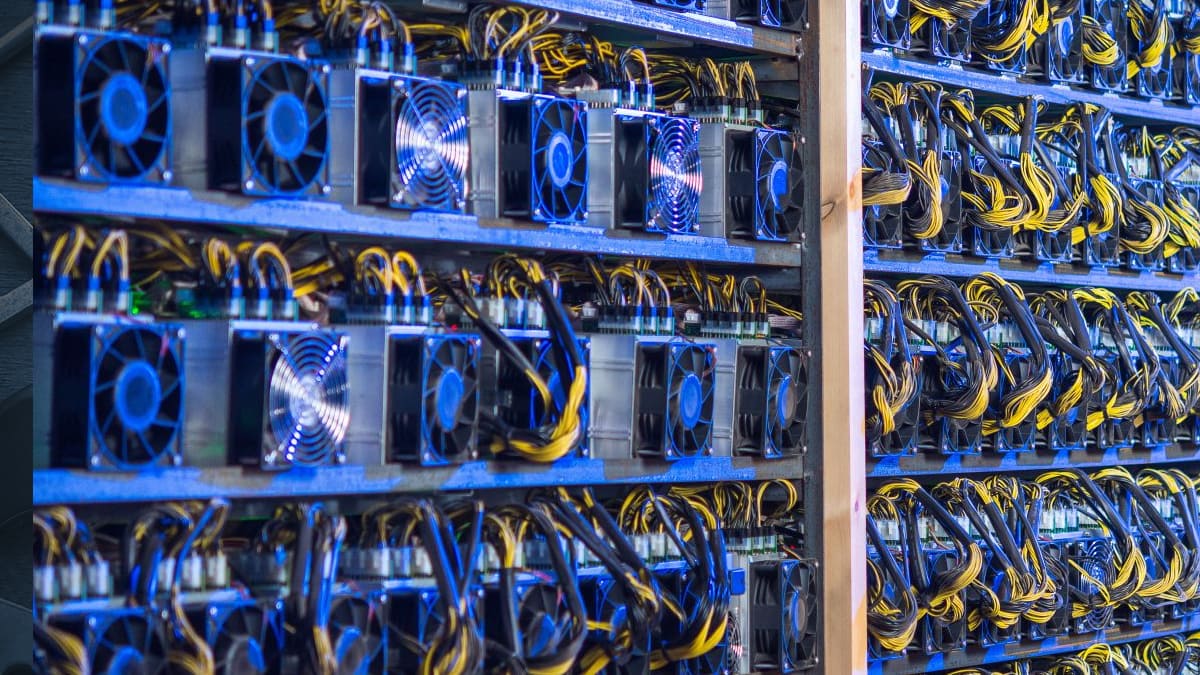
    In order to profitably mine Bitcoin, you’ll need specialized hardware called ASICs. These machines are designed to specifically mine Bitcoin’s SHA256 algorithm – in essence they only do one thing but do it well.

    [wp-compear id=”5139″]

    Mining Difficulty 

    Perhaps, you are thinking, if it’s that straightforward, what makes Bitcoin valuable? Well, Satoshi Nakamoto in anticipation of this made mining difficulty increase as computing power increased. The mining difficulty automatically adjusts to the increase in cumulative network computing power as more miners get involved. 

    AThe reason for this is to keep Bitcoin inflation in check. See, if there is a steady stream of Bitcoin, it is easier to have stable rollout process. When Bitcoin was first launched, you could profitably mine Bitcoin using a personal home CPU. As Bitcoin became more popular, miners moved to GPU (Graphics processing Units) to carry out more calculations. A GPU can enhance a computer’s computing power to the equivalent of 30 regular PCs.  

    Later, ASICs (Application Specific Integrated Circuits) came about. These were hardware equipment specifically to mine Bitcoin. Currently, they represent the gold standard in Bitcoin mining equipment and have occasional updates themselves. These ASICs have a higher “hash rate”, measured in hashes per second. Hash rate is the number of “guesses” the device can make per second. Consequently, the higher the hash rate, the higher the chance of earning bitcoins.

    Check out our video below to learn more about Bitcoin mining devices!

    Bitcoin mining-what do they use?

    Mining Pools 

    Even with top of the line mining equipment, the current mining landscape is incredibly competitive for individual miners. This has given rise to mining pools where miners combine computing power to compete effectively. If the pool successfully adds a block to the public chain, the pool spreads the reward among its members.  

    Currently, about a dozen large mining pools dominate Bitcoin mining. Mining pools charge you pool fees for participating which is something that can affect your profitability. 

    Top Bitcoin Mining Pools

    According to safestbettingsites.co.uk experts, there are 2 factors to consider when picking a Bitcoin mining pool – the location of the pool and it’s market share. The top priority would be location – the closer the pool is to you geographically the better. This is because sometimes due to network latency, shares that are mined could be “stale” – as new blocks are created rendering older blocks obsolete. It’s also important to know that Chinese servers are behind the Great Firewall of China, meaning that connections could periodically break. This means that choosing a server with low latency and close geographical location would give the highest yield.

    The second factor is the market share of the pool. The larger the market share, the more consistent the rewards. This is because blocks are continuously mined by the pool, and hence they can pay out at a consistent rate. This reduces the impact of the randomness of block creation.

    We recommend finding a pool close to your location with a high market share.

    Electricity Costs 

    Electricity is a major factor in Bitcoin mining. Bitcoin mining is certainly an electricity-intensive affair. This is because ASIC rigs have high computing power which the process of mining Bitcoin requires.  

    The high power consumption is in both powering the miner and cooling the machines which get really hot. This is why mining farms have cropped up in cold areas like Iceland to take advantage of natural cooling. 

    So, Is Mining Profitable? 

    This is a question that needs perspective. Mining on a personal PC is definitely not going to be profitable. This is because simple computers simply cannot compete with ASIC rigs and mining pools in terms of making more “guesses”. 

    So, the more computers you have and the faster your computer is- the greater your chances of generating the correct number and earning Bitcoin. Thus some people have entire farms of expensive computers to increase their chances.

    Currently, the block reward is 12.5 BTC for every block mined. Thus, you can only profitably mine Bitcoin with sophisticated equipment. Bitcoin mining farms are popular mining method to gain some of the block reward. Block rewards are set to half in 2020, reducing the mining rewards by 50%. This event is known as the “Bitcoin Halvening“. The current estimated date for the Halving is 13th of May 2020, after which the block reward will decrease from 12.5 to 6.25 bitcoin per block.

    One more obvious factor as to whether mining is profitable is the price of Bitcoin at any given time. Miners need to balance this with the expense of mining Bitcoin itself.

    Bitcoin Network Hashrate

    The Bitcoin Network Hashrate is currently above 120,000,000 TH/s. This means that if the hashrate of the network is coming for Antminer s17 (currently most popular type of Bitcoin ASIC), it would require 2.1 Million units. This would consume 5.4 Billion Watts of electricity, which is enough to power a small city! Mining rewards are split according to hashpower, with larger miners getting a high proportion of the daily Bitcoin mining reward.

    Summary 

    In summary, the following are factors which affect the profitability of mining Bitcoin:

    • Hashrate;
    • Block reward;
    • Mining difficulty;
    • Power consumption;
    • Pool fees; and
    • Bitcoin’s price at any given moment.

    Bitcoin mining is, therefore, a complicated task.

    However, investing significantly in a large mining pool is the most efficient way to go about it. The current circumstances make individual mining simply a waste of time when done on a small scale.  

    Nonetheless, it is still an activity that many investors have a significant stake in. The reality, however, is that the task will get progressively difficult with time and a select few with significant hashing power and cheap electricity will thrive.  

  • DASH mining guide (2020 Edition)

    DASH mining guide (2020 Edition)

    DASH mining is the process of generating new cryptocurrency using specialized mining machines known as “ASICs”. This guide teaches you the basics of DASH mining and how to set up your ASIC. DASH miners are specialized machines designed to solve the “X11” hash function used to protect the DASH network. When a miner finds a hashed result that meets the network difficulty requirements, it is submitted to the DASH network. Once verified, the miner will be rewarded in DASH cryptocurrency, thus generating an income for the mienrs. In order to mine DASH, you’ll need to get an ASIC. It’s no longer possible to mine DASH using CPU or GPU (unlike Monero or Ethereum mining).

    [wp-compear id=”5232″]

    What is DASH

    DASH (also known as Xcoin, Darkcoin) is a form of digital currency that is not controlled by any government or individual entity. DASH is based on Bitcoin technology, with some major differences between:

    • Anonymous transactions – DASH transactions are anonymous, so it is impossible to trace the source of DASH funds. This offers significant privacy benefits for DASH users.
    • Instant confirmation – Masternodes instantly confirm DASH transactions, whilst Bitcoin transactions take 10-30 minutes to confirm.
    • Low fees – DASH transaction fees are significantly less than Bitcoins or any other bank for that matter.
    • X11 Algorithm – DASH mining uses a different algorithm called X11.

    How Profitable is DASH mining

    Daily Revenue from mining rewards differ everyday – this is because mining difficulty changes and hence the daily reward. Revenue is dependent on the power of the Graphics Processor Unit (GPU) involved, with higher Hashrates being faster and more profitable

    • Network difficulty- Think of it this way, every day the same wage gets paid to all the DASH miners in the world.
    • The value of DASH– The current USD value of DASH is important for those seeking profits in fiat currency (USD) or even Bitcoin (BTC).

    What is X11?

    X11 is a chained hashing algorithm that uses 11 different hashing algorithms to secure the network (hence the “11”). The algorithms Blake, BMW, Groestl, JH, Keccak, Skein, Luffa, Cubehash, Shavite, Simd and Echo are used in sequence, repeated one after another until the very last function. This will give a final hash value which is then submitted to the blockchain if it meets the difficulty requirement. X11 is designed by Evan Duffield to improve the security of the blockchain. The reasoning is that if one of the algorithms are compromised, there are 10 others to continue to protect the network.

    The second reason X11 was designed is to make it harder to create mining ASICs (although we know that this is now possible). For a period of 2 years, it was possible to mine DASH using a conventional computer via CPU and GPU mining. However, this is no longer the case as chip makers have found ways to create high specialized X11 ASICs.

    DASH Pool Mining

    There are two main ways to mine DASH – solo mining or pool mining.

    Pool Mining (working together)

    • Work with others to mine and share rewards
    • Get paid per share, on a hourly or daily basis
    • Less random / dependent on luck
    • Pools take some fees (0.5-3% depending on pool)

    Solo Mining

    • You mine the entire block reward (3.11 DASH per block) – no pool fees
    • Random Chance and probability – you can go days or months without rewards
    • Not viable if Hashrate is low – single GPU will take years to mine a block

    Generally speaking, pool mining is the preferred method for most miners. This is because it provides a reliable stream of daily income, rather than large random bursts. Thus it allows miners to better calculate their profits and losses.

    List of top DASH mining Pools

    There are 2 factors to consider when picking a DASH mining pool – the location of the pool and it’s market share. The top priority would be location – the closer the pool is to you geographically the better. This is because sometimes due to network latency, shares that are mined could be “stale” – as new blocks are created rendering older blocks obsolete. It’s also important to know that Chinese servers are behind the Great Firewall of China, meaning that connections could periodically break. This means that choosing a server with low latency and close geographical location would give the highest yield.

    The second factor is the market share of the pool. The larger the market share, the more consistent the rewards. This is because blocks are continuously mined by the pool, and hence they can pay out at a consistent rate. This reduces the impact of the randomness of block creation.

    We recommend finding a pool close to your location with a high market share.

    Pool Market Share Location Reward System Pool Fee
    Antpool 26% Asia / China PPS (Pay per Share)
    PPLNS (Pay per last N Shares)
    1-4%
    ViaBTC 17% Asia / EU PPS (Pay per Share)
    PPLNS (Pay per last N Shares)
    2-4%
    Coinmine.pl 7% EU PPLNS (Pay per last N Shares) 0-1%
    dash.btc.top 4.7% China PPS (Pay per Share) 0%-2%
    miningpoolhub.com 1% EU
    USA
    PPS (Pay per Share)
    PPLNS (Pay per last N Shares)
    1%

    DASH Cloud Mining

    In 2020, DASH Cloud mining contracts are not profitable. This is because mining has become more competitive with lower margins – forcing miners to reduce costs. Cloud mining is hit the hardest because of they have large overheads like advertising spends and legal costs. In our latest research, we found that cloud mining providers were charging 184% for the same hashrate than home-made solutions.

    What else can I mine with X11?

    When you purchase a DASH miner, you’re limited to mining the X11 algorithm. X11 algorithm can mine coins such as Smartcoin, Pura, and Hatch. Admittedly, there are not many other good coins to mine using X11 ASICs, with DASH being the most valuable of the bunch. This is unlike other algorithms such as SHA-256 which is used in Bitcoin mining, Bitcoin cash and BitcoinSV.

    Masternodes vs. Mining

    There are two was to make a passive income on the DASH network – mining and masternodes. Like miners, masternodes also generate a DASH reward every time a block is created on the DASH network. The reward distribution is as follows:

    • 45% – Miners reward
    • 45% – Masternode reward
    • 10% – DASH treasure (DASH DAO – Decentralized Autonomous Organisation)

    As you can see, masternode node holders get equal amounts of rewards as miners. In order to become a masternode, a total of 1000 DASH must be staked by the node holder. At the current price of $60 per DASH, this means a total of $60,000 must be staked in order to gain masternode rewards.

    The function of masternodes is to provide additional layer 2 services to the network. This includes sending pre-approved transactions (InstantSend), improving security of the network (Chainlocks) and privacy features (PrivateSend). The 1000 DASH required by the masternode serves as collateral to ensure good behavior. If the funds are moved or spent, the associated masternode will go offline and stop receiving rewards.

    The biggest factor in deciding whether to mine DASH or getting a DASH masternode is the financial commitment factor. The advantage of a masternode is that the 1000 staked DASH can be fully returned at the end of operation, whilst mining equipment will become obsolete over time. In addition, masternode holders are given the right to vote in the DASH treasury which gives funding to future developments. The disadvantage of masternodes is the high initial investment, which cannot be less than 1000 DASH.

  • What REAL cryptocurrency mining looks like

    What REAL cryptocurrency mining looks like

    Cryptocurrency Mining can be tough to get started with – but there are always mining expert’s who are willing to lend a hand and share their wealth of experience. One such person is Alex Hillman, he runs cryptocurrency mining farm with over 300 GPUs. We asked detailed questions about how he got started, his mining setup and what advice he would give to beginners getting started with mining.

    Miner Bio: Alex Hillman

    Alex Hillman (@SpillyGuy) comes from a computer and programming background. He currently mines at 3 different locations, including dedicated warehouses and research labs. He mines with more than 300 GPUs, often times on multiple cryptocurrencies at the same time.

    Can you tell us about your mining operation (Where/ How many people are involved / Power usage)

    When the technology started taking off I knew it was something I wanted to be involved in with my computer and programming back ground. We currently run well over 300 gpus at 3 locations including dedicated warehouses and research labs.

    What type of setup – solo or pool mining do you use

    We tri or quad mine all of our gpu miners. Often we mine coins like Ethereum or Raven while dual mining something like LBRY or DECRED on the GPU extra memory. We accomplish this most cases with Claymore Miner. On the CPU we use a xmr-stak style miner to mine coins like Loki, Monero or Sumocoin.
    Last you can mine on pools that create extra tokens and with the fpga cards we do this as well.

    We mine on large pools like ethermine with a private
    workgroup of about 50 clients and friends to increase profits and luck factor.

    Do you use ASICs ?

    No we strongly disagree with the logistical cycle and ethics of building single use products like this that have such a short life span.

    Mining is Loud and Hot – have you ever been driven crazy by the noise or Danced around naked when setting up gear?

    I often jam while building but we try to do all of our
    thoughtful work away from the computers. But yes I have danced naked in the
    mines many times.

    What do you think is the biggest challenge when it comes to mining

    Having enough power to grow

    Do you ever dabble in speculative mining – if so what new coins are you into

    Yes spec mining can be wildy profitable. At the start we
    mined sumocoin about several hundred a week at 0.07 cents. We sold those coins
    at 14.00usd so it paid for our first dedicated miners.

    What happens when hardware breaks ? who repairs them?

    Spencer my business partner is the expert on trouble shooting most often its a software driver issue or a hardware issue like usb or risers going bad.

    What is the most controversial thing to happen to you?

    We helped attack the EOS and ADA blockchain with our GPU network in a effort to prove their lacking security.

    What advice would you give to a someone who wants to start out mining

    Start simple with a single computer at home. Use a gaming or work computer toss a good video card like a Nvidia 1070Ti or Nvidia 1080ti in it and start speculative mining first.

    Nvidia or AMD – which team are you on?

    Nvidia produces coins at a more efficent power rate and with
    far less loss and heat. Its really not a question amd is cheap and quick while
    Nvidia is the better option over time

    Cloud Mining – in your opinion are they legit or scam

    All a scam…. why would I rent you my money tree for any
    money less than it makes me. The business model is flawed from the start.
    Remote hosting is a thing but in most cases if someone is trying to rent you
    cloud mining they are hedging out their own risk by making you take it all.