Bitcoin Halving is expected to happen at 12 May 2020 07:07:39 UTC
What is the Bitcoin Halving Event?
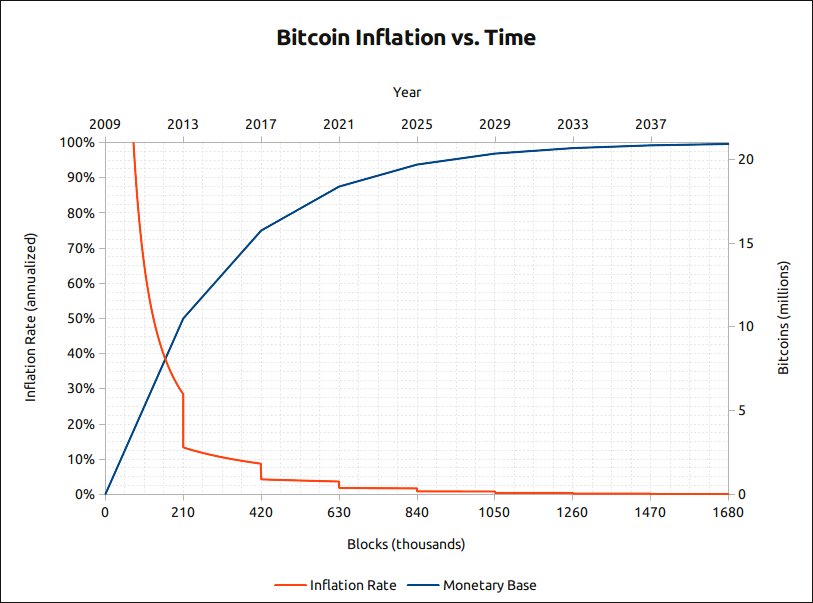
The Bitcoin Halving event which marks the point where Bitcoin mining rewards will be cut precisely in half. Many view this as a turning point for the price of Bitcoin because it will drastically reduce the new supply of Bitcoin, creating scarcity. Currently the Bitcoin Halving is expected to happen at 12 May 2020 11:04:30 UTC – the exact time and date may vary due to fluctuations in Bitcoin block creation time. Once the halving takes place, the amount of Bitcoin mined per day will decrease from 1,800 BTC to 900 BTC. It is important to remember this event is permanent and will affect all the Bitcoin mined in the future as well (until the next halving event). From an economics standpoint, the less Bitcoin there is being produced the more scare and less accessible Bitcoin will become.
Check out my video on what the Bitcoin halving is, and what opportunities it can mean for Bitcoin.
Reduced Sell Pressure on Bitcoin
There will be substantially less sell pressure from Bitcoin miners as they’re income of Bitcoin will half. Currently, miners will mint $13 million USD worth of Bitcoin per day. This is no small figure – and one of the reasons why mining is such a trillion dollar industry (Check out our Bitcoin mining guide for how to be part of it).
Will Miners shut down / got bankrupt?
After the Halving, miners will receive half of their regular income. This will drastically alter the dynamics and profitability of Bitcoin Mining. For miners who are using older machines (ASICs), the drop in income might spell certain doom. Some miners will yield negative profits and be forced to retire the older less efficient units. This is a common practice in mining – renewing hardware is part of the profitability cycle for miners. This is similar to other tech hardware businesses like server farms which require annual upgrades to hardware.
There is no risk that Bitcoin be without miners – till is still 900 BTC to be mined each day (~$7.5 Million USD). Miners will be looking to be more competitive and source cheaper and cheaper electricity. In addition, Bitcoin difficulty can drop if there is less hashrate on the network, meaning it will be easier to mine Bitcoin.
Hype and Expectations
The Bitcoin Halving comes with a lot of hype and optimism for the future of Bitcoin. Several memes have emerged with charts pointing to “pump” in the price of Bitcoin. The chart above shows the LOG price of Bitcoin over time, with a ascending trend indicating potential prices of $250,000 and even $2,000,000 for the price of Bitcoin. It is important to remember that with cryptocurrencies prices are high volatile and past trends don’t always indicate future trends.
Stats
Total Bitcoins in circulation:
18,367,900
Total Bitcoins to ever be produced:
21,000,000
Percentage of total Bitcoins mined:
87.47%
Total Bitcoins left to mine:
2,632,100
Total Bitcoins left to mine until next blockhalf:
7,100
Bitcoin price (USD):
$9,987.70
Market capitalization (USD):
$183,453,074,830.00
Bitcoins generated per day:
1,800
Bitcoin inflation rate per annum:
3.64%
Bitcoin inflation rate per annum at next block halving event:
1.80%
Bitcoin inflation per day (USD):
$17,977,860
Bitcoin inflation until next blockhalf event based on current price (USD):
Chinese tech giant Tencent has launched a Blockchain Industry accelerator and incubator program to advance the use of blockchain technology in China. Called, the “Tencent Industrial Accelerator” (腾讯区块链加速器) the program is open to only 30 blockchain startup applications. Successful projects will receive access to both funds and business partnership opportunities from Tencent. This comes as a direct response to China’s directive to spearhead the development of blockchain technologies – President Xi personally talked about the advantages of blockchain. Tencent’s entry into Blockchain is creating a lot of noise because they are known to incubate many successful breakthrough projects such as WeChat, League of Legends (Tencent is the biggest shareholder in Riot Games), and QQ. To qualify, startups must be financed for at least one round and their applications submitted before the June 6th cut off date.
Table of Contents
China is a hotbed for Blockchain Development
China has positioned herself as a leader in Blockchain development, with 45% of all blockchain projects coming from the nation. The industry was given a huge boost in October 2018 when President Xi Jinping voiced his admiration for the technology behind cryptocurrencies. China launched its blockchain service network (BSN) on April 27th, a network designed to boost the integration and adoption of Blockchain in big businesses. The network is set up for commercial usage and looks to provide a platform for enterprises and individuals wishing to make a blockchain application. Blockchain technologies are extremely powerful for enterprise applications as it allows for large scale data tracking with a guarantee on the authenticity of data. We’ve seen enterprise-focused Blockchain projects gain major partnerships in the past, such as Vechain’s partnership with logistics company DNV GL and auditing firms PwC.
President Xi personally called for Blockchain Development in China in 2019
China’s Blockchain Service network is released alongside China’s National Digital Currency Electronic Payment (DCEP) Project. DCEP is a central bank national currency designed to replace paper RenMinBi (RMB) and improve the financial infrastructure in China. (Cymbalta) The project has received an official list of partners including McDonald’s and Starbucks. It is highly suggested that these projects will have a high degree of synergy, with the potential application of DCEP in Blockchain projects in China.
Tencent is Accelerating Industrial Applications
Projects which provide industrial blockchain solutions, data sharing applications, digital asset transactions, and supply chain financing are also encouraged to apply to the accelerator. Development areas were also highlighted, this time related to smart contract security, consensus algorithms, multi-party governance, and trusted identity and computer solutions. From the application, it would appear that Tencent is looking for projects related to various fields. The sectors which they are putting their focus on governance, education, energy, agriculture, public welfare, manufacturing, and logistics.
Mentoring and Opportunites
It is not just the name recognition provided by the accelerator which would attract startups. The program also includes usage of Tencent’s blockchain as a service platform, four mentoring meetings across the year, numerous networking opportunities, and the chance to fly to a country of interest with regards to blockchain or their project.
Taking all these activities and experience in mind, it is no wonder the program sets you back a long way. The tuition fee is totaled at 100,000 RMB per person (14,100 USD), which is a similar figure to that of a master’s program at a US university.
FISCO BCOS Blockchain
The blockchain will use FISCO BCOS, an open-source protocol co-developed by Tencent, Huawei, and Shenzhen Securities Communication. Tencent has played an integral role in its development, with its digital bank, Webank, providing smart contract Digital Asset Modeling Language for FISCO BCOS.
The network has already shown itself to be popular in its initial Beta period which began six months ago. Reports have suggested that 2,000 developers had signed up to the test period, creating blockchain applications for public welfare charity and electronic invoices.
Both the DCEP project and the BSN are all key structures in China’s technological plan, called the “China Standards 2035”. The document, which is set for release later this year, will plot out how the technologies will shape the next decade.
What are Central Bank Digital Currencies (CBDC) – will they mark the start of a revolution to change the financial system forever? CBDCs are digital currencies issued by central banks that function as National Currencies (fiat). They are a direct replacement of paper money, with the exact same value and issuance policies. CBDCs are state-sanctioned and governed by the monetary authority and regulatory law.
[wp-compear id=”5168″]
Banks around the world are racing to issue out Central Bank Digital Currencies (CBDC). China has already deployed the test trial for Digital Currency Electronic Payment (DCEP), a digital version of the RenMinBi based on cryptographic technology. Japan immediately countered this announcement by plans to release a Digital Yen in “2 to 3” years. One of the key motivations behind CBDC is to drastically improve the way money is transferred around the world. Instead of relying on decade-old technologies like SWIFT, Digital Currencies can be transferred directly without friction. This will drastic impacts on all levels of banking, from the m0 reserve system to the unbanked.
Major newspaper outlets like The Guardian and the Economist began writing opinion pieces, calling the advancement from China a big step and one that could pose a threat to US economic hegemony. On the other side, commentators in China heralded their country’s fast work and implementation. Although the US and its state banks have been slow to announce any research plans and have seemingly stopped Facebook’s Libra (a privatized answer to a CBDC) in its tracks, other western nations have quickly begun research.
Global effort to deploy Central Bank Digital Currencies
Earlier this year, banks from the UK, EU, Japan Canada, Switzerland, and Sweden all began joint research on a CBDC. France has announced intentions to test a pilot CBDC in 2020.
In Asia, the Japanese immediately announced their intentions to create a CBDC to match China’s as soon as the news began to break. The Bank of Korea is also looking at its own digital currency. Smaller national banks like Thailand, the Philippines, and Singapore are also looking into creating their own. Projects such as Singapore’s Ubin work with the Monetary Authority of Singapore are already in Phase 5 of development.
The world is moving towards CBDC and is in agreement that this will be the currency of the future. But, what makes them so special and alluring to banks and governments?
Digital Currencies as a weapon to combat economic change
The main reason is its cost-effectiveness and control. CBDCs are not subject to long processing times and costly fees. As you can see from the stable coin market, sending and receiving cryptocurrencies can be done quickly and easily, with just a phone and internet connection required. Not only that, but digital currencies are far easier to track making money laundering tracking much easier.
Another factor is CBDC’s resilience to political or economic changes. Often citizens from emerging economies are subject to a large disparity in their currency’s health in the market when compared to exchange rates, however, stable coins rarely have major shifts. Not only that, but big banking shutdowns, like seen in Greece and Iceland might well have had a solution if they held a financial alternative to store their money. This benefit of digital currencies could well be important as the world stares recession in the face following the economic stresses of the Coronavirus effort.
However, there is one major detail that is propelling some nations’ research. The threat which CBDC’s pose to the US dollar domination. ChinaDaily called the People’s Bank of China’s DCEP a “functional alternative to the dollar settlement system.” This is something politicians in Beijing want as US sanctions are made effective namely due to the dollar being the reserve currency. This means often international transfers to sanctioned states are prohibited and banks shut down, as they are using the US dollar in the exchange.
Challenging US sanctions
The theoretical ability of CBDC’s to circumvent US dominance is something numerous embattled nations have looked to pounce on. Other countries who hold national digital currencies include Iran- a country ravaged by US sanctions and Venezuala- a similarly hit nation. Other US adversaries that have begun research into their own CBDC include Cuba, North Korea, and Palestine.
Clearly, the race is on between the various competing nations to launch their own digital currencies and make a new economic framework. Who will lead the charge remains to be seen, but the answer could have major consequences for the future.
The PIT is a high performance cryptocurrency exchange which supports extremely high performance, security and access to a network of banks for fiat trades. The PIT is made by Blockchain.com, a cryptocurrency industry veteran who’s blockchain explorer and wallet is used by millions. To build the exchange, Blockchain.com hired trading veterans from NYSE, Google, Goldman Sachs, UBS and TD Ameritrade. The key selling point for The PIT is the efficiency and fairness of the custom “Mercury” trading engine coupled with the large 40M audience Blockchain.com already has.
In this review we’ll take a deep dive a the trading features on the PIT, trading and withdraw fees, security and an assessment on liquidity.
“We decided to take matters into our own hands, and built an exchange that puts users first, including the 40M wallets on our platform.”
Peter Smith, CEO of Blockchain.com
Buy Crypto directly with USD or EUR
One of the biggest selling points of The PIT is the ability to buy cryptocurrencies with USD or EUR. As a regulated exchange, The PIT has bank accounts in good standing in both the US and European Union. This customers can buy Bitcoin without paying expensive credit card fees (Binance’s Credit card issuer charges 5% to buy cryptocurrencies). Being regulated also means The PIT has already obtained the necessary audits and permits necessary for operating an exchange.
Daily Clearing to Fiat
A big selling feature for the PIT is the daily clearing of fiat to a network of top banks in Europe and US. This drastically prevents liquidity issues when it comes to fiat, such as failures to withdraw Fiat. This feature will be most attractive to institutional investors (Supported by the PIT Pro) who need direct access to large quantities of fiat.
About Blockchain.com
The PIT is created by Blockchain.com, the first company to establish a blockchain explorer for Bitcoin. Blockchain.com was launched in 2011, with the website blockchain.info and blockchain.com. In 2013, they launched a Bitcoin wallet for iOS and Android. In 2014 Blockchain.com closed the second biggest digital currency financing around of $30.5 Million fundraising from Lightspeed Venture Partners and Moasiac Ventures.
Simple trading interface
The PIT offers a simple, ease to read trading interface. Trading history, order book and price history is very cleanly presented on the trading interface. The front-end also supports a large degree of customization, allow users to use TradingView to draw patterns and trends.
The PIT exchange fees
The PIT charges trading fees using a tiered system based on the amount of USD traded. In the starter tier, fees start at 0.14% for makers and 0.24% for takers. Maker fees decrease substantially as trade volume increases, with the lowest maker fee at 0.02% for trade volumes above $1 Billion USD.
Tier
Volume in 30 Days
Maker
Taker
1
$0.00 – $99,999.99
0.14%
0.24%
5
$2,500,000.00 – $4,999,999.99
0.04%
0.18%
10
$20,000,000.00 – $24,999,999.99
0.03%
0.14%
15
$1,000,000,000.00+
0.02%
0.05%
Is The PIT secure
Whilst the PIT is a new cryptocurrency exchange, Blockchain.com has been in the cryptocurrency industry since the beginner. Blockchain.com has been providing wallets to millions of cryptocurrency users with an excellent security record. This gives Blockchain.com a strong reputation and presence in the industry. This puts Blockchain at the top of the list for security (however, we always recommend users to take funds off exchanges for long term storage and into their own wallet, such as the Ledger Nano X).
As an added security measure, there is an optional feature to bind The PIT account with the Blockchain mobile wallet. This will provide additional account security.
What coins can you trade on The PIT
Currently the PIT supports the trading of Bitcoin (BTC), Ethereum (ETH), USD, Bitcoin Cash (BCH), Stellar (XLM), Paxos Standard (PAX), Litecoin (LTC) and USDT.
The PIT Exchange Review
Review Score: 4.5/5
The PIT has three major advantages – abundance of users, access to a network of bank accounts in US & EU, and long term reputation in the crypto space. Whilst 2019 saw a sudden influx of exchanges, most don’t have licenses to work with banks or passed audits. With a simple to use, yet highly customization interface, the PIT is easy to use for new traders and also feature rich for experts.
[wp-compear id=”5176″]
Disclaimer: Cryptocurrency trading involves significant risks and may result in the loss of your capital. You should carefully consider whether trading cryptocurrencies is right for you in light of your financial condition and ability to bear financial risks. Cryptocurrency prices are highly volatile and can fluctuate widely in a short period of time. As such, trading cryptocurrencies may not be suitable for everyone. Additionally, storing cryptocurrencies on a centralized exchange carries inherent risks, including the potential for loss due to hacking, exchange collapse, or other security breaches. We strongly advise that you seek independent professional advice before engaging in any cryptocurrency trading activities and carefully consider the security measures in place when choosing or storing your cryptocurrencies on a cryptocurrency exchange.
Telegram, one of the world’s leading messaging apps, has been forced to delay the unveiling of the Telegram Open Network (TON) and issuing the GRAM token. Telegram’s Open Network was one of 2018’s hottest projects, garnering over $1.7 Billion dollars of investment over 3 phases. Many viewed telegram’s networks as a way to bring more masses into the decentralized ecosystem, as the messaging app had over 400 million monthly active users. The $GRAM token was planned to be integrated directly into the Telegram App along with support for smart contracts. On top of this, TON also offered smart contract features – allowing for Decentralized Finance (DeFi) and other applications. The network was originally planned to be released on April 30th, but the Russian based company released a letter to their investors (in Russian) on the 29th April, saying this would have to be postponed for another year at the latest.
This news comes as a disappointment to many investors who were expecting TON to rival projects such as Facebook’s Libra (also delayed). These projects directly compete with Central Bank Digital Currencies, which are gaining traction with the launch of China’s DCEP. Although many may have attributed the change in release date to the current Coronavirus pandemic which has brought the world to its knees, it is in fact down to regulatory concerns.
Legal troubles with the US Securities and Exchange Commission (SEC)
The letter claimed that the decision was brought about, “in light of the recent US district court decision.” The case they are referring to is last month’s decision by a US judge that the company could not proceed with any blockchain projects or issue tokens until they resolve their dispute with the US Securities and Exchange Commission (SEC).
Last October the SEC sued Telegram for violating its laws and selling its gram tokens illegally. The commission was alerted to Telegram after they made $1.7 billion from their initial coin offering (ICO) of their Gram token. This pre-selling was not authorized by the SEC and was out of step with securities law.
This SEC problem is something Telegram is finding hard to shake off. They were forced to delay their TON blockchain before, going from October 2019 to April 2020. Now they have been forced to delay even further.
Financial difficulties
Pavel Durov, CEO of Telegram Inc
Each time the network is delayed, Telegram and the CEO, Pavel Durov, are also losing money. The latest delay has really hit them hard. Per the letter to investors, those who have added to the project will receive 72% of their money back. However, those who wait until April 2021 will see 110% of their initial investment returned.
However, how the money or Gram tokens are returned to investors is a little up in the air. The letter looked to calm investors, who made their decisions last Friday, saying: “We are continuing to engage in discussions with the relevant authorities in connection with TON and the issuance of tokens to the original purchasers.”
The letter continued: “If we obtain the relevant permissions prior to April 30, 2021, purchasers who opted for the loan will have the further option to receive Grams or potentially another cryptocurrency on the same terms as those in their original Purchase Agreements (to the extent allowed by applicable regulatory restrictions).”
Either way, this blockchain and cryptocurrency creation must be a costly venture for Durov, especially now investors funds are being reimbursed. The Telegram CEO said in the letter that he would be paying off the debt incurred through equity.
“With 400 million monthly users and organic growth of 1.5 million sign-ups each day, Telegram is the # 1 most downloaded social media application in 27 countries… Based on the valuation of messaging services at similar stages of their growth, we believe Telegram’s equity value will exceed the aggregate amount of its potential debt resulting from this offer by at least several times,”
Pavel Durov
Fake Telegram Refund services
After the announcement of the GRAM refund, several scams have emerged offering fake “Telegram Token Refunds”. These services typically ask victims to pay them in advance with the promise of a larger sum refund. These of typical cryptocurrency scams that will immediately run away with the victim’s funds.
When will Telegram Open Network be launched
According to the latest investor newsletter, TON’s earliest launch date would be 2021. TON has suffered various delays due to regulatory issues, such as the pending investigation by the US Securities and Exchange Commission (SEC).
Is there a refund for GRAM
For legitimate purchasers of GRAM, there is a 110% refund for investors (non-american) and 72% refund for american investors. Please be-aware of Fake Telegram Refund services that ask you to pay money.
Unstoppable domains is a new type of internet domain built on Web 3.0. The key feature of unstoppable domains is that it’s censorship-resistant – it is impossible for any single entity to demand the removal of a domain. This is important as we experience more and more censorship on the internet. Ultimately the goal of unstoppable domains is to make the internet censorship resistant and information freely accessible. Instead of relying on centralized services to buy and sell domain names (eg, Namecheap or GoDaddy), Unstoppable domains uses decentralized platforms Ethereum and Zilliqa Blockchain as a neutral 3rd party. This gives registered domains censorship immunity as no government or entity can restrict or remove access to that domain. To further improve on censorship resistance, it’s possible to host the content on the Inter Planetary File System (IPFS) a decentralized hosting service where content cannot be removed.
One of the first uses of Unstoppable Domains is the creation of easy to remember cryptocurrency addresses. One thing that scares people away from cryptocurrency is the address. A long mixture of letters and numbers almost freezes crypto users whenever they want to send or receive their digital wealth. However this can be simplified with Unstoppable Domains into a “.zil” or “.crypto” domain, such as boxmining.zil.
Unstoppable Domains has been working on its technology since 2017. They are software development company utilizing blockchain technology to give power back to the people and to ease the way people and cryptocurrencies interact.
To enhance the interaction, Unstoppable Domains has borrowed some ideas from the internet both at current age and during its early days. For example, during the early days of the internet, users had to cram IP addresses, which were the only way to send messages from one person to the other. Although the system worked, memorizing numbers and periods “.” was just too much.
To overcome the challenge, the IP address was placed behind the scenes and brought in the Domain Name Service (DNS). The DNS system made it simpler since a human-readable address was provided, and in the background, it was tied to the complicated IP address. Therefore, an internet user just typed the name, eg, Facebook.com, and the DNS system, having connected Facebook.com with its IP address, eased the way users saw and interacted with the internet.
Using the same technique, Unstoppable Domains seeks to put the complex cryptocurrency addresses behind a human-readable name. As such, instead of directly sending cryptos to an address, you use the human-readable name.
The concept behind Unstoppable Domains is succinctly explained by its CEO, Mather Gould, “We’ve been crypto enthusiasts since 2012 and have believed that crypto payments were too complex to go mainstream. Just like IP addresses were replaced with DNS system, we believe cryptocurrency addresses will be replaced with human-readable names.”
“.crypto” domain for all crypto addresses?
Recently Unstoppable Domains announced the “.crypto” blockchain agnostic domain. The idea behind this domain is to unify cryptocurrency addresses for Bitcoin, Ethereum, Ziliqa and more.
How to use Unstoppable domains with IPFS
Unstoppable domains added the a new feature to work with uncensorable decentralized file hosting service IPFS. This will allow content to be permanently hosted on the internet with full immunity to government or political interference. IPFS hosts files spread across multiple locations in a decentralized fashion, so even if one server is taken down the content will still be accessible.
Claim protected brand names on Unstoppable Domains
To prevent phishing and domain name stealing, Unstoppable Domains automatically protects brand names like apple.crypto and boxmining.crypto. Only verified identities can claim such domain names via the free claim tool:
One name for all your cryptocurrency wallets?
That’s not all; you will only require one name for all of your wallets. Yes, just one. You see, Unstoppable Domains is looking for ways of driving crypto adoption. One of those ways is to make sending crypto as simple as sending mail.
Therefore, friends can send you Bitcoin, Ether, Litecoin, etc., using a single name. Then, in the background, the technology from Unstoppable Domains routes the different cryptocurrencies to their respective wallets. This even eliminates the need for scanning QR codes since reading them is not 100 percent accurate.
Zilliqa is a scalable smart contract blockchain ecosystem that facilitates the creation of scalable decentralized applications.
However, Zilliqa is only providing a platform for Unstoppable Domains to build their blockchain-focused DNS. This means that the blockchain name service, although built on the Zilliqa platform, supports external cryptos like Ethereum, Bitcoin, Stellar Lumens, etc. It also supports the use of credit cards.
As it is built on the Zilliqa blockchain, the domains will have a .zil extension.
Unstoppable or Censorship-resistant Domains
Apart from helping in the general public easily interact with cryptocurrencies, Unstoppable Domains is keen on providing censorship-resistant domains.
With these domains, the owner of the domain name has complete control of the domain and its contents. Traditional domain assets are stored on your behalf by custodians, for example Google.
However a blockchain domain is stored in your cryptocurrency wallet which only you control. Therefore, no company, law enforcement or even Unstoppable Domains themselves can take it from you.
It does not end there. The information used to register your domain remains private; you can choose not to give any personal information. This means that it is hard to track an individual using the data provided. Also, the content provided on the website cannot be censored by a third party; you are in full control.
Will Unstoppable Domains be Unstoppable?
Unstoppable Domains are setting up for a challenging journey which will see cryptocurrency being adopted by more people. Additionally, with censorship-resistant websites, the control is finally given back to the people.
Unstoppable Domains certainly has the firepower to become unstoppable. They have recently announced that it secured US$4 million in funding in Series A led by Draper Associates and Boost VC. They have also received grants from the Ethereum Foundation and Zilliqa Foundation.
— Unstoppable Domains (@unstoppableweb) May 23, 2019
Unstoppable Domains announces it raised US$4m
In their AMA with CEO Matt Gould on 15 May 2019, Unstoppable Domains revealed their development roadmap for 2019. Over this summer they will be working on fiat un boarding and privacy tools. In fall, the majority of the focus will be websites. (Phentermine)
On the retail side, the auction for the top .zil names will end in Summer 2019. Afterwards, anyone will be able to buy their own .zil name. Looking further, in Fall and Winter 2019, website and browser support is expected to become functional.
Unstoppable Domains’ roadmap for the remainder of 2019
Final Review Verdict
Unstoppable domains delivers a new way to prevent censorship at the domain lever using blockchain technology. Development and adoption is accelerated by the team’s recent $4 Million Dollar Series A raise lead by Draper Associates. This new round of funding gives the team more funds to form partnerships to increase adoption. Currently we’re waiting for more cryptocurrency wallets to accept the .zil addresses – currently MyCrypto and Moon are set to integrate it soon.
The cryptocurrency mining and hardware production company Ebang has just filed for a $100 million USD initial public offering with the US SEC. This filing not only shows the there is a market for Bitcoin mining, but that the industry in high demand. Ebang’s annual revenue is $109 million last year, despite falling cryptocurrency prices. The annual production of Bitcoin is worth $3.5 Billion USD at current Prices. Miners need new hardware as new chip technologies, such as those produced by Ebang, is both more powerful and energy efficient. In 2019, 82% of Ebang’s revenue came from application-specific integrated circuit (ASIC) chips.
Moving to 10nm production is expensive
One of the reasons for Ebang going public is to move to even more advanced technology and production techniques. In chip manufacturing, moving to smaller node sizes, such as 10nm makes the miner more powerful and power efficient. Ebang’s new mining chip, the DW1233 is independently developed and based on the new 10nm production process.
Although the Bitcoin price started to recover in the second quarter of 2019, our operations generally lag behind the increase of Bitcoin price.
Ebang Press Release
Failed IPOs and Second Chances
This is Ebang’s second attempt at an initial public offering, after they failed to file for an IPO with the Hong Kong Stock Exchange (HKEX) in 2018. The initial IPO was not granted by the HKSE after 6 months of application, indicating it was not accepted by the HKEX. This time around Ebang has a smaller raise of $100 Million USD as opposed to the first filing, which valued the company at $1 Billion dollars.
Cryptocurrency mining ecosystem
Large cryptocurrency mining hardware manufacturers have all been seeking Initial Public Offerings as a method to raise capital for expansion. Part of the reason is the growing market Bitcoin and cryptocurrency ecosystem.
This year were seeing the rise of Decentralized Finance (DeFi)— a new application of decentralized Blockchain technology that is poised to replace the trillion dollars Global Finance industry. However, recent events such as the dForce hack has shown us that hackers can exploit weaknesses in smart contracts and steal money. It’s almost like robbing a bank, except in this case the bank is flush with crypto AND can’t defend itself. In the case with dForce, the hacker stole $25,000,000 USD (talk about a good haul) and with crypto transactions we know this is not reversible. Luckily in this specific case, the team managed to negotiate with the hacker and they volunteer to return the money back.
This whole incident highlights a big problem — DeFi applications hold huge amounts of assets and vulnerabilities in the code could lead to theft of the entire balance ( which could eventually mean millions of trillions of dollars).
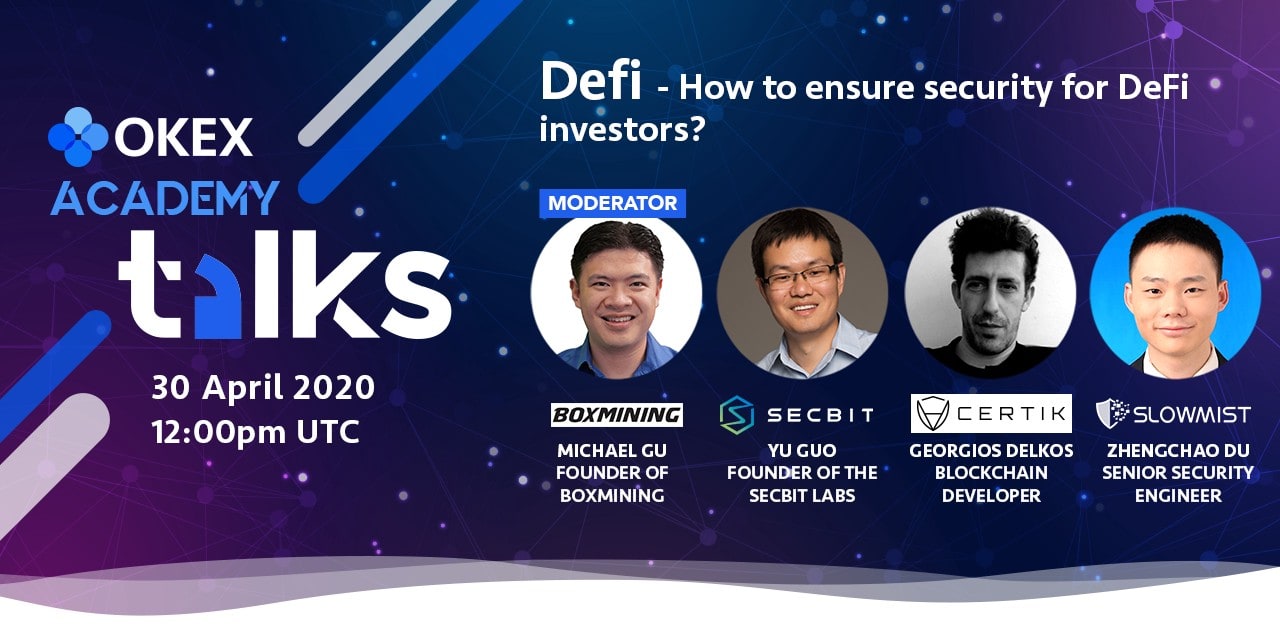
In this special webinar held by the OKex acedemy talks we assemble 3 Blockchain security experts to discuss how to improve security in DeFi.
Bitcoin Mining is the process of using specialized computer hardware to earn Bitcoin. The annual production of Bitcoin via mining is $3.5 Billion dollars, with most of that Bitcoin going to Bitcoin miners. As miners earn rewards in Bitcoin, their profits can change greatly on market conditions – making Bitcoin mining a high risk / high reward industry. Anyone can join the Bitcoin network and become a miner. In fact originally Bitcoin can be mined on all personal computers and commonly available hardware. However, in 2020, specialized hardware called Application Specific Integrated Circuits (ASICs). These machines mine Bitcoin at a very efficiency.
[wp-compear id=”5139″]
Bitcoin is now a household name. For an invention that is just over a decade old, this is certainly remarkable. A mysterious entity by the name Satoshi Nakamoto launched Bitcoin in 2008 as an alternative to central bank currency. Bitcoin mining is an alternative to obtaining Bitcoin on top cryptocurrency exchanges. Miners often sell Bitcoin on Over-the-Counter brokers to generate passive income.
Decentralization is a central tenet of Bitcoin. Essentially, no single person controls either the issue or functioning of Bitcoin. This system can, therefore operate and transfer funds from one account to another without centralized control.
Centralized control of a financial system is pretty easy. How then, does a decentralized ecosystem like Bitcoin work? The important question therefore is; how does the ledger automatically update transactions without giving either entity power to control to entire blockchain?
How Bitcoin Mining Works
The basic feature of Bitcoin is the open-source nature of the Bitcoin protocol. This means that anyone can access and update the Bitcoin code. Similarly, anyone can update the Bitcoin ledger of transactions. All that needs to be done is for your computer to guess a random number that solves an equation from the system.
The more powerful your computer is, the more guesses it can make per second. Accordingly, having a powerful computer exponentially increases your chances of “guessing right”. This allows you to add the next “block” of bitcoin transactions to the existing chain.
A more complicated representation is as follows. On the one hand, you have your miner that makes “guesses”. If your mining equipment makes the right guess, you get the right to add the next block of transactions to the blockchain. The block you create is sent to other computers so that they can validate it. At the same time, other computers in the network validate the block and update their copies of the Bitcoin blockchain. More computing power translates to greater frequency of making the right guesses. However, in line with natural rules of probability, it is virtually impossible for one computer to get it right all the time.
This process is what Bitcoin mining entails in a nutshell. Computers compete to add the next block and in the process generate new blockchain which automatically goes into the network. The computer that solves the block earns a “block reward” and some transaction fees on the transactions entered into the blockchain. Uniquely, the process of validation is automatic and does not rely on centralized control. Miners can decide to hold the bitcoin they create or trade it to other bitcoin community members.
Bitcoin Mining Hardware
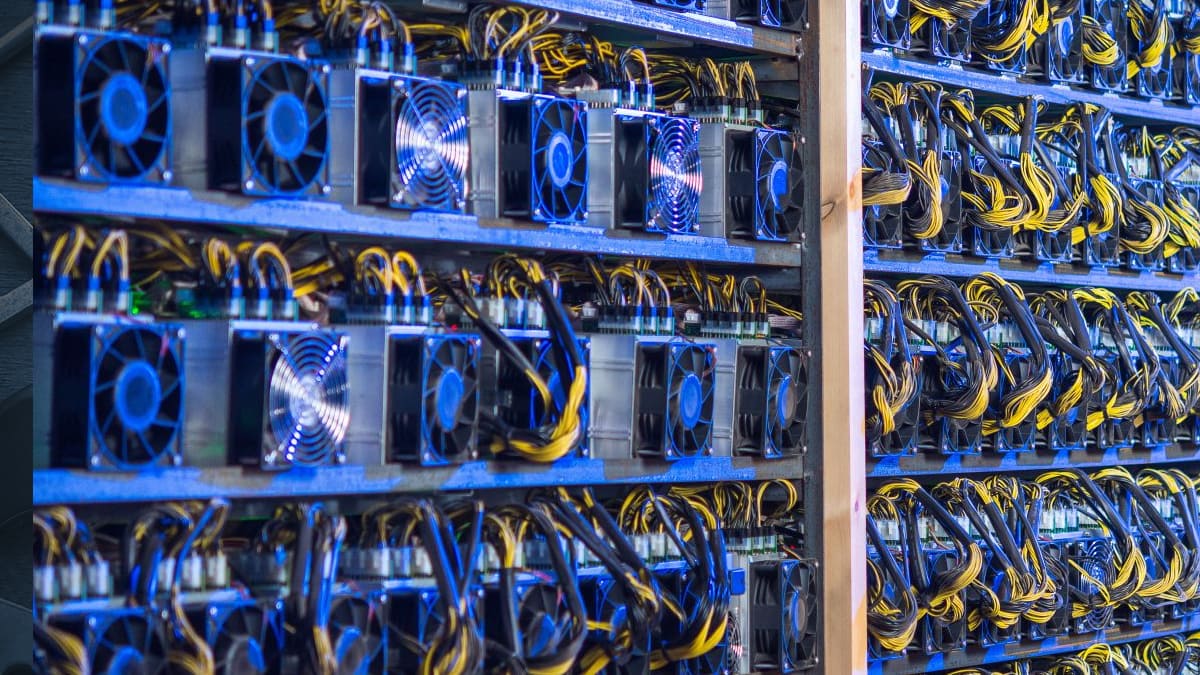
In order to profitably mine Bitcoin, you’ll need specialized hardware called ASICs. These machines are designed to specifically mine Bitcoin’s SHA256 algorithm – in essence they only do one thing but do it well.
[wp-compear id=”5139″]
Mining Difficulty
Perhaps, you are thinking, if it’s that straightforward, what makes Bitcoin valuable? Well, Satoshi Nakamoto in anticipation of this made mining difficulty increase as computing power increased. The mining difficulty automatically adjusts to the increase in cumulative network computing power as more miners get involved.
AThe reason for this is to keep Bitcoin inflation in check. See, if there is a steady stream of Bitcoin, it is easier to have stable rollout process. When Bitcoin was first launched, you could profitably mine Bitcoin using a personal home CPU. As Bitcoin became more popular, miners moved to GPU (Graphics processing Units) to carry out more calculations. A GPU can enhance a computer’s computing power to the equivalent of 30 regular PCs.
Later, ASICs (Application Specific Integrated Circuits) came about. These were hardware equipment specifically to mine Bitcoin. Currently, they represent the gold standard in Bitcoin mining equipment and have occasional updates themselves. These ASICs have a higher “hash rate”, measured in hashes per second. Hash rate is the number of “guesses” the device can make per second. Consequently, the higher the hash rate, the higher the chance of earning bitcoins.
Check out our video below to learn more about Bitcoin mining devices!
Bitcoin mining-what do they use?
Mining Pools
Even with top of the line mining equipment, the current mining landscape is incredibly competitive for individual miners. This has given rise to mining pools where miners combine computing power to compete effectively. If the pool successfully adds a block to the public chain, the pool spreads the reward among its members.
Currently, about a dozen large mining pools dominate Bitcoin mining. Mining pools charge you pool fees for participating which is something that can affect your profitability.
Top Bitcoin Mining Pools
According to safestbettingsites.co.uk experts, there are 2 factors to consider when picking a Bitcoin mining pool – the location of the pool and it’s market share. The top priority would be location – the closer the pool is to you geographically the better. This is because sometimes due to network latency, shares that are mined could be “stale” – as new blocks are created rendering older blocks obsolete. It’s also important to know that Chinese servers are behind the Great Firewall of China, meaning that connections could periodically break. This means that choosing a server with low latency and close geographical location would give the highest yield.
The second factor is the market share of the pool. The larger the market share, the more consistent the rewards. This is because blocks are continuously mined by the pool, and hence they can pay out at a consistent rate. This reduces the impact of the randomness of block creation.
We recommend finding a pool close to your location with a high market share.
Electricity Costs
Electricity is a major factor in Bitcoin mining. Bitcoin mining is certainly an electricity-intensive affair. This is because ASIC rigs have high computing power which the process of mining Bitcoin requires.
The high power consumption is in both powering the miner and cooling the machines which get really hot. This is why mining farms have cropped up in cold areas like Iceland to take advantage of natural cooling.
So, Is Mining Profitable?
This is a question that needs perspective. Mining on a personal PC is definitely not going to be profitable. This is because simple computers simply cannot compete with ASIC rigs and mining pools in terms of making more “guesses”.
So, the more computers you have and the faster your computer is- the greater your chances of generating the correct number and earning Bitcoin. Thus some people have entire farms of expensive computers to increase their chances.
Currently, the block reward is 12.5 BTC for every block mined. Thus, you can only profitably mine Bitcoin with sophisticated equipment. Bitcoin mining farms are popular mining method to gain some of the block reward. Block rewards are set to half in 2020, reducing the mining rewards by 50%. This event is known as the “Bitcoin Halvening“. The current estimated date for the Halving is 13th of May 2020, after which the block reward will decrease from 12.5 to 6.25 bitcoin per block.
One more obvious factor as to whether mining is profitable is the price of Bitcoin at any given time. Miners need to balance this with the expense of mining Bitcoin itself.
Bitcoin Network Hashrate
The Bitcoin Network Hashrate is currently above 120,000,000 TH/s. This means that if the hashrate of the network is coming for Antminer s17 (currently most popular type of Bitcoin ASIC), it would require 2.1 Million units. This would consume 5.4 Billion Watts of electricity, which is enough to power a small city! Mining rewards are split according to hashpower, with larger miners getting a high proportion of the daily Bitcoin mining reward.
Summary
In summary, the following are factors which affect the profitability of mining Bitcoin:
Hashrate;
Block reward;
Mining difficulty;
Power consumption;
Pool fees; and
Bitcoin’s price at any given moment.
Bitcoin mining is, therefore, a complicated task.
However, investing significantly in a large mining pool is the most efficient way to go about it. The current circumstances make individual mining simply a waste of time when done on a small scale.
Nonetheless, it is still an activity that many investors have a significant stake in. The reality, however, is that the task will get progressively difficult with time and a select few with significant hashing power and cheap electricity will thrive.
2020 is a huge year for Bitcoin mining. Huge changes to the mining ecosystem – changes that will spark another “gold rush” for mining. This will be spearheaded by two factors – the release of new more efficient mining hardware known as ASICs and Bitcoin halvening. The release of new hardware will give new players a bigger advantage in mining due to the efficiency factor – new ASICs generate more hashpower with less power. (https://www.sliderrevolution.com) We’re already seeing large funds like Fidelity Investments building large mega-watt mining facilities in North America and other continents. You can hare about the North America mining explosion in this podcast. This marks the return of mining as a major investment opportunity this year.
Table of Contents
Cryptocurrency Mining is a $6 Billion+ USD per year industry
Sizes of Exchange, Mining, DeFi and ICO industries respectively
One well-kept secret of the mining industry is the huge profits being generated by cryptocurrency miners (Bitcoin, Ethereum, DASH and Monero mining). Let’s start off with an industry Fact – every day $19,000,000+ USD dollars worth of cryptocurrencies are being produced by miners across the world. This means a total of $6.8 Billion dollars will be mined in 2020 alone. The biggest currency being mined is Bitcoin – with a 1,800 bitcoin being produced per day totalling to a value of $15,833,340 USD. To put everything into perspective, the ICOs only raised a total of $371 Million in 2019 according to icodata.io. Mining is currently the second largest industry behind exchanges (source: Bloomberg).
Miners upgrading and replacing older hardware (often confused with “miner capitulation”)
Ironically the miners have perpetuated myths such
as “mining is not profitable” or “the bitcoin mining death spiral” to deter
new players coming into this profitable space. Many reports in 2019 have
featured erroneous calculations that Bitcoin mining is not profitable. This is
because researchers have incorrectly assumed that miners are getting
expensive commercial electricity costs of $0.07-12 cents per kilo-watt
hour. This is far from the truth – mining operations receive considerable
discounts as they purchase low priority power (meaning they will get cut off
grid in the event of a surge in power usage). The actual figure is in the range
of $0.01 – $0.03 per kw/h. This means miners are generating large amounts of
profit. It is the biggest industry in the blockchain space, and yet it is
surrounded by both mystery and false information.
New
Hardware (ASICs) is game changing
New high efficiency Bitcoin mining hardware is coming in 2020 will be a huge game changer. Bitmain will be releasing the new Antminer s19 based on the 7nm manufacturing process. Competing ASIC manufactures are also making new chips, with Innosilicon and Canaan hot on the heels. This die shrink increase the hashpower of chips whilst reducing power consumption at the same time. These two factors mean these new units will be more efficient – the biggest factor contributing to Bitcoin mining profitability.
Hashr8 – New MiningOS
New operating systems dedicated for mining cryptocurrencies such as Hashr8 are also being launched this year. These OSes will make it easier for commercial, enthusiast and retail miners to improve mining efficiency and management. This is a huge positive trend for the industry as a whole as it makes professional tools mainstream and accessible to the general public. This will level the playing field and reduce the gap between large-scale miners.