Tag: ai model

  • Setting Up OpenClaw with Discord: A Complete Step-by-Step Guide

    Setting Up OpenClaw with Discord: A Complete Step-by-Step Guide

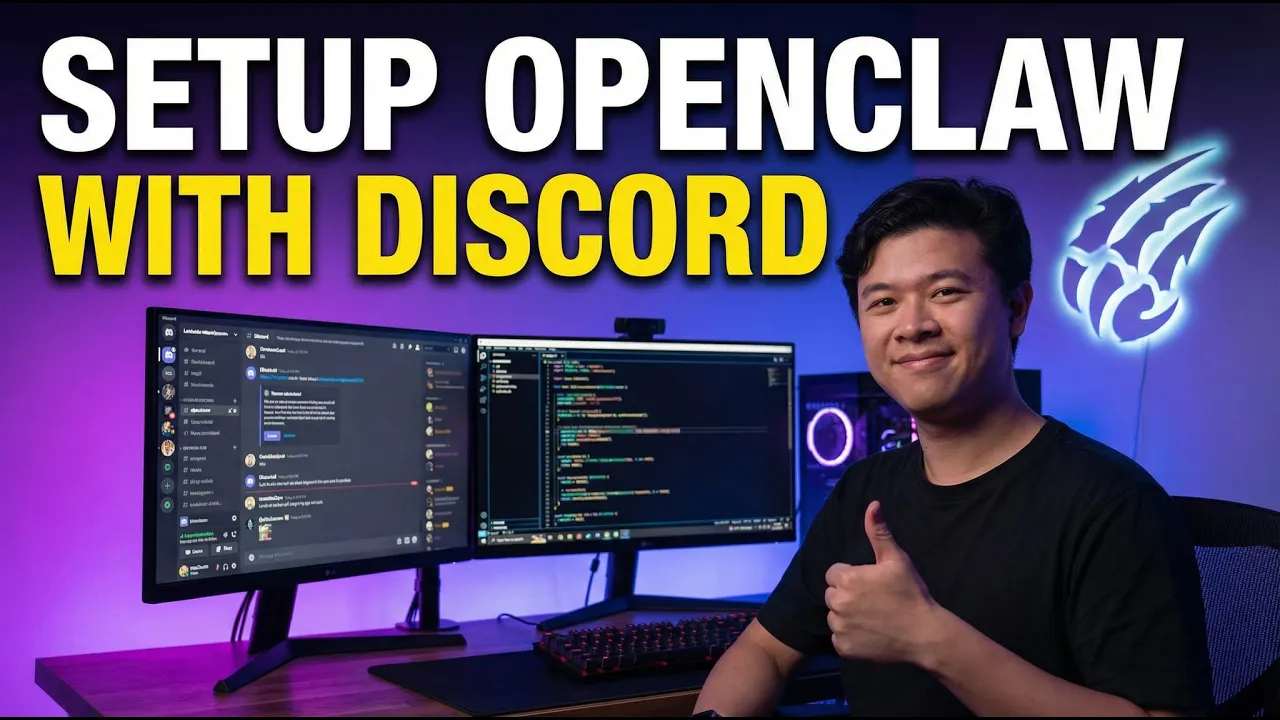
    In the rapidly advancing world of AI agents and collaborative tools, integrating platforms like OpenClaw with Discord offers a powerful way to streamline team workflows and bot interactions. This article provides an in-depth, hands-on guide to this setup. Whether you’re a developer, AI enthusiast, or team leader looking to enhance collaboration, this article distills the key insights and steps from the video to help you get started seamlessly.

    Why Integrate OpenClaw with Discord?

    Discord stands out as an ideal platform for OpenClaw due to its structured environment, which keeps interactions “clean, tidy, and neat.” Unlike cluttered chat interfaces, Discord allows you to create dedicated channels for specific bots or tasks—for example, a “Stark” channel for research and presentations or a “Banners” channel for summarization. This setup facilitates both human-bot and bot-bot collaborations, making it easier to manage multiple AI agents without chaos.

    This integration turns Discord into a collaborative hub, where teams can assign tasks, monitor progress, and isolate discussions using threads. It’s particularly useful for users already familiar with AI tools like Claude AI, Grok AI, or Cursor AI, as it builds on similar concepts in prompt engineering and agentic workflows.

    Step-by-Step Setup Process

    While OpenClaw offers an agent-based setup option (via chat commands), we recommend the manual method for its higher reliability—noting that agent-driven attempts fail about 75% of the time.

    1. Create a Discord Application and Bot

    • Head to the Discord Developer Portal at discord.com/developers and create a new application.
    • Give your bot a name (e.g., “Bob”), upload an image, and add a brief description.
    • In the “Bot” section, enable key intents: “Server Intent” and “Message Content Intent.” These allow the bot to interact properly within servers.
    • Reset and copy the bot token—treat this as highly sensitive information and never share it.

    2. Configure OpenClaw

    • Launch OpenClaw and run the command openclaw configure.
    • Paste in your Discord bot token when prompted.
    • Specify the target Discord server and channel ID. To find these, enable Developer Mode in your Discord settings (under User Settings > Advanced), then right-click on the server or channel to copy the ID.
    • Confirm the pairing to link OpenClaw with Discord.

    3. Restart the OpenClaw Gateway

    • Execute openclaw gateway restart to activate the connection. This step ensures smooth communication between the AI agents and your Discord setup.

    4. Invite the Bot to Your Server

    • Back in the Discord Developer Portal, navigate to “OAuth2” > “URL Generator.”
    • Select scopes like “Application Commands” and “Bot,” and grant permissions (e.g., Administrator for simplicity, but use cautiously).
    • Choose “Guild Install” if it’s a private server.
    • Generate the URL, paste it into your browser, and authorize the bot to join your server.

    Once invited, the bot should appear in your server. Initially, it may only respond when mentioned (e.g. @Bob), but you can configure it to reply to all user messages for broader interaction.

    Post-Setup Tips and Best Practices

    After integration, optimize your setup for efficiency:

    • Use Threads for Focused Tasks: Start a new thread (e.g., “Research Task”) to keep bot interactions isolated and organized. This prevents channel clutter and makes it easier to track specific projects.
    • Team Management: Limit channel access to avoid overwhelming the space with too many users or bots. Discord’s structure shines in small, focused teams.
    • Security Emphasis: Always prioritize token security to prevent unauthorized access.
    • Customization: Adjust bot behavior in OpenClaw settings for reply preferences or additional features.

    In the video, we also touch on broader applications, such as using this setup for vibe coding, no-code AI development, or even Web3 AI projects, making it versatile for various workflows.

    Troubleshooting Common Issues

    If things go wrong—such as the bot not responding or gateway failures, stick to manual configuration over voice or agent commands for stability. If you’re new to this, spending time in Developer Mode will make IDs and permissions easier to handle.

    Tools and Models Mentioned

    • OpenClaw: The core AI agent framework, praised for its configurability.
    • Discord Developer Portal and OAuth2: Essential for bot creation and permissions.
    • Related ecosystems: Mentions of Claude AI, Grok AI, and tools like Minimax or GLM-5 for complementary AI tasks.

    Final Thoughts: Is This Setup Right for You?

    This integration transforms Discord from a simple chat app into a robust platform for AI-driven collaboration, ideal for developers experimenting with agent swarms or teams handling complex projects. While the initial setup requires some technical know-how, the payoff in organization and efficiency is significant. As AI tools continue to evolve—think o1 models or advanced prompt engineering—this guide positions you to stay ahead.

    This article captures the essence for quick reference. For the full walkthrough, including screen shares and demos, watch our video on YouTube!

  • KimiClaw Review: Is It Worth the Hype and the Price?

    KimiClaw Review: Is It Worth the Hype and the Price?

    In the ever-evolving landscape of AI tools, KimiClaw has emerged as a hosted version of the popular OpenClaw platform, promising seamless integration and ease of use. Released on February 18, 2026, this article provides hands-on insights into KimiClaw’s deployment, performance, and comparisons to alternatives. Here’s a comprehensive breakdown based on the analysis.

    What is KimiClaw? A Quick Introduction

    KimiClaw is essentially OpenClaw hosted on Kimi’s servers, accessible directly from the Kimi dashboard. The setup is remarkably simple—one-click deployment makes it appealing for beginners looking to get started quickly without dealing with complex installations. The reviewer, who upgraded to the $39 per month plan specifically for testing, highlights this ease of use as a initial positive. However, the excitement fades as deeper evaluation reveals significant shortcomings.

    This tool is positioned within the broader ecosystem of AI models like Claude AI, Grok AI, Cursor AI, and the o1 model, but KimiClaw aims to stand out by leveraging Kimi’s infrastructure. Tags from the video also nod to related topics such as vibe coding, prompt engineering, and Web3 AI, indicating its potential applications in coding workflows and no-code AI development.

    Key Criticisms: Where KimiClaw Falls Short

    The review doesn’t hold back on the drawbacks, painting a picture of a product that feels underdeveloped and overpriced:

    • Missing Integrations and Features: Users might expect KimiClaw to incorporate Kimi’s unique capabilities, such as the “nano banana unlimited slide generation” for AI-powered presentations. Unfortunately, these features remain isolated and inaccessible within KimiClaw, limiting its utility.
    • Server Location Issues: Hosted in mainland China, the servers introduce potential hurdles for global users. Services may be blocked in certain regions, and latency or data compliance concerns could arise, making it less ideal for international projects.
    • Outdated Software: KimiClaw runs on OpenClaw version 2.13, which lags behind the latest releases. This means users miss out on recent improvements and optimizations available in newer versions.
    • Inadequate Memory Setup: A major flaw is the lack of proper memory configuration, including vector embeddings for better context retention and search. The reviewer references a prior video on enhancing AI agents with vector embeddings and OpenAI keys, emphasizing how this omission hampers performance.

    Overall, the hosted version is described as “basic” and lacking the depth of a self-managed setup. For those handling AI coding, experiments, or crypto-related tasks, these limitations could be deal-breakers.

    Cost Analysis: $39/Month vs. Alternatives

    At $39 per month, KimiClaw’s pricing comes under fire for not delivering commensurate value. The reviewer argues that the cost is unjustified given the stripped-down features and backend opacity. Instead, they strongly advocate for self-hosting OpenClaw on a budget-friendly VPS for as little as $2 per month. This approach offers full control, access to the latest versions, and transparency over processes—benefits that far outweigh the convenience of Kimi’s hosting.

    For users already on Kimi’s “Allegretto” plan (which includes generous free usage allowances), the best strategy is linking an external OpenClaw instance via API key rather than relying on the built-in KimiClaw. This hybrid setup maximizes Kimi’s powerful model without the extra expense.

    Recommendations and Better Options

    The verdict is clear: Skip the upgrade and save your money. Here’s the key advice from the review:

    • Learn Self-Hosting: Invest about 30 minutes in following a installation guide (linked in the video) to set up OpenClaw yourself. It’s empowering and unlocks more features without proprietary restrictions.
    • Explore Alternatives: The video teases upcoming comparisons with models like Minimax (noted as the cheapest option at version 2.5) and GLM-5. Other tagged tools such as Claude AI and Grok AI are suggested for those seeking robust AI for coding and workflows.
    • Community Feedback: As a new channel, BoxminingAI encourages comments and suggestions, hinting at future content on testing these alternatives for OpenClaw compatibility.

    The reviewer expresses hope that Kimi will address issues like server location and feature integration in future updates, but for now, custom setups reign supreme.

    Final Thoughts: Proceed with Caution

    KimiClaw’s one-button simplicity is tempting, but its limitations make it a poor choice for serious users. In a market flooded with AI innovations—from vibe coding tutorials to advanced prompt engineering—this tool doesn’t quite measure up. If you’re dipping your toes into AI for beginners or exploring AI crypto and Web3 applications, start with free or low-cost alternatives and build from there.

    For the full hands-on demo and timestamps, watch our video on YouTube. What are your experiences with hosted AI tools? Drop your thoughts below!

  • Top AI Models in February 2026: A Comprehensive Overview

    Top AI Models in February 2026: A Comprehensive Overview

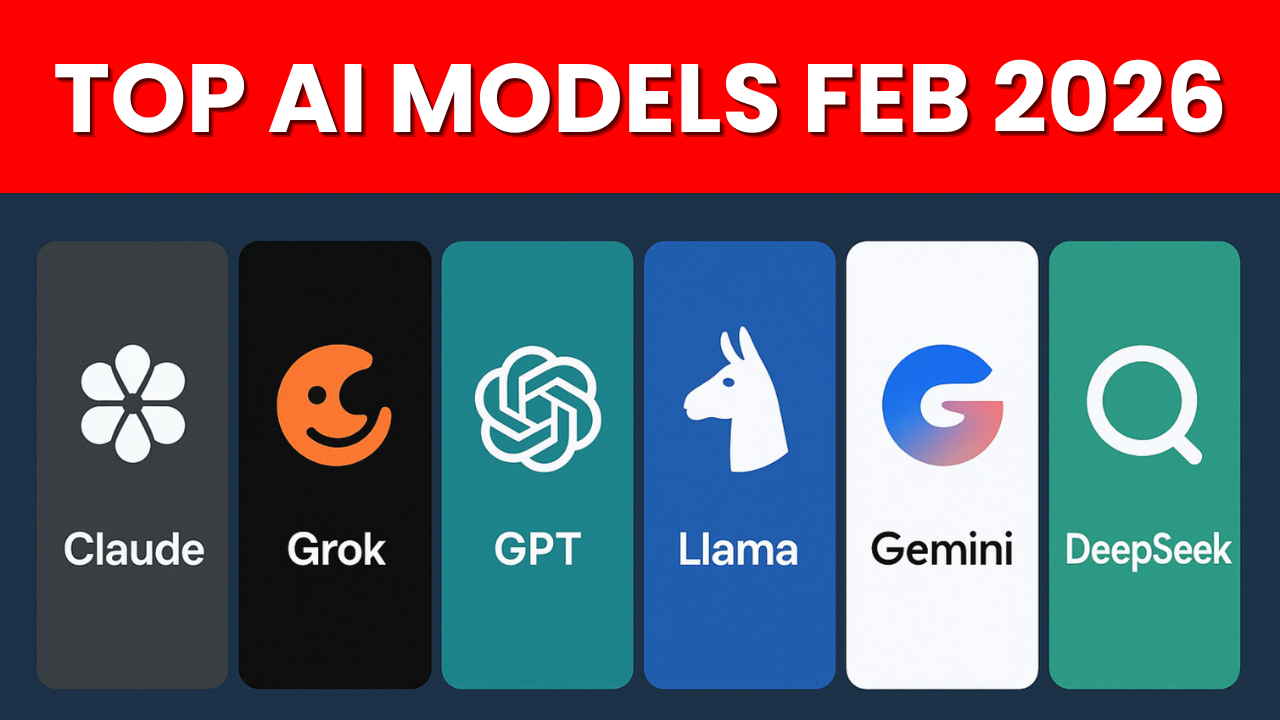
    In the fast-paced world of artificial intelligence, February 2026 has proven to be an exceptionally dynamic month. With major releases like Grok 4.20 and Sonnet 4.6 hitting the scene right after this analysis was recorded, it’s clear we’re living in an era of rapid innovation. Drawing from extensive hands-on testing, this article breaks down the leading AI models from both the US and China, highlighting their strengths, costs, and practical recommendations for users ranging from beginners to advanced developers.

    US-Based AI Models: Powerhouses with a Price Tag

    The United States continues to dominate in high-end AI capabilities, particularly in coding and complex problem-solving. Here’s a closer look at the standout models:

    • Opus 4.6 by Anthropic: Often hailed as a “coding juggernaut,” Opus excels in programming tasks. Its chatty, explanatory style makes it ideal for beginners who need step-by-step guidance. For larger projects, such as building dashboards or resolving major bugs, it’s unmatched in efficiency and reliability. However, this comes at a steep cost—users can easily spend $200 per day on intensive usage, with pricing around $5 per million tokens. If you’re handling sensitive data or mission-critical work, Opus’s superior intelligence justifies the expense. youtu.be
    • GPT 5.3 Codeex by OpenAI: This model shines in streamlined coding workflows, especially when paired with OpenAI’s client tools. Unlike Opus, it focuses on getting the job done with minimal chit-chat, making it a go-to for efficient task completion. It’s a strong contender for developers who prioritize speed over verbosity.
    • Google Gemini: While Google is pushing boundaries with its new “thinking model,” it hasn’t gained much traction among coders. The consensus is that it’s playing catch-up, often overshadowed by Opus and GPT in practical applications.
    • Grok: Integrated seamlessly with X (formerly Twitter), Grok is a daily essential for staying updated on real-time news. However, it falls short in coding prowess compared to its peers.

    These US models represent the pinnacle of AI performance, but their high costs can be prohibitive for casual or budget-conscious users.

    Chinese AI Models: Affordable Alternatives Closing the Gap

    China’s AI landscape is exploding with cost-effective options that deliver near-top-tier performance. These models are particularly appealing for their “dirt cheap” pricing and generous usage limits, making them accessible for a broader audience.

    • Minimax: This is a top recommendation for its unbeatable value in coding tasks. At just $20 per month, the coding plan provides 300 prompts every five hours—plenty for agentic workflows without the fear of overuse. Performing at about 95% of Opus’s level, it’s more than sufficient for most users. One caveat: it handles contexts up to 120K tokens well but may degrade beyond that, similar to older models like ChatGPT 3.5. youtu.be
    • Kimmy: Featuring an innovative “agent swarm” for collaborative task handling, Kimmy offers powerful capabilities. However, its $40 monthly plan makes it less cost-effective for long-term use. It’s worth trying for a month to explore its features before potentially switching to more economical alternatives.
    • GLM5: Alongside Minimax, GLM5 is highlighted as a solid choice for those diving into AI learning and development.

    Chinese models are narrowing the performance gap with US counterparts, offering substantial savings without sacrificing much in quality. For everyday projects, they’re often “more than good enough.”

    Other Notable Tools and Broader Insights

    Beyond the big players, several other options deserve mention:

    • Local Llama: Running on personal hardware, this model delivers around 80% of top-model performance at zero additional cost. It’s a favorite for users dodging subscription fees.
    • Open Router: A versatile platform for experimenting with various models and plans, emphasizing cost efficiency.
    • Deep Seek: Once a market disruptor, it’s no longer at the forefront.

    The rapid evolution of AI, especially around events like Chinese New Year, underscores the need for flexibility. Avoid locking into one ecosystem—switching models frequently allows you to leverage emerging capabilities. For critical tasks involving passwords or user data, weigh the costs carefully and opt for proven reliability like Opus.

    Final Thoughts: Navigating the AI Boom

    As AI continues to advance at breakneck speed, choosing the right model boils down to your needs, budget, and risk tolerance. For high-stakes work, invest in US models like Opus. For value-driven alternatives, turn to Chinese options like Minimax. Whether you’re a coder building the next big project or just exploring AI, tools like these make it an exciting time to be involved.

    For the full discussion, check out our video on YouTube. What are your thoughts on these models? Share your experiences and suggestions for future topics!

  • 5 Must Know TIPS Before You Use OpenClaw

    5 Must Know TIPS Before You Use OpenClaw

    OpenClaw has become a go-to tool for building collaborative AI systems that handle everything from research to automation. But like any powerful tech, it requires some fine-tuning to perform at its best. In this article, I share five practical tips to optimize your OpenClaw setup, drawing from real-world experience with crashes, memory issues, and cost management. Whether you’re new to agents or a seasoned builder, these tweaks can save you time, money, and headaches.

    We also have a full video guide if you need visual assistance.

    Tip 1: Activate Memory and Embeddings for Persistent Context

    One of the biggest pitfalls with OpenClaw agents is their tendency to “forget” important details between sessions. Without proper memory setup, your agents start fresh every time, losing track of projects, API keys, or passwords.

    The fix? Ensure embeddings are enabled by integrating an OpenAI or OpenRouter key. This allows agents to retain context over time. In the video, I demonstrate how to test this: Simply ask your agent, “Are embeddings working?” If not, add the key and verify. Pro tip: Monitor your OpenAI dashboard for embedding usage to confirm it’s active. This simple step prevents repetitive queries and keeps your workflows smooth—essential for long-term tasks like ongoing research or bot maintenance.

    Tip 2: Leverage Multiple Agents and Threads for Organized Workflows

    Cluttered agent interactions can lead to irrelevant responses and lost efficiency. The solution is to scale with multiple agents and dedicated threads.

    Create new threads for specific topics, inviting agents to join as needed. This keeps discussions focused—e.g., one thread for coding, another for research. I showcased building a custom dashboard within OpenClaw to track activities: It displays what each agent is handling, highlights gaps, and provides real-time visibility. This not only tidies up your setup but also boosts relevance, making complex multi-agent swarms feel manageable. If you’re running Discord bots like I do, this organization is a game-changer for scalability.

    Tip 3: Quick Recovery from Crashes and Configuration Errors

    Agent crashes are inevitable, especially after tweaking settings or updating files. But you don’t need to restart from scratch—let the agent fix itself!

    Navigate to your OpenClaw directory and instruct the agent to “study the folder and resolve errors.” In my demo, this resolved a Discord connection issue by leveraging the agent’s knowledge of its own codebase. It’s like having a self-healing system: The agent identifies problems (e.g., misconfigured APIs) and applies fixes on the fly. This tip saves hours of debugging, particularly for non-coders, and keeps your workflows uninterrupted.

    Tip 4: Fine-Tune Heartbeat Intervals for Proactivity Without Breaking the Bank

    Heartbeats are OpenClaw’s way of keeping agents alive and responsive, pinging the AI model periodically (default: every 30 minutes) to check status or trigger actions like reminders.

    While useful for time-sensitive tasks, they can rack up costs—especially with premium models. The key is tuning: Instruct your agent to adjust the interval to something longer, like one hour, via simple commands. Monitor usage on platforms like OpenRouter to balance proactivity and expenses. In the video, I explain how this prevents unnecessary token burn while ensuring agents stay engaged for critical ops, like market alerts in crypto setups.

    Tip 5: Secure Secrets Management with .env Files

    Handling sensitive data like passwords or API keys is tricky—agents often delete them from notes for security reasons, leading to repeated failures.

    Shift to .env files, a standard coding practice. Store credentials there (e.g., not in GitHub uploads) and instruct your agent to reference them. This enhances reliability without exposure risks. My demo shows how this prevents agents from “forgetting” secrets mid-task, making your setup more robust for real-world applications like automated trading or data scraping.

    Conclusion: Level Up Your Agentic Game Today

    These five tips—memory activation, multi-agent organization, crash recovery, heartbeat tuning, and secure secrets—transform OpenClaw from a basic tool into a powerhouse for agentic workflows. They’re born from hands-on testing in my own systems, helping you avoid common traps and unlock efficiency.

    If you’re building AI agents, try these out and see the difference. For more deep dives, check the full video. Join our Discord community at https://discord.com/invite/boxtrading to share your OpenClaw setups, troubleshoot together, or collaborate on bots.

    Follow me on X at @boxmining or subscribe to the BoxminingAI Youtube channel for the latest AI tips and reviews. Let’s push the boundaries of what’s possible with agents—see you in the next one!

  • OpenClaw Acquired by OpenAI: A Game-Changer for Agentic Workflows?

    OpenClaw Acquired by OpenAI: A Game-Changer for Agentic Workflows?

    In a surprising move that’s shaking up the AI landscape, OpenAI has acquired OpenClaw, the innovative agent-building tool created by Peter Steinberg. Confirmed by OpenAI CEO Sam Altman himself, this acquisition brings Steinberg into the OpenAI fold while ensuring OpenClaw remains an open-source project under a dedicated foundation. If you’re into AI agents, workflows, or just the latest tech drama, this is big news.

    Drawing from my recent video breakdown, let’s unpack what happened, why it matters, and what could come next for users like us building multi-agent systems.

    The Acquisition Breakdown: From Side Project to OpenAI Powerhouse

    OpenClaw started as a humble side project by Peter Steinberg, initially called Cloudbot and built around Anthropic’s Claude model. Funded entirely out of Steinberg’s pocket (thanks to his previous success selling a PDF company for over $100 million), it quickly gained traction for its ability to create swarms of AI agents that handle complex tasks collaboratively.

    The acquisition was announced via posts from both Altman and Steinberg. Key details:

    • Steinberg Joins OpenAI: He’s stepping in to “bring agents to everyone,” leveraging his expertise to supercharge OpenAI’s agentic capabilities.
    • OpenClaw’s Future: It won’t vanish—it’s staying open-source under an MIT license, with OpenAI committing to support a foundation that keeps the project alive and evolving.
    • No “Purchase” Per Se: As an open-source tool, this is more of a talent acquisition than buying IP, but it’s a clear signal of OpenAI’s investment in agent tech.

    Why OpenAI over Anthropic? That’s the million-dollar question (or perhaps more, given Steinberg’s track record). Despite OpenClaw’s roots in Claude, Steinberg chose OpenAI—maybe for their resources, vision, or something else. Either way, it’s a bold pivot that’s got the AI community buzzing.

    Why OpenClaw Blew Up and What It Means for Everyday Users

    OpenClaw exploded in popularity because it democratizes agent creation. In my own setup, my team uses it daily for everything from research to automation on our Discord bots. It’s model-agnostic, meaning it works with any AI backend, which is why the acquisition doesn’t spell immediate doom or drastic changes.

    For users:

    • Minimal Disruption: Continue using OpenClaw as before—no forced migrations or feature cuts.
    • Potential Upgrades: With Steinberg on board, expect tweaks optimized for OpenAI models like the rumored GPT-5.3 or Codex. This could mean faster, smarter agents without extra effort on your end.
    • Agentic Workflow Boost: If you’re building swarms for tasks like content generation or data analysis, this could lead to more robust features, making tools like my multi-agent Discord system even more powerful.

    In the video, I shared how we’ve integrated OpenClaw seamlessly—it’s not tied to one provider, so the shift feels more like an enhancement than a overhaul.

    What OpenAI Might Build Next: Speculations and Opportunities

    Looking ahead, OpenAI’s move screams strategy. They’re doubling down on agents, which aligns with their push toward more autonomous AI systems. Possible outcomes:

    • Integrated Features: OpenClaw could get native support for OpenAI’s ecosystem, like better integration with GPT models or enhanced tool-calling.
    • Broader Agentic Tools: Imagine OpenClaw evolving into a cornerstone for OpenAI’s agent frameworks, rivaling or surpassing competitors like Anthropic’s offerings.
    • Community Impact: As an open-source project, contributions could skyrocket with OpenAI’s backing, leading to innovations in areas like multi-agent collaboration or real-time workflows.

    I speculate the deal involved a hefty sum—Steinberg’s no stranger to big exits—but the real value is in accelerating AI agent tech. For us builders, this means access to cutting-edge tools without starting from scratch.

    Closing Thoughts: Congrats to Steinberg and What’s Next

    Huge props to Peter Steinberg for turning a side hustle into an OpenAI acquisition. It’s inspiring for anyone tinkering with AI projects. As for OpenClaw, it’s business as usual with exciting potential on the horizon. I’ll keep using it in my setups and update you on any changes.

    If this piques your interest, check out my video for the full rundown, including live reactions. Stay tuned for my next one on setting up advanced Discord bots with agents. Join our Discord community at https://discord.com/invite/boxtrading to discuss this acquisition, share your OpenClaw tips, or collaborate on AI builds.

    Follow me on X at @boxmining or subscribe to the BoxminingAI Youtube channel for more AI insights. Let’s see how this unfolds—agents are the future!

  • KimiClaw Review: Easy Setup but Is It Worth the $40?

    KimiClaw Review: Easy Setup but Is It Worth the $40?

    Kimi has introduced KimiClaw—a hosted version of OpenClaw powered by their Kimi 2.5 model. Promising seamless agent swarm capabilities for research and automation, it sounds like a dream for AI enthusiasts. But does it deliver? In this article, based on my latest video walkthrough, I’ll break down the quick setup process, run through live tests, highlight the limitations (including no X access and timeouts), discuss data privacy concerns, and compare it to cheaper alternatives.

    We also have a full video guide if you need visual assistance.

    Quick Setup: Launch in Under a Minute

    Getting started with KimiClaw is refreshingly straightforward, especially if you’re already in the Kimi ecosystem. It’s exclusively available on the Allegro plan, which costs $40 per month and unlocks the Kimi 2.5 model, agent swarms, and a 5x quota boost.

    Here’s the step-by-step from my demo:

    • Head to the Kimi dashboard.
    • Click to create or launch a KimiClaw instance—it’s that simple.
    • No need for local installs, server configs, or troubleshooting; everything is hosted.
    • Manage or delete instances with ease.

    In my video, I showed this taking less than a minute. It’s perfect for beginners who want to skip the technical hurdles of setting up OpenClaw locally. However, this convenience comes at a premium—more on that later.

    Live Tests: Agent Swarm in Action

    To put KimiClaw to the test, I ran a live agent swarm demo investigating a timely topic: “OpenAI’s acquisition of OpenClaw.” The swarm handled web searches and summarized key findings effectively, showcasing its potential for collaborative AI tasks like research or batch processing.

    Key highlights from the test:

    • Strengths: Solid web search integration and long-context handling. The agents coordinated well for basic queries.
    • Weaknesses: It timed out on more complex operations, exhibited basic behavior without advanced tweaks, and crucially, had no access to X (formerly Twitter). This is a big miss for real-time social media insights or trend analysis.

    I also checked for additional features, but found no full server or terminal control—limiting deep customization. Overall, it’s functional for entry-level agent swarms but doesn’t push boundaries.

    Limitations and Trust Issues: The Red Flags

    While the setup is a breeze, KimiClaw isn’t without flaws. Here’s what stood out in my evaluation:

    • No X Access: Can’t fetch posts or trends, which hampers tasks needing social data.
    • Timeouts and Basic Functionality: Extended runs often fail, and it lacks the sophistication of fully customizable setups.
    • No Full Control: You’re locked into Kimi’s hosted environment—no terminal access for mods.
    • Data Privacy Concerns: As a Chinese company (Moonshot AI), servers are hosted in China. This raises questions about data logging, retention, and potential monitoring. I advise caution if handling sensitive info.

    These aren’t deal-breakers for casual use, but they’re significant for power users. I spent the $40 to test it thoroughly—so you don’t have to!

    Alternatives: Better Value with Self-Hosting

    Why pay $40/month when you can get similar (or better) functionality cheaper? I compared KimiClaw to self-hosted options:

    • OpenClaw on Zebar: Set up for around $2/month. Full control, no subscriptions, and easy integration.
    • OpenRouter for Kimi Model: Access Kimi 2.5 directly at ~$0.50 per million input tokens and $2 per million output tokens. Pair it with your own OpenClaw for flexibility without the lock-in.

    These alternatives offer more customization, lower costs, and better privacy. If you’re not tied to Kimi’s dashboard, they’re the way to go. In my video, I emphasized that KimiClaw is “mid”—convenient for Allegro subscribers needing quick agent swarms, but overpriced otherwise.

    Conclusion: Convenience vs. Cost—You Decide

    KimiClaw shines in simplicity and integration for Kimi users, making agentic workflows accessible without setup headaches. However, its limitations in access, control, and privacy, combined with the $40 price tag, make it a tough sell compared to affordable self-hosted setups. If you’re deep in the Kimi ecosystem and value ease over everything, give it a shot. Otherwise, explore the alternatives for better bang for your buck.

    Tested it honestly in my video to cut through the hype—check it out for the full demo. Join our Discord community at https://discord.com/invite/boxtrading to discuss AI tools, share setups, and collaborate on agent swarms.

    Follow me on X at @boxmining or subscribe to the BoxminingAI Youtube channel for more no-BS reviews. Let’s optimize our AI game—see you in the next one!