Author: Michael Gu

  • Lightning Node Setup Guide (With Docker)

    Lightning Node Setup Guide (With Docker)

    This guide will get you started setting up a Lightning node to send and receive Bitcoin on the lightning network. The node will be always online – you’ll be able to send and receive lightning transactions at any time. We’ll be using a Docker container allow for faster deployment and updating. Remote Lightning nodes are great for anyone who wants to make some extra money routing lightning network transactions for passive income.

    • Difficulty: Intermediate
    • Time required: 1h
    • Setup type: LND with Docker
    • Prerequisites: Ability Deploy nodes on AWS or DigitalOcean

    This guide has been adapted from ZAP-tutorials – including a few updated commands.

    Note: For this guide we’re going to be using the Bitcoin Testnet – a test environment where we can make mistakes without serious consequences. Once you’re comfortable with deploying the node, you can switch over to the bitcoin mainnet by replacing “testnet” with “mainnet” in the code.

    Remote Node Setup with Docker

    For this setup, you’ll need to setup your own remote node on a cloud hosting service such as AWS or DigitalOcean. In this example, I deployed a t2.micro instance on AWS running Ubuntu Server 18.04. You can deploy any type of server, so long as it supports Docker you’re good to go.
    Note: must have 1GB or more of RAM on the VPS. Anything less will result in frequent crashes.

    To get Docker, install it with these commands

    sudo apt update
    sudo apt install docker.io

    Installing the Lightning node

    For the container, we’ll be using an image built by Zap – it’s already pre-configured with everything you need to get started (lnd, lndconnect). The first step is to create a “volume” which allows our data to be preserved in case the container is destroyed in the future. The volume we are creating is called “lnd-data”.

    Note: some installations docker don’t require “sudo”, if you run into problems, run docker without elevated “sudo” privileges.

    sudo docker volume create lnd-data

    Next step we’re going to run the latest image from “lnzap/lnd:latest”. We’re going to connect to the Bitcoin Testnet – this way if we make any mistakes we won’t be losing real Bitcoin.

    We are also connecting to public neutrino clients – this greatly lowers the hard disk requirements for this node.

    Before executing, make sure you fill in your IP in the YOUR_EXTERNAL_IP section.

    sudo docker run -v lnd-data:/lnd --name=lnd-node -d \
      -p 9735:9735 \
      -p 10009:10009 \
      lnzap/lnd:latest \
      --bitcoin.active \
      --bitcoin.testnet \
      --debuglevel=info \
      --bitcoin.node=neutrino \
      --neutrino.connect=testnet1-btcd.zaphq.io \
      --neutrino.connect=testnet2-btcd.zaphq.io \
      --autopilot.active \
      --tlsextraip=YOUR_EXTERNAL_IP \
      --externalip=YOUR_EXTERNAL_IP:10009 \
      --rpclisten=0.0.0.0:10009

    Congrats! You got your Lightning Node up and running.

    Create a Bitcoin Wallet

    Now its time to create a Bitcoin Wallet. You can do this directly by interacting with the lnd-node via Docker.

      sudo docker exec -u lnd -it lnd-node lncli --network=testnet create

    You can create a new address with the following command

      sudo docker exec -u lnd -it lnd-node lncli --network=testnet newaddress np2wkh

    This will give you a Bitcoin address where you can send Bitcoin to to fund the account. Since we’re on the Bitcoin Testnet, you can use https://coinfaucet.eu/en/btc-testnet/ to fund the account for free.

    PRO TIP: You can check if your node is working by scanning port 10009 and 9735 using https://www.yougetsignal.com/tools/open-ports/. This is a great way to check if there are any firewalls blocking your node from communicating and if the overall setup is successful. Running nodes will always have an “OPEN” status for the 2 ports.

    Connecting the Remote node with ZAP iOS app

    The ZAP app on iOS allows you to easily access the node remote node, send transactions, manage channels and more. The ZAP app is free and downloadable from https://zap.jackmallers.com/

    To connect ZAP with the remote node, run this command:

     sudo docker exec -u lnd -it lnd-node lndconnect --bitcoin.active 

    This gives you a QR code you can scan with your wallet (“Connect to a Remote Node”) to complete the binding. (Note: Older guides ask you to use zapconnect which no longer works and will give you an error).

    Creating Channels with other nodes

    To start making payments, you’ll need to create Lightning Channels with other nodes on the network. A great place to start finding other nodes is via https://1ml.com/testnet/. This is a list of all the testnet nodes.

    You can scan the QR code for various servers via “Settings” -> “Manage Channels” -> “+”

    Helpful Debugging tools and commands

    Now you’re all done – the remote node is running and funded. To test out the configuration you can use these following tests:

    Check LND status

    This command checks for status of lnd and if you’re fully synchronized with the Bitcoin Network.

    sudo docker exec -u lnd -it lnd-node lncli --network=testnet getinfo

    Checking LND Logs

    If there any problems and issues, it’ll usually show up in the logs. Access the latest 100 log messages using this command

     sudo docker logs --tail 100 -f lnd-node  

    Restarting the container

    When you restart the node, you’ll need to restart the container. For this you’ll need to know the container ID, then starting it.

    sudo docker ps -a 
    
    sudo docker start CONTAINER_ID

    Unlocking the Wallet

    Every time you restart the container, you’ll need to unlock the wallet:

     sudo docker exec -u lnd -it lnd-node lncli unlock

  • Proof of Stake explained

    Proof of Stake explained

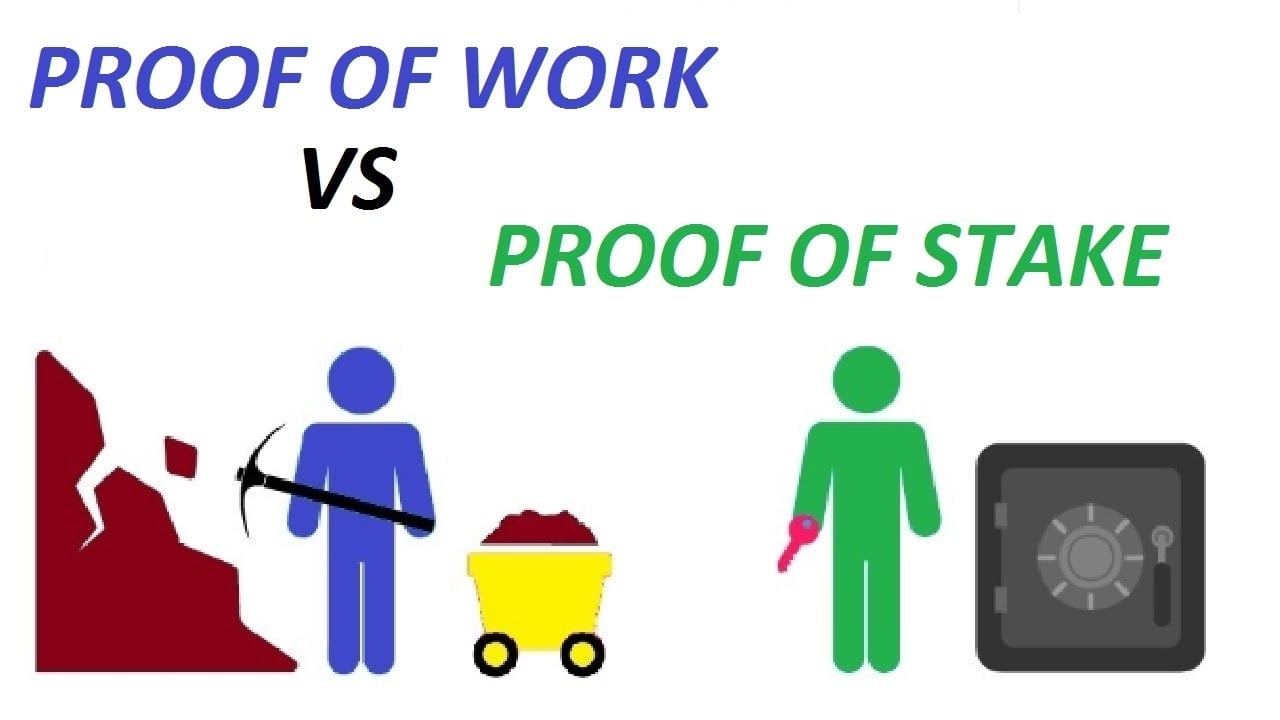
    Proof of stake (PoS) is a consensus mechanism introduced in 2011 to improve upon the current most popular algorithm in use – Proof of Work (PoW). The main advantage of Proof of Stake two-fold it improves the speed of the Blockchain and also reduces the amount of electrical waste. Instead of consuming vasts amounts of computational power to “mine” for cryptocurrencies, Proof of Stake elects stakeholders to validate transactions. This election processes depends on the amount of cryptocurrency held by a node, hence the name Proof of Stake.

    What is Proof of Stake

    To truly understand PoS it is easier if we also explain the current system being used by Ethereum, and that is proof of work (Ethereum Mining). So basically when Ethereum is transferred, miners group that up into a ledger called a block chain and to do this they have to solve a puzzle. In creating this blockchain, a lot of computational power is also used. The amount of reward you get for creating a blockchain is a transaction reward. However, this depends on how much work you ie. how fast you can calculate and solve the puzzle.

    So this is all going to go away once proof of stake comes along. With proof of stake, you don’t actually solve any puzzles. You remove the puzzle solving element from the system and thus change the way the reward is distributed. So instead of proving how fast you can calculate with hashrate, you need to prove how much Ethereum you own. You do this with something called a master node. When you create a master node, you have to lock up a certain amount of Ethereum to prove that you have it and rewards are distributed according to how much proof of stake you have. One can create multiple master nodes with a lot of Ethereum inside and you’ll earn more through this method.

    Will Ethereum adopt Proof of Stake?

    So you might have heard that Ethereum is considering changing its distributed consensus system to something called proof of stake. Here, we will try to explain what this is as well as how it may affect you.

    So you might have heard that Ethereum is considering changing its distributed consensus system to something called proof of stake. Here, we will try to explain what this is as well as how it may affect you.

    How does this affect me?

    So that’s going to be extremely interesting for everyone. We’ve seen proof of stake currencies before. Dash is one example where 50% of the rewards is done by mining and the other 50% is done by proof of stake. And there is PIVX which is 100% proof of stake. The advantage of proof of stake is huge. One benefit is that you no longer have to do the calculations which mean you save a lot of computational power. Another one is that you actually lock up Ethereum. By locking up Ethereum you effectively create more scarcity which means the price should go up.

    So hopefully, it’s going to happen sometime this year. To do so, the people in charge of Ethereum have to make sure the code is ready and stable. And they also have to make sure they have the support of the miners. That’s going to be an interesting thing to see in the coming months because if the miners don’t support this move then what can happen is that it might break up Ethereum again just like last year.

    But there are mechanisms to help along this process. Ethereum actually has kind of a ‘time bomb’ that would blow up if the switch is not made. The switch has always been planned and it’s in a sense been hard coded to happen sometime so that’s kind of interesting to see how this will progress.

    Miners also do not need to worry they will be without a job. There are other currencies that can be mined with the current hardware. For example, if you use AMD GPUs, you can start mining Zcash which is also extremely profitable right now. So I do see this as being very exciting for everyone.

  • CryptoDaily’s Fabulous Camera and Gear Setup

    CryptoDaily’s Fabulous Camera and Gear Setup

    Cameron runs the wonderfully informative and hilarious CryptoDaily Channel. Something we notice straight away the high quality render of his rugged beard and perfect bed hair. Today we find out what camera and recording gear CryptoDaily uses to create his awesome content, direct from the man himself!

    CryptoDaily Camera and Gear Setup
    CryptoDaily Camera and Gear Setup

    Main Camera – Canon 1DX Mark ii Lens – Canon EF 11-24mm f/4L USM Lens Viewfinder – SmallHD 5inch
    This camera again is totally unnecessary, but it gives great colour accuracy, sharp image and smooth 50fps. The 4k quality is quite important because it allows you to punch in without losing image quality.

    Side Camera – Canon 80D Lens – Canon EF-S 10-18mm f/4.5-5.6 IS STM Lens This is the part of my setup I am least happy with. The lack of 4k quality on it is in stark contrast to the main camera, but provides 50fps smooth image also. The ultrawide lens is important so it can be quite close to you in an office without looking like it is.

    Display – 49-Inch 5k Super Ultrawide Display – Dell U4919DW
    Totally unecessary, but it does allow me to have notes on the side, my main window being recorded in the middle, and my OBS on the other side as though it was a triple monitor setup with no bezels.

    Mic – Shure SM7B Mixer –
    Yamaha MG10XU I love the sound of this mic. I’ve tried many in the past, nothing is better for podcast audio in my opinion.

    Monitor Speakers – Audioengine A5+
    Ideally you edit with a pair of quality headphones, but I try to be wireless where I can. This are monitor speakers so ideally what I am hearing is what most people will also have recreated when watching my videos.

    Keyboard – Logitech G613

    Mouse – Razer Mamba Wireless

    PC – GTX 1080 graphics card, 8700K CPU, 32gb Ram, Maximus X Motherboard, NZXT AIO, NZXT Case, 4TB Samsung SSD.

  • Binance Chain Guide

    Binance Chain Guide

    *Update: Added information about Binance Chain Memos and new withdraw panel

    Binance just launched the Mainnet for Binance Chain – and there are significant changes such as a “BNB token swap” that you MUST know about. The Binance Token (BNB) will no longer be on the ethereum chain (ERC-20 Token), instead it will be fully migrated to Binance chain (BEP-2). This means if you hold BNB on an ethereum wallet, you must pay special attention or you might accidentally send it to the wrong address.

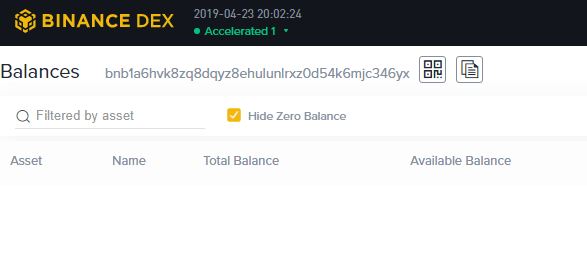
    Binance Dex with new BNB address
    New BNB addresses are shown on Binance DEX

    Read more about Binance and features in our Binance Exchange Review

    Binance BNB Token Swap

    Binance has started the token swap for $BNB tokens. In the future, BNB address will begin with “bnb……” format instead of the ethereum “0x…” address.

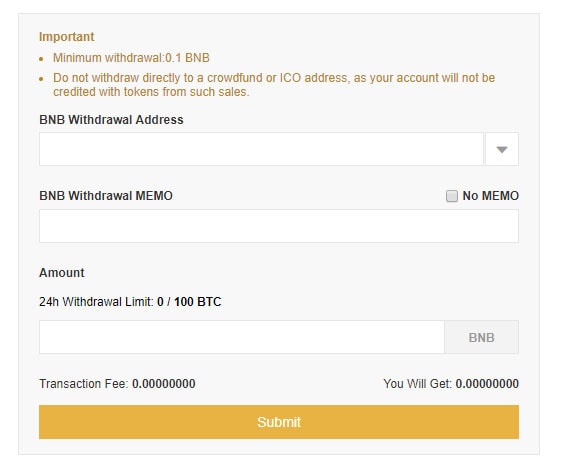
    New BNB withdraw page uses the MEMO feature that is unique to Binance Chain
    • BNB kept on Binance.com will automatically be swapped – no manual operation required. The new withdraw page will automatically use the Binance Chain address.
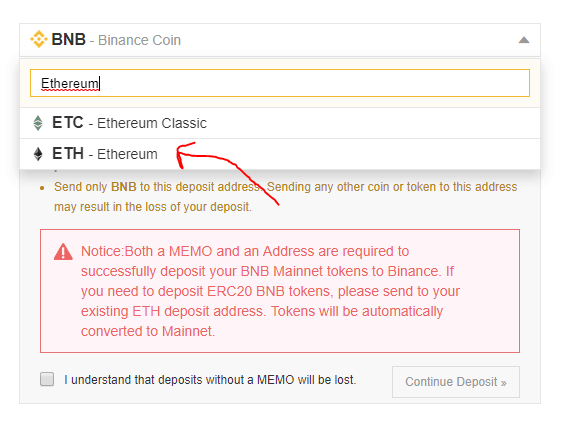
    • To deposit Ethereum based tokens based on the ERC-20 standard, $BNB tokens can be sent to the Ethereum deposit address on the Exchange.
    Old ERC20 Binance BNB tokens can be deposited in “Ethereum” address for converstion

    Once ERC20 BNB is deposited into the exchange, the token will be automatically swapped.

    BNB Token Supply and Functionality

    In terms of total supply, the amount of BNB remains the same. The initial supply of BNB will be 200,000,000 and 11,654,398 BNB will be burned on Binance Chain. Binance will burn ERC20 BNB tokens to keep the total supply constant as the token swap takes place

    Binance DEX

    Binance DEX has officially launched at Binance.org. This Decentralized Exchange is designed for advanced users who want to keep self-custody of their cryptocurrency assets (as opposed to centralized exchanges where funds are kept by exchanges).

    Currently Binance DEX support their own token standard, the BEP2 token. For coins to be listed on the DEX, they need to be migrated to the Binance Chain. Whether coins are willing to migrate depends on what features they need:

    • Faster transactions – Accelerators and small number of Validators mean confirmation times are much faster
    • Centralized – Validators are pre-authorized and consensus is not open to general public
    • No smart contract support – Binance Chain is transaction only

    Binance to Challenge Ethereum as top Token Issuance Platform?

    With the introduction of the BEP2 token standard, Binance Chain can allow projects issue tokens via Initial Coin Offerings (ICO) or Initial Exchange Offerings (IEO). This feature allows BinanceChain to rival the ERC20 standard Ethereum which has been used by many popular projects such as Basic Attention Token (BAT) and OmiseGo (OMG). What sets BEP2 tokens apart is that it has a faster confirmation time and access to Binance DEX.

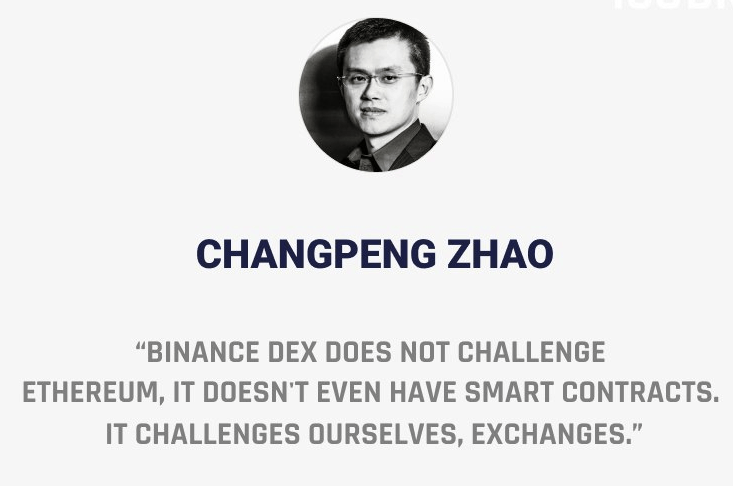
    Whilst many have questioned if the success of Binance Chain would mean the demise of Ethereum, CEO Changpeng Zhao has denied this claim.

    CEO Changpeng Zhao doesn’t see Binance Chain as a competitor to Ethereum

    Currently Mithril (MITH) has chosen to migrate to be the first token to be migrated to the Binance Chain.

    Disclaimer: Cryptocurrency trading involves significant risks and may result in the loss of your capital. You should carefully consider whether trading cryptocurrencies is right for you in light of your financial condition and ability to bear financial risks. Cryptocurrency prices are highly volatile and can fluctuate widely in a short period of time. As such, trading cryptocurrencies may not be suitable for everyone. Additionally, storing cryptocurrencies on a centralized exchange carries inherent risks, including the potential for loss due to hacking, exchange collapse, or other security breaches. We strongly advise that you seek independent professional advice before engaging in any cryptocurrency trading activities and carefully consider the security measures in place when choosing or storing your cryptocurrencies on a cryptocurrency exchange.

  • Binance Hacked for $41,000,00 USD  – are Funds Safe?

    Binance Hacked for $41,000,00 USD – are Funds Safe?

    An unknown group of Hackers stole more than 7000 BTC ($41,000,000 USD*) from Binance, the worlds largest cryptocurrency exchange. Binance reported that the hacker used a combination of phishing exploits and gained access to a large number of “API keys, 2FA codes, and potentially other info”. This marks the biggest hack for Binance.

    For more information about Binance, check out our Binance Review.

    Funds are SAFU

    https://www.youtube.com/watch?v=JS_JKELYsHo

    Binance was able to immediate respond that “Funds are Safe” – they have an emergency fund that can easily cover the $41 Million that were stolen. In fact, it is reported that Binance made a profit of $446 Million in 2018 alone, so this hack can easy be covered by the exchange.

    As a safety precaution, Binance has halted all deposits and withdraws on the exchange for at least 7 days. The purpose of this suspension is to improve exchange security and reduce the impact of the stolen funds. The exchange still has resumed trading at this time.

    We strongly recommended is to keep funds off exchanges and in hardware wallets such as the Ledger Nano X. Exchanges are large targets for hackers – ironically the bigger and more reputable the exchange, the more hackers they attract. Having a Cold Wallet (such as the Ledger or Trezor) allows for storage of cryptocurrency on devices that are not accessible to hackers.

    CZ formally responds to the hack via Youtube

    Decentralized Exchanges to the Rescue?

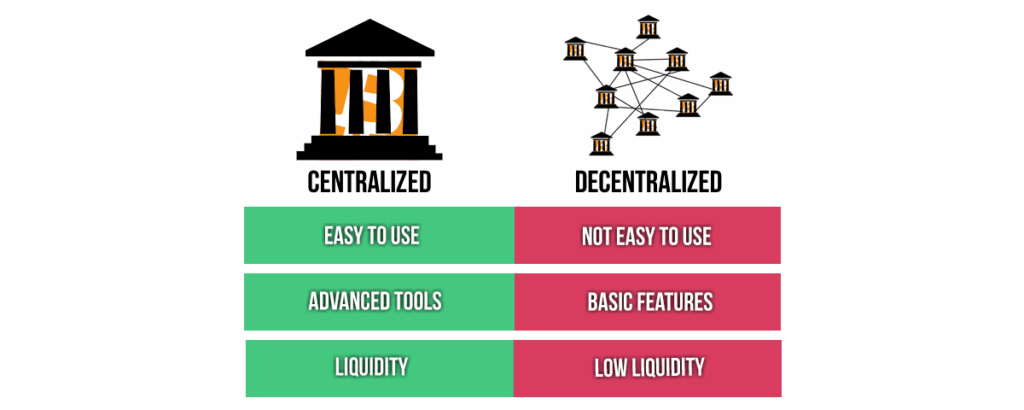
    Decentralized Exchanges might be hard to use, but they offer full custody of funds.

    In light of this hack, Decentralized Exchanges (DEX) are becoming more and more promising. With a DEX, users can keep their own funds and be safe from large hacks and suspension in deposit / withdraws. Binance has already been building a Binance DEX, supported by the Binance Chain.

    Inside Job?

    Various theories have surfaced about the Binance Hack, with some accusing the hack possibly coming for Binance Insiders who know the workings of the exchange and security precautions. Previous Binance talked about their “Big Data” AI which was meant to catch unauthorized withdraws and sim swap attacks

    CZ talks about “Big Data AI” security system

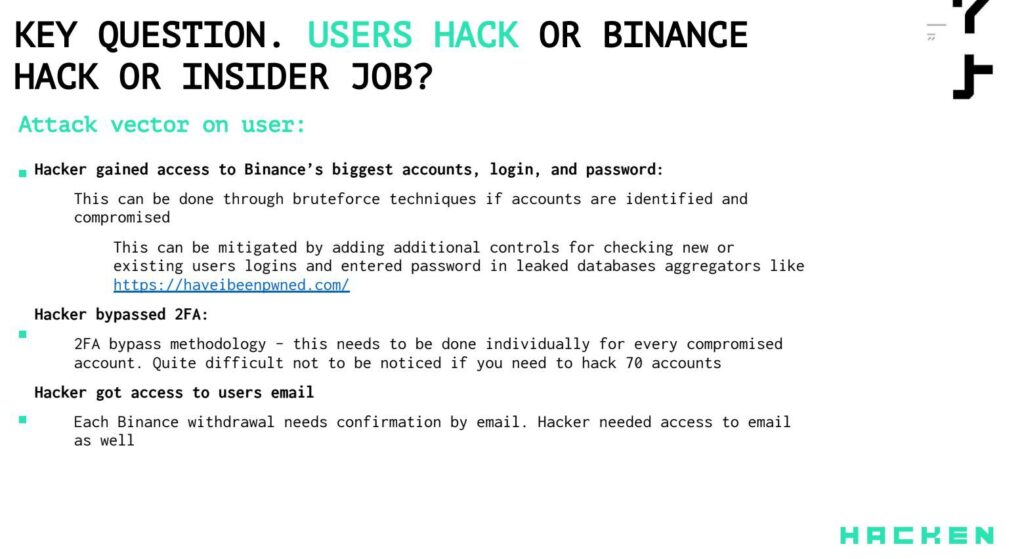
    The hot and cold wallet storage of Binance has been extensively analysed by the Hacken Team for any further information.

    Hacken Analysis of the Binance Hack

    The report showed that Binance had Internal controls for amount sent and manual review. However it seems hacker managed to withdraw amounts that were just under the manual review threshold. It might be possible that the hacker had information about the internal workings of the Binance defense system and how to bypass it. However, there is no conclusive evidence that it was done by someone inside Binance.

    No Rollbacks – Bitcoin is Safe!

    There was a proposal to rollback the hacker’s transaction on the Bitcoin Blockchain after the hack was initially discovered. This would reverse the transaction and “thwart” the hacker. This drew the ire of the Bitcoin community is it recognized that even with $41 M bounty to do a reversal, it would be extremely dangerous and near impossible to collude more than 51% of the hash-power.

    Whilst Binance CEO Changpeng Zhao “CZ” initially humored this idea, it was quickly refuted.

    https://twitter.com/cz_binance/status/1125996194734399488

    Many Bitcoin advocates who are familiar the network also pointed to the impossibility of doing a Bitcoin Rollback:

    *Assuming $5883 per Bitcoin as the time of writing.

  • Secrets of “Darkpools” and unreported trade volume and Bitcoin OTC

    Secrets of “Darkpools” and unreported trade volume and Bitcoin OTC

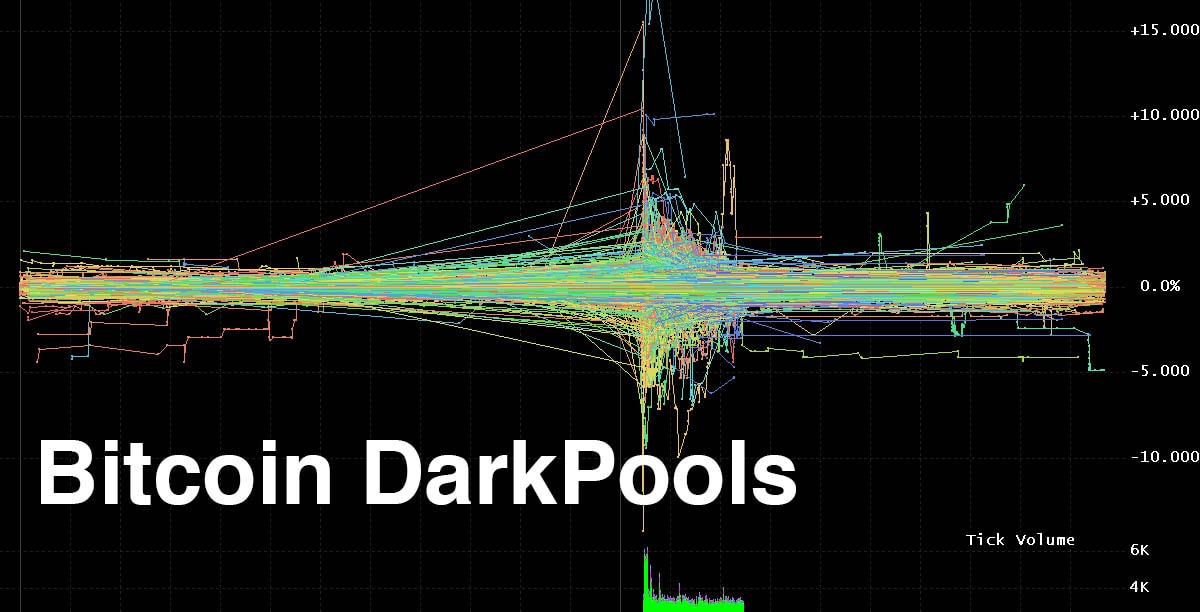
    In Crypto, not all trade volumes are visible – in fact “Darkpools” account for a huge amount of crypto trading and has an enormous impact on cryptocurrency prices. Darkpools include peer-to-peer trading, such as on sites like localbitcoins.com and also Over the Counter (OTC) desks. The reason why it’s unreported is because deals are done privately, for example Peer-to-peer trading can be done in person and with cash, leaving virtually no trace of the transaction ever happening. Large volumes are also traded OTC – this is more organised as private buyers and sellers are matched, with some form of escrow to allow the transaction to take place. OTC desk sometimes even require minimum volumes, like $100,000+ USD to up to 1 Million.

    First things first. What’s an Over the Counter (OTC) desk?

    Traditionally, OTC desks facilitate trading of securities that are not listed on formal exchanges, e.g. the New York Stock Exchange.

    The trading of cryptocurrencies on OTC desks is similar to those in traditional markets.

    OTC desks have a network of buyers and sellers. The trades themselves are facilitated by OTC broker-dealer who will locate and negotiate directly with prospective buyers and sellers over computer networks or by phone.

    This is contrasted from trading over exchanges where the prices and order books are publicly available. For OTC desks, their broker-dealers will negotiate the trade price for you. Trades are also not publicly listed giving the parties privacy.

    Therefore, to fully understand what is going on in the cryptocurrency markets it is important to consider what is also happening at OTC desks. This is because large transactions happen on them on a daily basis.

    What does a trader at an OTC desk do?

    Traders at OTC desks are the broker-dealers mentioned above. Their role is to locate and match buyers and sellers, and negotiate the best deal for all the parties involved.

    Part 1: Crypto trading/ Market Manipulation/ OTC Markets

    Therefore, it is important for traders at OTC desks to have a keen eye on the cryptocurrency markets and be knowledgable of the market trends.

    I had the opportunity to interview Charles Yang, Head Trader at Genesis Block Hong Kong, an OTC desk. In my interviews we discuss what’s really happening at OTC desks away from the public eye. We also discuss his thoughts on the market sentiment.


    Is Tether Safe? Will Bitcoin & Ethereum Recover? 

    Secrets and Insights from an OTC Trader

    Here’s a summary of the key points from the interviews with Charles.

    There is still interest in cryptocurrencies

    Charles observes there is revived interest in cryptocurrencies despite this bear market.

    He notes that a lot of the customers from the OTC desk who were previously dormant have recently contacted them wanting to buy and sell cryptocurrencies.

    The risk of Tether is exaggerated

    Firstly, what is Tether? Refresh your memory with our Tether Explained guide below:

    We’ve seen in recent news that USDT is not fully backed by cash. Instead, Tether is around 75% backed by cash, and the remaining 25% by other securities or loans.

    Confused with what’s happening in this Tether scandal? Check out our video below which explains what is happening and the latest legal action surrounding Bitfinex.

    Despite this, there is still demand for USDT in Asian countries such as China, where they are buying USDT at a premium.

    This is because China bans cryptocurrency exchanges, so retail investors cannot buy cryptocurrencies such as BTC. What they do instead is they first buy USDT through peer to peer merchants, and then enter the cryptocurrency market at a later time when conditions are right. 

    Right now, Bitfinex who is being accused of “losing” customers funds is more at risk. Bitfinex will have to go bust first before people question USDT.

    Charles believes that fundamentally short trading would have less losses because if USDT is at 97% and your prediction is wrong, then your loss would only be 3%. Whereas the opposite would be to bet that it goes to 0.

    Mining is still profitable

    The recent “official news” in China was that cryptocurrency mining has been banned.

    Despite this ban, Bitmain is coming up with new models and generally summer is big for mining because electric costs falls.

    There may be miners who start accumulating and building to maximize their margins 

    Charles notes there is news that big players are scrambling to get cheap damaged mining rigs. They are not the newest models but there are still returns from using them to mine cryptocurrencies.

    So despite the official news about China banning mining the word on the street is that people are buying rigs and locking in contracts for the summer months.

    Simple guide to the aftermath of the Chinese Bitcoin mining ban

    Initial Exchange Offerings (IEOs) are risky, but need not be avoided completely

    If you participate and get allocation you would benefit. But ultimately it is the exchanges that benefit because you need to buy their token to participate.

    For example Binance requires you to buy into IEOs with their BNB token. Of course it’ll be great for you in the short term if you get allocation and the coin pumps. However your risk is that you would be left with the exchange token if you don’t manage to get any allocation after the lottery.

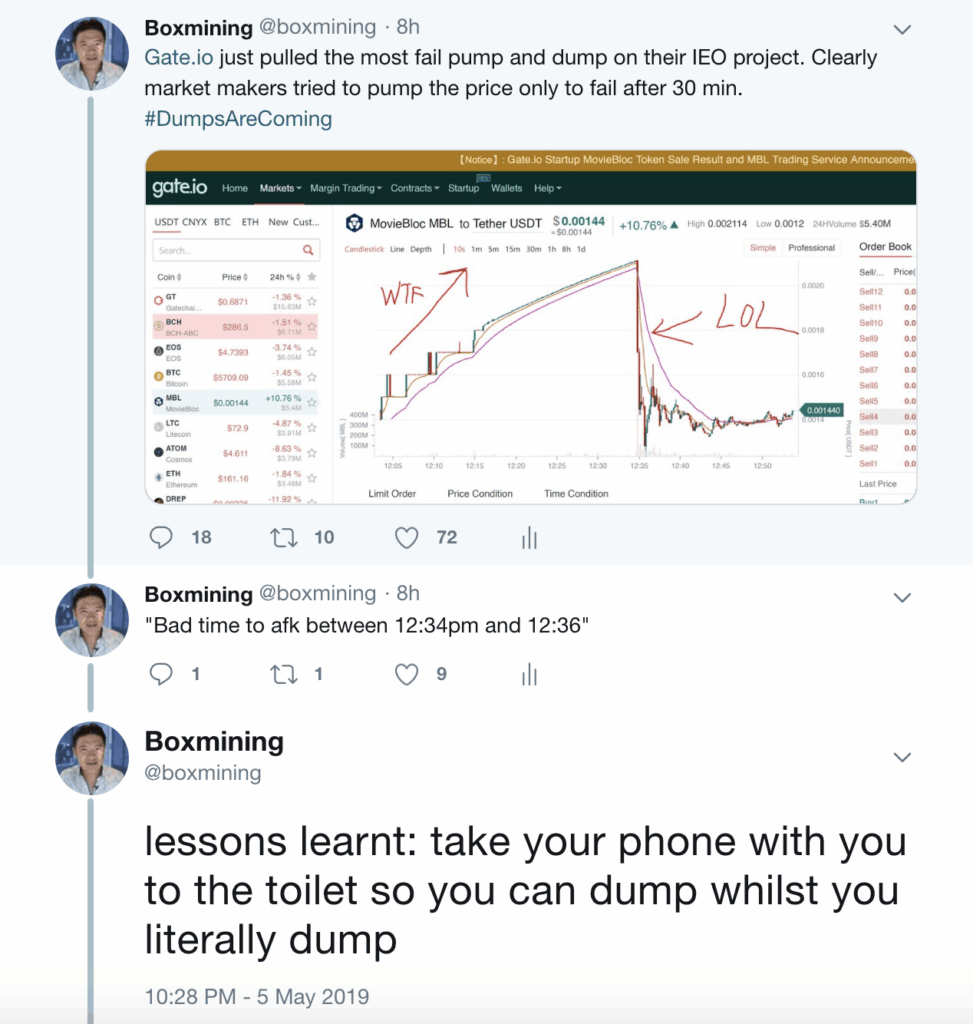
    IEOs are also highly volatile, especially immediately after listing

    It may be better to trade with OTC desks than exchanges

    Charles notices that there is quieter trade flow, so big players looking to buy or sell cryptocurrencies need to offer better prices. Therefore the margin between the buy and sell price is much less. Bigger players also can offer better quotes because of volume. Therefore it may be cheaper to trade with OTCs who deal exclusively with larger orders than exchanges.

    And whilst exchanges require you to have the funds ready at the time of transaction, OTC desks allow you to lock in the prices and settle later. This gives people more flexibility .

    However, depending on who you are, one upside or downside of OTCs is that they are not transparent. So while you can try to gauge whether there is a lot of trade flow through an OTC desk by reading their reports (if any), there is no way you can verify if they are being truthful. On the other hand you can conduct trades privately compared to on exchanges.

    What coins to hold? Bitcoin Bitcoin Bitcoin (BTC)

    Unlike other coins, Bitcoin (BTC) has a 10 year history. There is no founding team or leader. For this reason it is not affected by company politics and is the most decentralised.

    We can see the prices for a lot of tokens crash during the Initial Coin Offering (ICO) crash. Some may be due to the project running out of funds, failing to deliver on its promises or in worse cases the founders and key personnel leaving the project altogether. Studies were shown that over 80% of ICOs in 2017 were scams.

    I was standing in the same spot glued to my phone for 2 hours when this all went down.

    We also see that the ICO game was not fair, some people were able to purchase tokens for a more favourable rate or terms even before the token was listed to the public. This however would never happen with BTC.

    Is day trading profitable? No (sorry)

    For retail investors, day trading is not profitable even for traditional markets.

    This is because retail investors would be bogged down by trading fees, but not all trades are profitable.

    Retail investors are also unprotected from market manipulation. This is especially true for cryptocurrency investing, which is generally an unregulated space.

    Don’t do this

    Conclusion

    Ultimately, trading cryptocurrencies requires exercising caution and doing your own research. One can look at OTC desk reports to have a good grasp of what may be quietly happening with some big players, but at the end of the day, question everything. Also, whilst you may stand to gain several times your initial investment by going into highly volatile IEOs, bear in mind it is designed so that exchanges ultimately win. The most prudent thing to do is to never invest more than you can lose.

    Links

    Buy Bitcoin in Hong Kong – https://buybitcoinhongkong.com/

  • Enjin Wallet becomes first wallet to offer full Binance Chain & all BEP-2 Tokens

    Enjin Wallet becomes first wallet to offer full Binance Chain & all BEP-2 Tokens

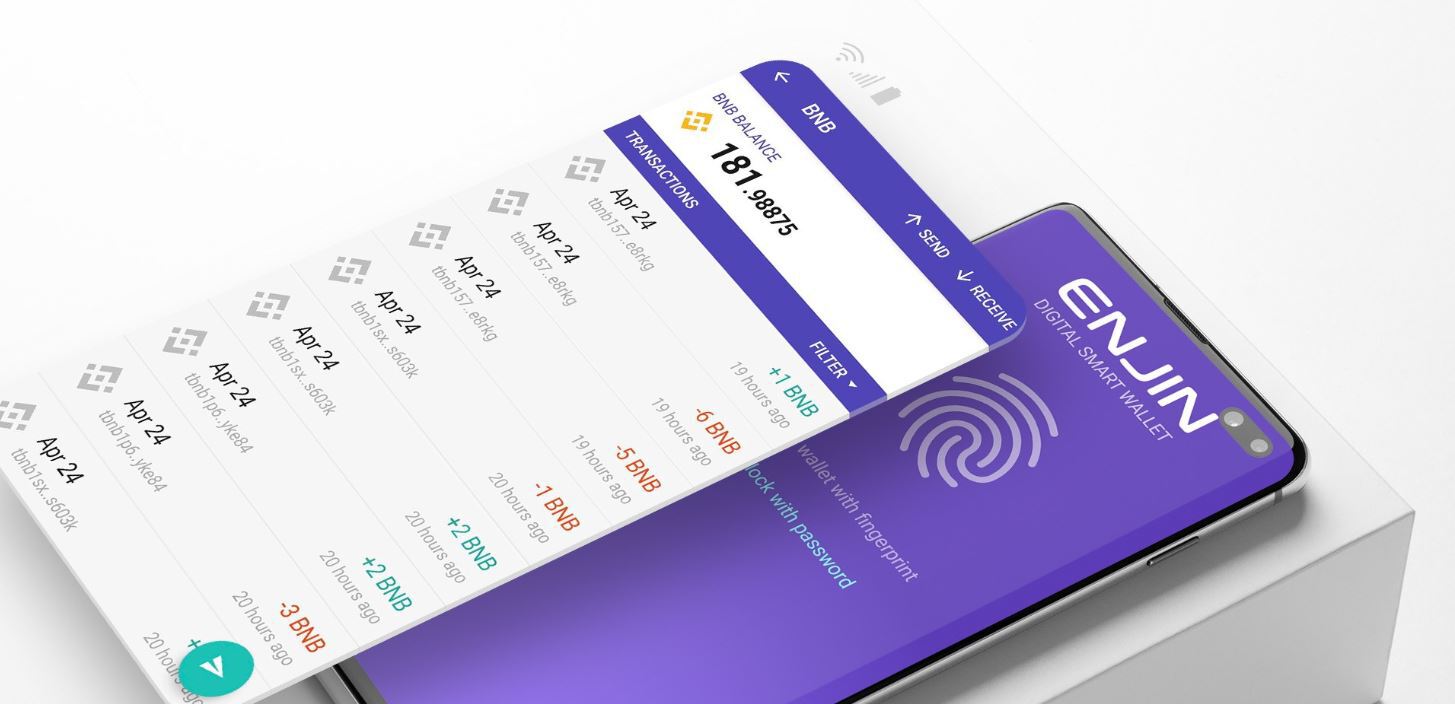
    Enjin Wallet just added full native support for the Binance Chain and all BEP-2 (Mithril, ChangeNow) based assets. This means all Binance Chain assets can now be safely stored on both Android and iOS phones and transferred with ease (with “memo” support). This integrations comes merely a week after the official launch of the Binance Chain mainnet on April 23. Binance Chain boasts fast transactions, transaction finality and support for Binance Decentralized Exchange (DEX).

    For more information about the Enjin Platform, check out our Enjin Coin Guide.

    All Binance Chain assets can be added to the Enjin Wallet

    This initiative is also a step in the right direction for Enjin, coming weeks after their collaboration with Samsung. With their partnership, Samsung Galaxy S10 Blockchain KeyStore will natively support ENJ, ERC-1155, Ethereum (ETH) and Ethereum based tokens.

    “Like Enjin, Binance is a fast-moving, innovation machine — and one that we are proud to throw our support behind through this collaboration and many more to come.”

    Maxim Blagov, Enjin CEO

    New Binance Coin (BNB) address start with “bnb…” instead of “0x….”

    It’s Enjin Wallet is the most secure mobile wallet in the crypto space with a strong private key encryption mechanism and their own secure keyboard which. Enjin team claims these security features gives the wallet “hardware-like security. (www.spinabifida.net) ” To ease navigation, Enjin has a coin management system with features that allow one to customize fees and set limits. 

    Stronger BUIDLers stick together

    Following this incorporation, Ted, lauded Enjin as a “community- and BUIDL-focused.” Apart from BNB support, Enjin also announced their plans of allowing clients to “place orders to Binance DEX’s on-chain order books—without leaving the Enjin Wallet’s secure interface” in coming days.  

    For more information about the Enjin Platform, check out our Enjin Coin Guide.

    “We are excited to have the support of Enjin Wallet on Binance Chain. Enjin users will be able to transact from wallet to wallet on Binance DEX with full custody over their assets, increasing the level of freedom in the community.” 

    Ted Lin, the Binance Chief Growth Officer

    If anything, this announcement complements Binance’s effort of launching a modern, liquid and easy to use decentralized platform effectively creating a liquid market place where participants can exchange digital assets without a third party via Binance Chain, a decentralized network from where the Binance DEX and all other Binance’s operations will operate from. 

    Binance CEO Changpeng CZ Zhao talks about the future of cryptocurrencies

       “Binance Chain is a very simple chain in terms of application, but it can handle very large loads. It is our opinion that the load is more important than the features.”— Changpeng “CZ” Zhao, Binance CEO 

    Clearly, Enjin is strategically positioning itself and will tap on the success of Binance DEX. Besides, the announcement is a testament enough, revealing their code improvement and dedication of prioritizing the user which is the reason why the wallet as a 4.6-star rating at Google Store. 

  • Thundercore will launch on Huobi Lite

    Thundercore will launch on Huobi Lite

    Update: Huobi has released new information about the IEO, with Thundercore (TT) being sold at $0.015 USD.

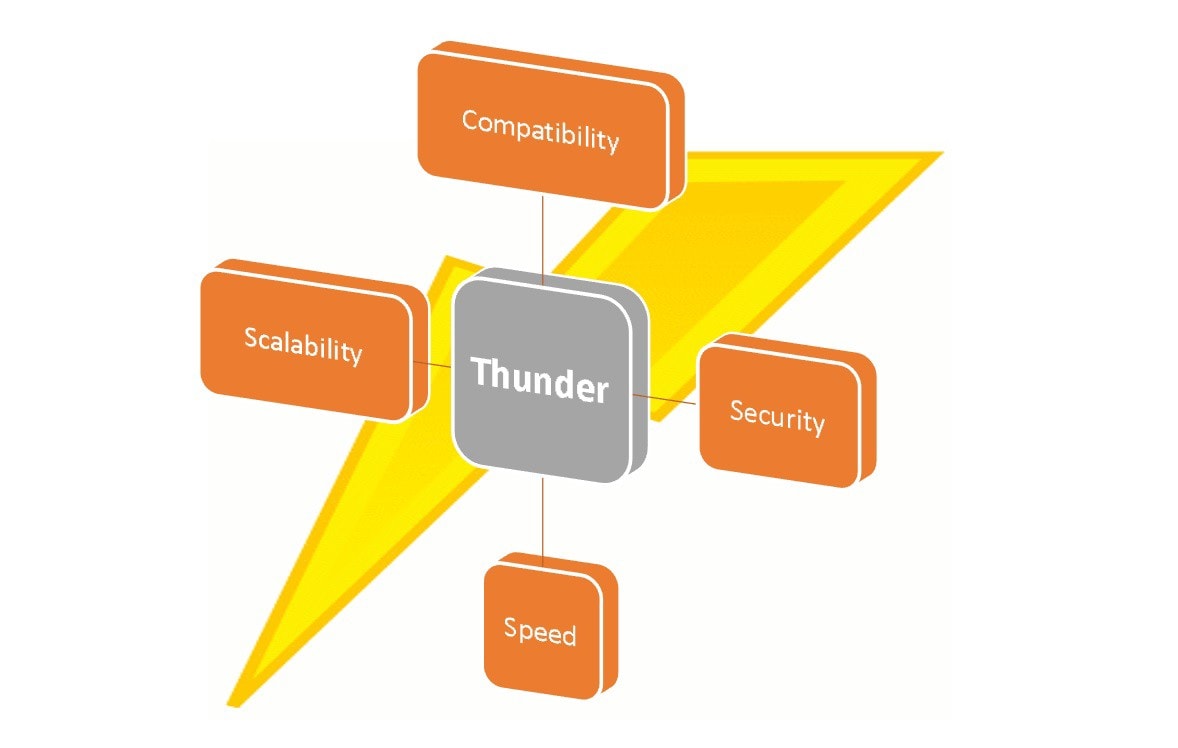
    Thundercore protocol, a revolutionary fast scaling network protocol that can be used to scale ethereum Dapps will be launching on “Huobi Lite” on May 9th. This launch strategy is interesting because of the small investment size given to public – only a $500,000 USDT allocation available for Huobi platform users. Normally Initial Exchange Offerings are in the $1 to $5 Million allocation range. With such a small allocation, it’s unlikely platform users will get a significant quality of ThunderCore (TT) – possibly leading to a sellout in a few seconds.

    For more information about Thundercore, read our Thundercore Guide here.

    OTC trading & Risks

    As Thundercore TT tokens are unlocked, savvy traders have already started speculating on the price of TT. Many OTC desks are offering TT for trade, at prices between 3.5 and 5 cents USD – depend on the region. It’s important to remember that OTC trades may not be safe – there are already reports of scammers pretending trade TT when in fact they don’t have any. Do not trade with unknown strangers.

    What is ThunderCore and how does it work?

    We have produced a video on the scaling protocol summarizing how “Thunderella” – the core consensus mechanism behind Thundercore works.

    Large TT transactions and movements

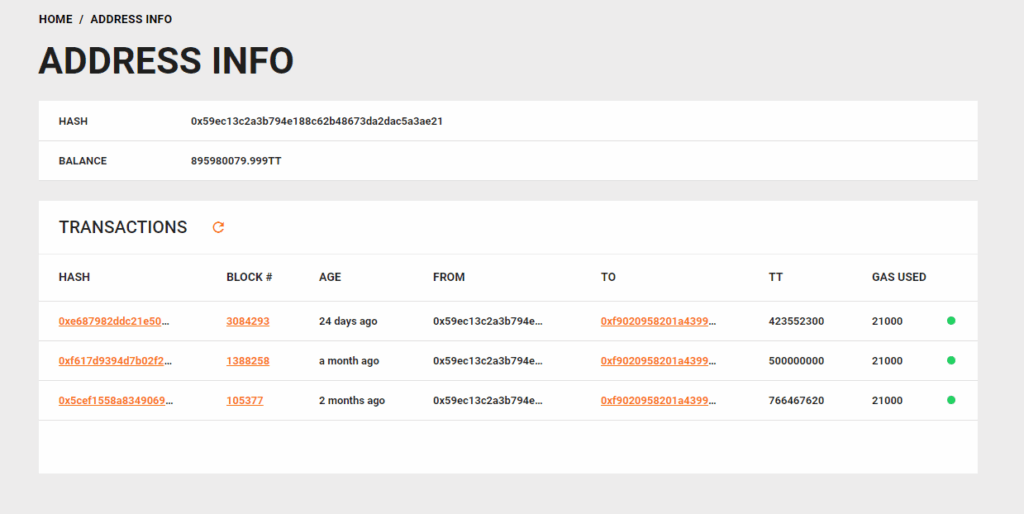
    Some groups have spotted large amounts of TT being transacted, such as this following transaction of 895980079.999TT ($30 M USD worth) being moved:

    https://scan.thundercore.com/address/0x59ec13c2a3b794e188c62b48673da2dac5a3ae21

    To view current ThunderCore transactions, check out Thunderscan
    https://scan.thundercore.com

    Token Price / Private Sale price

    Official token price and private sale information from the Huobi Listing is as follows:

    Total Token Supply: 10,000,000,000 TT
    Prime Lite Allocation: 0.33% of Total Token Supply
    Prime Lite Release Period: No lock-up/Vesting
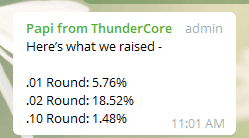
    Seed Round Price: Jan 2018, $0.01/TT
    Seed Round Allocation: 575,906,500 TT, 5.76% of Total Token Supply
    Seed Round Release Period: Lock up until Feb 26, 2020
    Strategic Round Price: March 2018 to May 2018, $0.02/TT
    Strategic Round Allocation: 1,862,274,499 TT, 18.62% of Total Token Supply
    Strategic Round Release Period: One year lock-up after investment, release respectively over March 2019 to May 2019
    Private Round Price: June 2018 to July 2018, $0.1/TT
    Private Round Allocation: 147,648,516 TT, 1.48% of Total Token Supply

    This information is in alignment with the information on Thundercore Telegram Channel.

    Telegram and Chat groups

    Thundercore English: https://t.me/thunder_official

    Thundercore China: https://t.me/thundercore_china

  • MimbleWimble complete Beginner’s Guide

    MimbleWimble complete Beginner’s Guide

    What is MimbleWimble

    While earlier blockchains such as Bitcoin did not account for privacy and scalability, new projects are addressing these very issues. One of the most revolutionary protocols right now is MimbleWimble. The protocol is gaining traction because of its ability to address privacy, scalability and fungibility. Currently coins that use this technology are Grin, Beam, Epic Cash and Litecoin is starting sidechain development.

    Why is Privacy important? Currently, when you use Bitcoin, that is, to send bitcoin, the receiver can extract unrelated transactional information. Because of this splitting transparency concession, privacy coins like Monero are increasingly becoming more popular thanks to their transaction obfuscating ability.

    MimbleWimble’s History

    The whitepaper for MimbleWimble was first published by Tom Elvis Jedusor, an alias name referenced from Harry Potter, in June 2016 but the mainnet is now live. What Elvis proposed was hiding senders and receivers addresses as well as the amount. This not only ensured privacy but also reduced block size to allow for more direct and efficient transactions while making the platform more scalable. Because of their proposal, Mimble Wimble’s white paper is popular with privacy coins enthusiasts.

    How does MimbleWimble Works

    MimbleWimble (MW) ensures that with all transactions, there are no addresses from where the amount is coming from and to whom it is going to. Furthermore, it hides the amount being transacted. Transactions are trivially aggregated to hide where a newly created transaction comes from. The transaction is relayed privately among peers before becoming public.

    Without an address it becomes impossible for any user to track a transaction. With other cryptocurrencies, to send or receive transactions, one must have an address. This addresses act as tags making it possible for the public to tack transactions, with MimbleWimble, this simply doesn’t exist because the address (tag) isn’t there.

    To hide transaction amounts, MimbleWimble has used EllipticCurve Cryptography (ECC) creating the underlying structure to eliminate inputs and outputs data. This essentially takes out your signature from transactions by combining the signature of the sender and the receiver to create a private address.

    However, using confidential transaction, the amount being transferred remains visible to the participants of the transaction.

    MimbleWimble goes further ensuring that not even your IP can be traced. If you send or receive amounts with a phone or laptop regularly, this phone or laptop can be identified and traced back to you. However, with a new privacy layer in the MimbleWimble protocol, there’s extra security preventing tracking.

    Grin’s Advantage over Other Privacy Coins

    By comparing it to one of the biggest privacy coins, Monero, it’s clear that Grin—which uses MW, is superior. Whereas Monero creates dummy transactions to hide the real transaction via ring signatures, Grin employ transactional output, a technique that makes it hard for UTXO tracking as well as cut-through transaction via Coinjoin to merge old transactions.

    Clearly, what Mimble Wimble brings to the fore is a technological breakthrough that has great implication for the entire ecosystem that would even changehow transactions are done. Its implementation means cryptocurrencies like Bitcoinwould be used on a day to day basis without compromise of privacy, scalability and fungibility via a simple hard fork.

    How to mine MimbleWimble Coins

    MimbleWimble coins can be mined using GPU and CPU hardware. To find out how to mine Epic Cash, check out our full Epic Cash Mining guide.

  • Mithril (MITH) Overview

    Mithril (MITH) Overview

    Mithril aims to disrupt our perceptions on social media- to decentralize and reward social media content creators fairly and openly. 

    For a long time, content creators have not been earning for firing up their creative juices. Their followers have also been left dry after interacting with content. But this is now in the past since the launch of Mithril, a platform employing blockchain technology with content creators and their followers in mind. 

    The team behind Mithril comprises of top minds like Wilson Huang who is a former software engineer at Yahoo and Jeffry Huang, the former chairman of M17 Entertainment. 

    Since its launched in 2018, the decentralized social media platform has already made notable milestones. For example, it has secured a partnership with PiePie, a social platform where content creators can earn MITH tokens (more on this shortly). 

    Mithril does this through “social mining”. Unlike other social media platforms such as Facebook and Instagram, Mithril rewards users for their content according to the popularity it attracts. 

    What makes the Mithril ecosystem 

    The Mithril ecosystem is made of the MITH token, Lit, and the Mithril Vault which are intertwined to bring a comprehensive experience to content creators. 

    The MITH token (MITH) is the platform’s native token and which is used to reward publishers in a process called Social Mining (more on Social Mining later). The token is built using the ERC-20 standard on the Ethereum blockchain. It can be used to purchase goods and services on the Mithril Merchant Network, or it can be traded for other digital currencies. Apart from being used for payment and Social Mining, MITH can also be used for staking.  

    Lit, on the other hand, is an already developed social media app that is available to those using iOS or Android-powered mobile devices. Just as with other top social media apps like Facebook, Lit can be used for messaging and posting personal stories using the ‘stories’ feature. 

    The third core component of Mithril is the Mithril Vault, a secure virtual wallet for the MITH tokens. 

    Key Features Of Mithril

    Social Mining

    Though their mobile app- Piepie (available on iOS and Andriod), users can post 6 second videos and share it with over 154,000 (and growing!) other users globally who can follow, like or comment on them. 

    Users who post on Piepie will be rewarded with Mithril’s (MITH) tokens.

    Mithril recently expanded their ecosystem by partnering with Yeemos (available on iOS and Andriod). Yeemos is an app where users can post photographs. Other users can then interact with the posts by doodling, posting stickers, emojis, reactions or comments on them.

    Yeemos is expected to support the MITH reward system soon.

    Mithril Vault

    Users can link their Piepie (and eventually Yeemos) accounts to the Mithril Vault. The Mithril Vault has several functions:

    Funds: Users can withdraw and/or deposit their MITH, Binance (BNB) and Ethereum (ETH) tokens. Support for more tokens is expected.

    Staking: Users can “stake” some/all of their MITH for a minimum of 14 days. Staking increases the amount of MITH earned when using Piepie.

    Shift: Users can “shift” their MITH to ETH and vice versa.

    Exchanges

    MITH tokens are currently traded on most major exchanges including Binance, Bitfinex, Bithumb, Lbank, OKEx and HitBT etc.

    Uses for MITH Token

    The MITH token can be used as follows:

    Staking: As mentioned above, MITH can be staked in the Mithril Vault to increase the MITH earned from social mining on Piepie.

    Shifting: Also as mentioned above, the MITH Vault allows users to shift their MITH into ETH.

    Payments: MITH is accepted as a form of payment in the Mithril Merchant Network. For now this includes some Taiwanese cafes and merchants. Globally, MITH can be used to pay for other products/services relating to dating apps, paid content and other applications.

    The Mithril roadmap

    Mithril has been hard at work meeting its milestones, and in some cases ahead of schedule.

    For Mithril, the milestones covered form the footing for a bright future ahead. While the future will be comfortable for Mithril network users, the developers have already rolled their sleeves up. 

    For instance, the team behind Mithril is yet to develop an ad network, conduct a vault merchant network onboarding, among other high profile developments. 

    Those already partnering with Mithril include, Qtum, M17 Entertainment, Swag, SOLA Foundation, bytepay, Simple Swap, Atomic, among others. 

    In short, Mithril has just left the runway. 

    Resources:

    Website: https://mith.io/

    Whitepaper: https://mith.io/whitepaper.pdf

    Blog: https://medium.com/mithriltoken

    Telegram: https://t.me/MithrilChat

    Twitter: https://twitter.com/MithrilToken

    Binance research report: https://info.binance.com/en/research/MITH-2018-11-15-46831.html