Tag: claude opus 4.6

  • Claude Mythos: Anthropic’s Most Powerful AI Ever — Leaked Before Launch

    Claude Mythos: Anthropic’s Most Powerful AI Ever — Leaked Before Launch

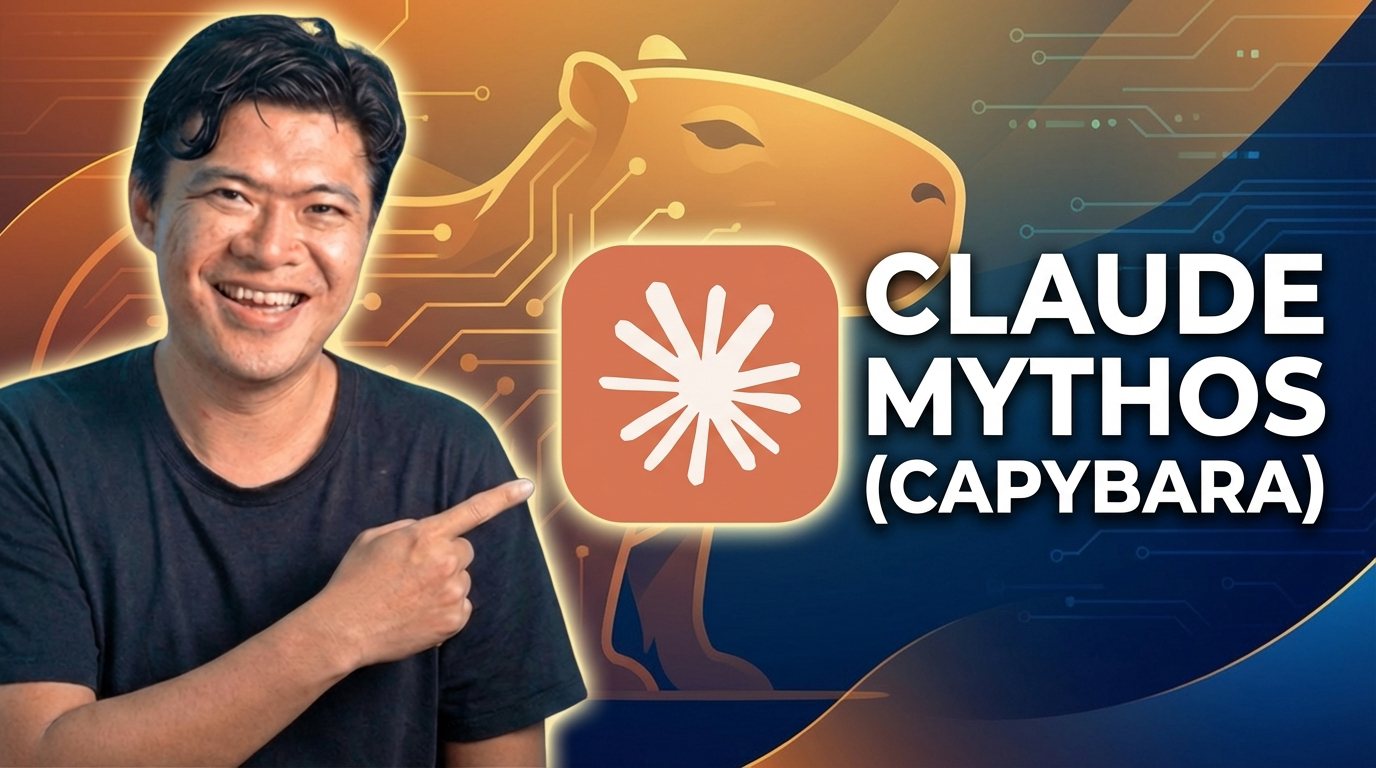
    Anthropic accidentally revealed its next-generation AI model, codenamed “Capybara,” through a CMS misconfiguration. Here’s everything we know about the model that sits above Opus.

    How the Leak Happened

    On March 26, 2026, Fortune magazine discovered nearly 3,000 unpublished assets — draft blog posts, images, and PDFs — left exposed in a publicly searchable data store linked to Anthropic’s content management system. What those documents revealed shocked the AI world: Anthropic has been quietly testing a new model called Claude Mythos, internally codenamed Capybara, that the company itself describes as “by far the most powerful AI model we’ve ever developed.”

    Anthropic confirmed the leak the same day, called it a “human error in CMS configuration,” immediately locked down public access, and — critically — did not deny the model’s existence. Instead, a spokesperson confirmed Mythos is real, currently in early access testing, and represents a “step change” in capability.

    Anthropic’s content management system was misconfigured, leaving draft blog posts about Mythos in a publicly searchable data cache. Fortune reviewed the documents before Anthropic locked them down — and the story broke globally on March 27, 2026.

    Rather than deny the report, Anthropic leaned into the confirmation. The company acknowledged the model, described its capabilities, and explained its cautious rollout plan. For a company known for its careful, safety-first communications, this was a remarkably candid moment — even if unintentional.

    What Is Claude Mythos?

    Claude Mythos — codenamed Capybara during internal development — is not an update to an existing model. It is an entirely new tier of AI, sitting above Opus in Anthropic’s lineup.

    Anthropic’s own leaked draft put it plainly: “Capybara is a new name for a new tier of model: larger and more intelligent than our Opus models — which were, until now, our most powerful.”

    Key confirmed details include:

    • New top tier — not a revision of Opus, but a new product category above it
    • Early access — currently being trialed by select enterprise customers
    • More expensive — described in draft documents as carrying a higher price point than Opus
    • Step change — Anthropic’s own language signals this is a generational leap, not an incremental update

    Performance: What the Leak Revealed

    The leaked draft states that “compared to our previous best model, Claude Opus 4.6, Capybara gets dramatically higher scores” — across software coding, academic reasoning, and cybersecurity.

    No exact benchmark numbers have been published yet. But the qualitative framing is notable, especially on cybersecurity. Anthropic’s own safety assessment warns that Mythos is “currently far ahead of any other AI model in cyber capabilities” — a statement framed not as a marketing boast but as a risk disclosure.

    To put that baseline in context: Claude Opus 4.6 — the model Mythos outperforms — currently ranks second globally on BrowseComp at 34.44%, behind only Gemini 3 Pro. It’s already a top-tier frontier model. Mythos reportedly clears it by a wide margin.

    The Cybersecurity Warning

    The most striking detail from the leak isn’t about coding or reasoning — it’s about security risk. Anthropic’s documents suggest Mythos could enable a new class of cyberattacks that outpace existing defenses. In response, the company plans to give cyber defenders access first, to help harden systems before any broader commercial release.

    This is a significant departure from typical model launches. It signals that Anthropic views Mythos not just as a product, but as a dual-use capability requiring careful sequencing.

    The New Model Tier Structure

    Anthropic’s lineup is being rebuilt from the top down. The current public hierarchy runs:

    TierModelPurpose
    ⚡ SpeedHaikuFast, cheap, high-volume tasks
    ⚖️ BalanceSonnetBalanced performance and cost
    🏆 PowerOpusComplex reasoning and tasks
    🦙 Beyond OpusCapybara / MythosNew ceiling — largest, smartest, most expensive

    This is not just a new model — it’s a new pricing tier. Developers building on the Anthropic API should expect Mythos to carry significantly higher costs than Opus, targeted at high-stakes professional and enterprise use cases.

    Why This Matters

    The Commoditization Counter

    The same week this story broke, CNBC was reporting on fears that AI models were becoming commodities — that differentiation between frontier labs was narrowing. Mythos is Anthropic’s direct answer: push the ceiling higher before the competition catches up.

    The Enterprise Play

    Cybersecurity capability at this level signals a deliberate positioning toward the enterprise market — the highest-value, highest-stakes segment in AI deployment. Companies spending millions defending infrastructure will pay a premium for a model that leads on offense-aware reasoning.

    The Competitive Context

    OpenAI has GPT-5. Google has Gemini 3 Pro, currently ranked first on BrowseComp. Both are pushing hard at the top of the capability ladder. Mythos positions Anthropic to compete — and potentially lead — at the very frontier. The leak may have been embarrassing, but the timing was nearly perfect: every major AI outlet is now talking about Anthropic.

    What We Still Don’t Know

    Despite the confirmation, significant details remain unannounced:

    • Release date — no official timeline, only “currently in testing”
    • Exact benchmark scores — all performance descriptions remain qualitative
    • Pricing — described as “more expensive than Opus” with no specific figures
    • Context window — not disclosed in any leaked documents
    • Multimodal capabilities — unknown whether Mythos extends vision or audio beyond Opus 4.6
    • Official announcement — expected to be accelerated now that the cat is out of the bag

    Verdict

    Claude Mythos is real, confirmed, and coming. It’s the most capable model Anthropic has ever built, it’s already in the hands of early access customers, and the accidental leak almost certainly means the official launch is imminent.

    For developers, it’s time to plan for a new top-tier API option with a new pricing tier to match. For enterprises — particularly those in cybersecurity — this may be the most relevant model release of 2026. And for the broader AI market, the message is clear: this is not a plateau.

    Watch Anthropic’s blog and announcements closely. The official reveal can’t be far away.

    Sources: Fortune (March 26, 2026), Anthropic spokesperson statement, India Today, Firstpost, KuCoin News — March 26–27, 2026.

  • Cheap AI vs Premium AI: MiniMax 2.5 vs Claude Opus (Full Breakdown for OpenClaw Users)

    Cheap AI vs Premium AI: MiniMax 2.5 vs Claude Opus (Full Breakdown for OpenClaw Users)

    If you’re running OpenClaw and wondering whether you really need to pay for Claude Opus — or whether a cheap MiniMax plan can do the job — this breakdown is for you. We ran real tests, compared costs, and came to a clear conclusion: cheap AI can work, but it comes with a catch.

    The Test Setup — Multi-Agent OpenClaw in Action

    Meet our Agents: Stark, Banner, and Jeff

    The test uses a real multi-agent OpenClaw setup with three agents running simultaneously — Stark, Banner, and Jeff — each powered by different models. This isn’t a synthetic benchmark. It’s a live production environment where the agents handle real tasks every day.

    The Logic Test: Walk or Drive to the Car Wash?

    The benchmark is deceptively simple: a car wash is 50 metres away — do you walk or drive? It’s a common-sense reasoning test that exposes how well a model handles real-world context, implicit assumptions, and practical decision-making. The answer seems obvious, but AI models handle it very differently.

    MiniMax 2.5 vs Claude Opus — Performance Comparison

    Consistency Is the Key Metric

    The biggest difference between cheap and premium models isn’t raw intelligence — it’s consistency. MiniMax 2.5 can produce excellent results, but it also overthinks variables, introduces unnecessary complexity, and occasionally slips on straightforward logic. Opus fails rarely, but when it does fail, it can fail in a big, hard-to-catch way.

    The Inconsistency Problem with Cheap Models

    MiniMax 2.5 and Kimi are fast and affordable, but they require more manual oversight. You can’t fully trust them to run autonomously without checking their work. For tasks where mistakes are costly — financial decisions, automated publishing, customer-facing responses — that inconsistency is a real risk.

    When Opus Fails, It Fails Hard

    Claude Opus has a much lower failure rate, but its failures tend to be more dramatic when they do occur. This is worth understanding: a cheap model that fails 10% of the time in small ways may actually be easier to manage than a premium model that fails 1% of the time in catastrophic ways, depending on your use case.

    Cost vs Performance — Is Opus Worth 20x the Price?

    MiniMax Pricing Breakdown

    MiniMax offers subscription plans that are dramatically cheaper than Claude Opus — roughly 20x less expensive per request. For high-volume, low-stakes tasks (summarising content, drafting social posts, processing data), this price difference is hard to ignore.

    • MiniMax 2.5 plan: affordable tiered pricing with generous request limits

    • 10% off via referral: https://platform.minimax.io/subscribe/coding-plan?code=5GYCNOeSVQ&source=link

    The Real Cost of Cheap AI — Manual Oversight

    The hidden cost of cheap models is your time. If you’re manually reviewing every output, correcting mistakes, and re-running failed tasks, the “cheap” model starts looking expensive. The true cost calculation has to include your oversight hours, not just API fees.

    Who Should Pay for Opus?

    Opus makes sense when:

    • You’re running fully autonomous agents with minimal human review

    • Mistakes have real consequences (financial, reputational, customer-facing)

    • You’ve already built systems and just need reliable execution

    MiniMax/Kimi makes sense when:

    • You’re still building and testing your setup

    • You have manual review in your workflow

    • You’re doing high-volume grunt work (research, drafts, data processing)

    The Hybrid Approach — Best of Both Worlds

    Use Opus for Architecture, Cheap Models for Execution

    The smartest approach, suggested by viewers and confirmed in testing: use Claude Opus for planning, architecture, and critical decisions — then hand off execution tasks to MiniMax or Kimi. One viewer described it perfectly: “Use Opus for architecture and planning, Kimi to generate the code and verify it, then Opus to fit the code gap against the specifications.”

    Kimi 2.5 as a MiniMax Alternative

    Kimi 2.5 is another strong contender in the cheap-but-capable category. Multiple OpenClaw users report running it successfully as their primary model. It’s particularly strong on reasoning tasks where MiniMax tends to overthink.

    • Kimi referral: https://www.kimi.com/kimiplus/sale?activity_enter_method=h5_share&invitation_code=Y4JW7Y

    OpenClaw Model Strategy — Practical Recommendations

    Turn Reasoning Mode On for Cheap Models

    A key tip from the comments: always enable reasoning mode when using MiniMax or Kimi on OpenClaw. It significantly improves output quality and reduces the inconsistency problem.

    Should Each Agent Have Its Own Model?

    A common question from new OpenClaw users: should each agent run a different LLM? The answer is yes — and this video demonstrates exactly why. Different agents have different roles, and matching the model to the task (cheap for grunt work, premium for critical decisions) is the optimal strategy.

    The Journey from MiniMax 2.1 to Near-Autonomy

    The video covers a personal journey from frustrating early experiences with MiniMax 2.1 to a near-autonomous multi-agent setup. The key insight: the model matters less than the systems you build around it. Good prompts, clear memory structures, and well-defined agent roles can make a cheap model punch above its weight.

    Verdict — Cheap AI vs Premium AI for OpenClaw

    MiniMax can be great value but inconsistent. Opus rarely fails — but when it does, it fails hard. The winning strategy is hybrid: cheap models for execution, Opus for architecture and critical decisions.

    1. Zeabur hosting (save $5 with code boxmining): https://zeabur.com/
    2. MiniMax 10% off: https://platform.minimax.io/subscribe/coding-plan?code=5GYCNOeSVQ&source=link
    3. Kimi AI: https://www.kimi.com/kimiplus/sale?activity_enter_method=h5_share&invitation_code=Y4JW7Y
    4. More AI news: https://www.boxmining.com/
    5. Join Discord: https://discord.com/invite/boxtrading
    6. Watch the full video: https://youtu.be/1naLl0IwuPM