Category: Decentralised Finance (DeFi)

Decentralized Finance (DeFi) is a sector within the cryptocurrency and blockchain space which aims to provide a decentralized version of the products available in traditional finance- without central control and at a lower cost with potentially higher returns. These products include loans, interest-bearing deposits and borrowing services.

The advantages of decentralized finance are that it addresses the problems we have with the traditional banking system. For example, decentralized finance protocols are controlled by multiple people, and all participants are required to abide by the rules written into the smart contracts underlying the protocols.

  • WAX ($WAXP): The King of NFTs?

    WAX ($WAXP): The King of NFTs?

    WAX Protocol ($WAXP) stands for Worldwide Asset eXchange. They are one of the safest and most convenient ways to create, buy, sell and trade virtual items i.e. non-fungible tokens (NFTs) through an integrated DPoS blockchain platform designed to work hand-in-hand with a microservice layer to improve the digital goods market’s infrastructure. Obtaining WAX knowledge has enabled innovators to develop a highly-connected and sophisticated marketplace that has brought a lot of value in digital goods projects.

    This information here will help you learn how to incorporate the WAX Protocol within the WAX Platform and how the two tools complement each other. It’s worth noting that the WAX Platform is composed of the WAX Protocol and a microservice layer.

    Learn more about WAX with our interview with Evan Vandenberg, Director of Business Development at WAX.

    Profitable digital collectibles and blockchain gaming (with WAX blockchain)

    Background

    The WAX platform was founded by William Quigley and Jonathan Yantis, together they have vast experience in blockchain technology. Quigley is also the Managing Director of Cashel Enterprises, a cryptocurrency-focused investment vehicle which has incubated and invested in over 40 blockchain and cryptocurrency projects. Meanwhile, Yantis also works as WAX’s CEO.

    The global growth of the digital goods marketplace has experienced enormous challenges for the past decade, but WAX technology has helped in finding solutions that spur the development of the sector. Although some users think that the technology has arrived late when challenges are already overwhelming, it’s actually the perfect time since blockchain has matured enough to satisfy the requirements for the WAX system to succeed.

    As the digital goods market continues to expand, it’s essential to acknowledge that tokenized consumer products and virtual items have played an instrumental role in blockchain growth. Virtual items like in video games alone have generated more than USD$140 billion for the market. On the other hand, tokenized consumer products have realized over USD$1.8 trillion.

    Considering that WAX attempts to offer remedies for a marketplace with a combined market value of over USD$2 trillion, it’s easy to realize the magnitude of the problem. The first year of incorporating WAX Protocol operations on major players like VGO and dApps has realized over USD$150 million worth of trading volume.

    What is WAX?

    Wax is a marketplace for digital assets, serving more than 400 million online players that sell, buy, and collect in-game items. Their suite of blockchain-based tools allows people to trade digital or physical items instantly and securely to anyone in the world. WAX’s platform brings together a community of collectors and traders, buyers and sellers, creators and gamers, merchants, creators of dApps and even game developers.

    Examples of what WAX can do include buying and selling gift cards to people across the globe, or building your own online store using the B2B tools created by WAX. WAX also allows people to create NFTs and send them to others.

    WAX Blockchain

    The WAX network works on a consensus model that relies on various WAX Guilds to enhance blockchain production. WAX utilizes Delegated Proof of Stake (DPoS), which depends heavily on WAX Guilds to ensure success in blockchain generation.

    The WAX ecosystem has witnessed considerable growth due to the incorporation of the WAX Token Model, which is designed to ensure success in various aspects such as voting, staking, and rewards. The Wax Staking Reward is a feature that has encouraged community participation because it allows users to vote and access rewards.

    With WAX tokens, users have immense options to explore. For instance, if staked WAX tokens haven’t been placed, a token holder will require platforms such as Scatter and Lynx to automate the process.

    WAX Tokens ($WAXP)

    WAX tokens ($WAXP) power the entire WAX ecosystem. They are used to reward participants in the chain and enable contributors to receive ten times the number of tokens purchased. This strategy makes it easier to calculate all microtransactions on the platform.

    One benefit of owning WAX tokens is that you get to earn even more tokens by voting for WAX guilds. This is called the WAX staking reward. This process is hassle-free and takes just a minute or two to join. Furthermore, you can unstake your tokens at any time.

    WAX and DeFi? WAX’s new tokenomic model explained

    In a recent announcement, WAX mentioned they will have a new tokenomic model hoping to capitalise on the rapid growth and popularity of NFTs and decentralised finance (DeFi). Their plan is to link the value generated from creating, selling and trading NFTs to Ethereum. WAX considers it different from other DeFi platforms because they consider these activities to be able to provide a sustainable source of value to stakers.

    How the new WAX inter-blockchain tokenomic model would work is that the operational functions of NFTs would still be done on the WAX blockchain, whilst Ethereum will become, “…the capital vault of the WAX NFT empire”. There are 4 components to this new tokenomic model, namely:

    • WAXP to Ethereum bridge: this new bridge will enable WAXP token holders to convert their tokens into WAXE.
    • WAXE: WAXE is a new Ethereum ERC20 utility token. Participants of the WAX tokenomics will need to burn their WAXP tokens to get WAXE tokens via the Ethereum bridge. They would then stake the WAXE in the Ethereum Distribution Contract.
    • WAXG: WAXG is a new Ethereum ERC20 governance token which will be distributed to WAXE stakers based on a set timetable and proportionate to their percentage of the WAX Economic Activity Pool. Token holders will be able to govern the allocation and distribution of economic value on the platform.
    • WAX Economic Activity Pool: This is a smart contract which will accumulate a percentage of generated WAX fees to be converted to ETH for distribution to WAXE stakers or given to WAXG token holders that decide to burn their tokens.
    WAX tokenomic process
    WAX tokenomic process (Image credit: Medium)

    For full details of WAX’s new tokenomic model, check out their article on Medium.

    WAX Guilds and Rewards

    A WAX blockchain contains 21 WAX Guilds that qualify to earn a reward. Remember, blocks can only be produced after the chain meets the threshold to earn rewards. The rewards are awarded depending on the number of blocks that every WAX Guild can produce. Standby Guilds are considered as backup operators that help to generate a chain on request.

    WAX Performance Metrics

    WAX has been configured in such a way that it releases two blocks per second. It’s worth noting that each WAX Guild can only produce one block at a time. If a block fails to come out at a specific time, other blocks will jump the queue to ensure a continuous process.

    A block that has been skipped will contend for a space in the memory pool to compete for guilds’ inclusion in the next turn. More than 3000 blockchains are usually transacted each second in the WAX system. The transaction rate is two times swifter than the VISA system can procure in the same period.

    The Future of WAX technology

    WAX Platform doesn’t only work to offer remedy for the current problems but also offers a roadmap for future operations. WAX Developer Hive is tasked with the duty of technical service provision, tutorials, and other simulations. Besides, WAX developers equally provide vital resources that make implementations successful.

    The technology has also incorporated features that will make it convenient to evaluate whether the system passes the transparency test among communities.

    Also, there’s room to allow interoperation with other chains to enhance performance. NFTs are among the candidates that need microservices and can thrive with the WAX Platform.

    Conclusion

    Gamers from across the world can substantially benefit from its secure and decentralized digital items marketplace. As WAX Platform continues to provide more improvements, developers will find several ways to create features that would better serve gamers in terms of digital goods trading.

    The platform is also expected to play an instrumental role with digital media and is set to welcome over three billion users in the coming five years.  

    Disclaimer: Cryptocurrency trading involves significant risks and may result in the loss of your capital. You should carefully consider whether trading cryptocurrencies is right for you in light of your financial condition and ability to bear financial risks. Cryptocurrency prices are highly volatile and can fluctuate widely in a short period of time. As such, trading cryptocurrencies may not be suitable for everyone. Additionally, storing cryptocurrencies on a centralized exchange carries inherent risks, including the potential for loss due to hacking, exchange collapse, or other security breaches. We strongly advise that you seek independent professional advice before engaging in any cryptocurrency trading activities and carefully consider the security measures in place when choosing or storing your cryptocurrencies on a cryptocurrency exchange.
  • LABS Group ($LABS): bringing real estate investments to the masses?

    LABS Group ($LABS): bringing real estate investments to the masses?

    LABS Group aims to realise everyone’s dream of real estate ownership through fractionalising real estate investments.

    Traditionally, entry into the real estate industry requires a substantial investment due to the indivisibility of assets. Consequently, small investors find this asset class completely out of their reach.

    Among the few platforms trying a stab at bringing real estate to the masses is LABS Group. Through its ecosystem token and utilising decentralised finance (DeFi) and governance, its mission is to intelligently blend the centralized and the decentralized worlds of real estate to improve its liquidity.

    Check out our interview with Chairman Mahesh Harilela (or listen to the podcast).

    Tokenizing Real Estate Assets-LABS Group with Mahesh Harilela

    Background

    Mahesh Harilela, is the Company’s Chairman. Mahesh comes from one of the most prominent families in Hong Kong, which owns 19 hotel properties worldwide through the Harilela Group. Mahesh himself has certainly inherited the family’s entrepreneurial spirit and is involved in Trading, Brand Development, Renewable Energy Infrastructure, Agriculture and Education. He is also Chairman of the Board and CEO of M. Harilela Global Investments Ltd and Asia CBD Pte Ltd.

    What is Labs?

    LABS is a leading blockchain-based ecosystem for real estate investments. The platform seeks to bring more people into the space by fractionalizing investments. Compared with other legacy modes of investing in the real estate space like private equity funds, REITs, and direct investment, LABS emerges as the winner.

    For instance, it ticks crucial boxes such as low fees, governance, ownership, staking for profit, tradable, among others.

    Critical issues the protocol is trying to solve include:

    1. Costly entry and exit prices – Currently, the median entry price into the ecosystem is high. The cost rises as you enter into big cities. Apart from entry points, exit costs are driven through the roof by third parties such as agencies.
    2. Eradicate reliance on Real Estate Investment Trusts (REITs) – Although they allow pooled investments, they are majorly open to deep-pocketed individuals.
    3. Complicated access to a global network – International property ownership is a nightmare in the current state of the real estate industry.
    4. Low Liquidity – The traditional real estate market restricts investors from selling to the local market due to low liquidity.
    5. High fees – The fees range from taxes, agent fees, and transaction fees that introduce inefficiencies in the conventional market.

    How Labs Tackles the Above Problems

    Labs uses different approaches to solve key issues plaguing the traditional real estate industry permanently. These are:

    Crowdfunding

    The project believes in fractionalizing real estate assets, making it possible for multiple investors to put their money in the same assets by reducing the entry costs. Additionally, it minimizes the need for investors to stretch their cash reserves unnecessarily. In doing so, it reduces the risks of losing a lot of money.

    Powering a Global Portfolio

    With digitization, the project removes the global barrier. Consequently, it provides investors with a chance to have a global portfolio of real estate assets. (contentbeta) This lowers the risks for investors. Apart from enabling them to build a global portfolio, the digitization process enables investors to mimic traditional asset features like a store of value.

    Caters to Investors Diverse Appetites

    Labs enables investors to choose between different types of assets in the industry. For example, they can select residential, commercial, industrial, or hybrid and still choose their preferred location, risk levels, and ROI.

    It Brings Blockchain and Digitization Together

    By digitizing real-world assets, the project opens them up to trading on virtual exchanges that have no geographical limitations nor opening/closing times.

    Extra benefits

    Other benefits birthed by the project are:

    1. Interaction with the DeFi scene and enabling decentralized governance.
    2. Ability to trade real estate securities.
    3. Faster and direct dividends payments
    4. Reduced and enhanced transactions.

    Liquidity Provision On the Labs Network

    1. Tokenization – This helps power an asset-backed token ecosystem that lives on the blockchain enabling other activities such as over-the-counter trading and token swapping.
    2. Trading on the secondary market – Trading of Labs’ securities leverages recognized exchanges. Note that when shares are tokenized, they are traded on a securities exchange. Such asset trading platforms enable enhanced non-stop trading, positively impacting investors’ entry and exit points.
    3. Lending – Labs facilitates lending activities on the platform using two native assets; the Labs stable token, the Labs security token (more on these later). The protocol uses these tokens to address the liquidity problem by allowing their holders to engage in collateralized lending.

    Conclusion

    By fractionalizing real estate assets, Labs eases the entry of retail investors into the industry. Consequently, it increases liquidity. Another critical Labs undertaking is digitizing these assets, effectively connecting the real estate market to the DeFi world.

    In return, it opens up the space to more possibilities such as collateralized lending, over-the-counter trading, and swapping. Additionally, the inclusion of the LABS token drives community governance that is a crucial pillar in DeFi-focused protocols.

    Disclaimer: Cryptocurrency trading involves significant risks and may result in the loss of your capital. You should carefully consider whether trading cryptocurrencies is right for you in light of your financial condition and ability to bear financial risks. Cryptocurrency prices are highly volatile and can fluctuate widely in a short period of time. As such, trading cryptocurrencies may not be suitable for everyone. Additionally, storing cryptocurrencies on a centralized exchange carries inherent risks, including the potential for loss due to hacking, exchange collapse, or other security breaches. We strongly advise that you seek independent professional advice before engaging in any cryptocurrency trading activities and carefully consider the security measures in place when choosing or storing your cryptocurrencies on a cryptocurrency exchange.
  • O3 Swap: A Cross Chain Aggregration Procotol

    O3 Swap: A Cross Chain Aggregration Procotol

    Introduction

    O3 Swap, a cross-chain aggregation protocol, helps to assist multi-chain liquidity sources on ONE platform. It finds the best prices across multiple chains through its O3 Swap and O3 Hub. With no limits and hidden fees, O3 Swap is the next Trivago comparison site in crypto form. 

    What problem is O3 Swap trying to solve?

    Anyone remember the days we needed to barter, a system of exchange in which one party directly trades goods or services for other goods or services without using a medium of exchange, like fiat money? This leads to tons of problems as both products or services might actually have different values even with the same quantities given. This theory applies to the cryptocurrency system too.

    As the traditional Blockchain network is standalone and does not interfere with other blockchain networks, it is tough and difficult for the investors to carry out transactions in between. 

    This is where a cross-chain protocol comes in and breaks the glass ceiling. 

    Background of O3 Swap

    O3 Labs has developed a cross-chain aggregation protocol, named O3 Swap. The aim of O3 Swap is to offer customers access to cryptocurrency-based financial services by allowing them to exchange, or “swap,” various digital assets within their O3 Wallet. The tight security and safety systems used in O3 Swap have excelled in the decentralized system of cryptocurrencies. 

    On their official website, you can find out a few of the liquidity sources O3 Swap supports; Uniswap, SushiSwap, Curve, Balancer, Bancor, 1inch, Paraswap, and 0x Protocol are on the Ethereum blockchain; PancakeSwap. DODO, MDEX, BakerySwap, ApeSwap, BSCswap, and JulSwap are on Binance Smart Chain; Flamingo, Nash, and Switcheo are on Neo; MDEX, LAVAswap, Depth, and Chocoswap are on Huobi system.

    Cryptocurrency enthusiasts use O3 Swap as the cross-chain aggregation protocol to access liquidity outlets from different networks, making it simpler than ever to find the best rates. This single platform eases the complexity and hassle of transacting different cryptocurrencies with the lowest rates, no limit, and no hidden fees.

    A framework layer and a settlement layer make up what O3 Swap is. The O3 Wallet, O3 Swap, and payment function are the first steps. The O3 aggregator and cross-chain protocol are the seconds. Furthermore, O3 Swap has an automatic market maker, order book, and money market features to offer liquidity. Lastly, there is an O3 Swaps platform layer for a service API that can be combined with a variety of other applications.

    Features of O3 Swap

    O3 Swap’s main technical components are the exchange aggregators (O3 Aggregator) and cross-chain pool (O3 Hub). O3 Aggregators are used to help users find the most cost-effective exchange prices and routes in the network of sought-after blockchains. Whereas, O3 Hub uses the PolyNetwork to provide cross-chain transaction facilities, allowing consumers to perform liquidity by using a single token from several chains to earn money from cross-chain transaction fees and O3 incentives.

    1. O3 Swap is created using DeFi standards. As a result, everybody will be able to use it. With its aggregation protocol, users will not only benefit from low cross-chain exchange rates, but they will also be able to engage in the governance model, which is built on the O3 Swap Token.
    2. O3 Swap is permissionless, anti-censorship and non-KYC. It means that anybody can access O3 Swap anywhere, anytime without the need for permission of any party.
    3. O3 Swap aggregates the liquidity of multiple chains on its own single network. At the cheapest possible rate, crypto investors can exchange assets through the most efficient trading route by linking their own decentralized wallets.
    4. O3 Swap creates a community-based growth community. It develops decentralized governance and intense community development among the cryptocurrency market players. 
    5. O3 Swap utilizes the cross-chain exchange system to the top-notch level. Using the aggregation protocol puts forward all tested and potential cross-chain solutions to let the crypto lovers freely trade their desired assets with a single tap without any hassle. 

    O3 Swap Token

    O3 Swap Token (O3) is a token used by the O3 Swap platform. It acts as a vital link in the development of the O3 Swap network. Via token community governance, both members and developers are invited to engage in the overall ecological network based on the O3 Swap economic model.

    There are 3 methods to earn O3 Swap token in the O3 Swap economic model. Users will first get airdrops by participating in early product testing and community contributions. The second method is that they can use O3 Swap to acquire exchange mining earnings. The final method is through contributing liquidity to the Hub (cross-chain pool) in order to get O3 incentives. When O3 is gained in one of the three ways listed above, it is locked. To unlock the O3 in the account, users must offer liquidity with O3 trading pairings to the main DEXs. The unlocked O3 has 3 main advantages: 

    1. Member rights: Stake O3 token to obtain interest and transaction discounts allocated by the O3 Swap treasury.
    2. Community governance: Users can participate in community governance by staking O3 token to initiate proposals, participate in voting, etc.
    3. LP staking: Users can use O3 token to synthesize liquidity equity proof (LP), which can be used for unlocking and mining.

    All transaction fees from O3 Swap, on the other hand, will be utilised to purchase back O3 token in open markets on a regular basis. Then the fees will be paid proportionally to O3 stakeholders and development committees.

    How to use O3 Swap

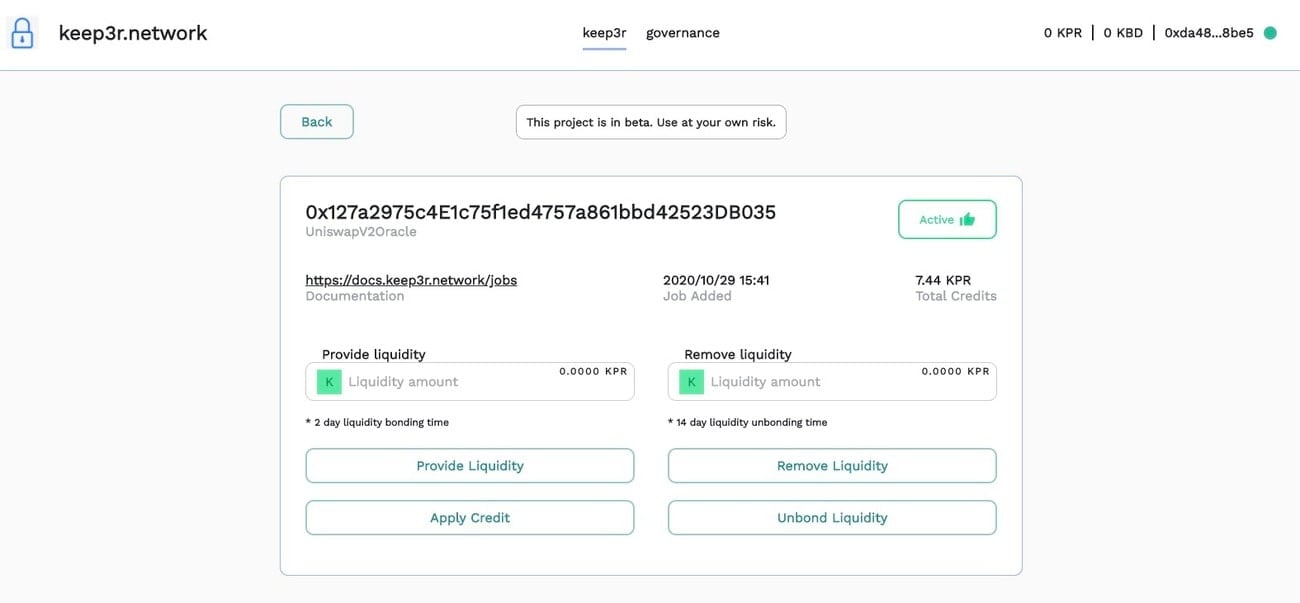
    Consumers may use the protocol by going to the Swap page on O3 Swap official website. Select it from the exchange section. The user must then bind their wallet (MetaMask, O3 Wallet, NeoLine) in order to choose the token they want to exchange. By clicking the “RFQ” button after entering a number, the user may see the transaction data. Users will validate their transactions and change the network charge accordingly. Also, the time of transaction confirmation may take longer than usual, depending on different network speeds. 

    O3 Hub

    O3 Hub is technically a big pool of the collected assets across the multiple assets in the platform. It is a cross-chain asset pool, such as a stable coin pool, and a cross-chain protocol built on the Poly Network. To earn O3 incentives, liquidity providers can deposit one or more funds into the cross-chain pool and stake the LP shares. Only stable currency cross-chain exchanges and liquidity provision are required throughout the testing period.

    The usage method is identical to O3 Swap. Users just need to choose their tokens, add or delete liquidity. Users must choose the “Deposit” or “Withdraw” option to validate a transaction. 

    IDO Launch

    On May 12th, 2021, O3 Swap had its public sale.

    This shows the aggressive innovation and determination for O3 Swap to disrupt the traditional cryptocurrency market as soon as possible. According to the roadmap, they have achieved the launch of the official website, released the Neo swap module, and published O3 Swap Litepaper in Quarter 1 of 2021. They soon will succeed in supporting ETH and BSC swaps, and be ready for O3 Version 1 online that allows the crypto users to enjoy all the perks in a more wholesome and comprehensive way.

    A decentralized autonomous association (DAO) will be formed by the end of the year 2021. O3 Swap’s aggregation protocol will have been implemented on Layer 2 networks. The whole O3 Hub development across the network will be completed by then. 

    In 2022, Version 2 of O3 Swap will make its debut with the support of instant quotes and pending orders. It will also launch cross-chain 2.0 and release the O3 network. 

    Conclusion

    According to O3 Swap, it is created in reaction to an immediate issue on the Ethereum blockchain: network congestion and low scalability. While alternative networks for retail investors have emerged, DeFi is still unable to realize its full potential due to barriers between blockchains. This project aspires to have the winning approach that will put an end to network seclusion.

    O3 Swap is changing the game so that every cryptocurrency enthusiast can enjoy the interchange between different blockchains freely. At the same time, they can enjoy the best price quote from more than 10 DEXs to optimize their best rates for the “swap”. 

    Disclaimer: Cryptocurrency trading involves significant risks and may result in the loss of your capital. You should carefully consider whether trading cryptocurrencies is right for you in light of your financial condition and ability to bear financial risks. Cryptocurrency prices are highly volatile and can fluctuate widely in a short period of time. As such, trading cryptocurrencies may not be suitable for everyone. (https://unitedwepledge.org Additionally, storing cryptocurrencies on a centralized exchange carries inherent risks, including the potential for loss due to hacking, exchange collapse, or other security breaches. We strongly advise that you seek independent professional advice before engaging in any cryptocurrency trading activities and carefully consider the security measures in place when choosing or storing your cryptocurrencies on a cryptocurrency exchange.
  • Duck Liquidity Pool (DLP) by DuckDAO ($DUCK)

    Duck Liquidity Pool (DLP) by DuckDAO ($DUCK)

    Duck Liquidity Pool ($DUCK) is a DeFi Market Maker protocol, developed by DuckDAO, one of the biggest cryptocurrency community that provides funding and marketing support to early-stage crypto projects.

    The boom of decentralized finance (DeFi) in recent months has ushered in a new profit-making strategy for crypto traders, beginners and advanced alike. Decentralized exchanges (DEX) rely on liquidity pools to help power their market-makers. While the Duck Liquidity Pool is a new entrant in DeFi, it has already captured the attention of many users in the space thanks to its high APY and token burning model.

    https://youtu.be/8MNKafDgW0o

    What is the Duck Liquidity Pool?

    The Duck Liquidity Pool (DLP) is DuckDAO’s own market maker. The funds that supply its pool came from the sale of pre-mined tokens and can be accessible in many other protocols and exchanges. In the meantime, projects that are supported by DuckDAO will be the first to be able to tap the pool. The ticker for the pool is $DUCK.

    The unique feature that distinguishes DLP from others is its “unilateral burn” strategy, or the one-sided token burn model. It is designed to burn 50% of all earned rewards (more on this later).

    The APY level for DLP is high and its suppliers can receive as much as 50% of the profits from market making, airdrop of incubated project tokens, as well as non-fungible token (NFT) campaigns. Such a feature enables yield farmers the ability to earn profit by just providing liquidity to DuckDAO’s market maker.

    To participate in the DLP, users have to lock their cryptocurrency holdings by depositing their funds in the pool. In return, they receive DUCK tokens as a reward for supplying funds to the pool.

    DuckDAO’s Native Token ($DUCK)

    DUCK token is the DuckDAO’s native utility token, which also powers the incentive model for the Duck Liquidity Pool. The token has the following use cases:

    • Yield farming on Uniswap pools – Staking tokens help contribute liquidity to DUCK and DDIM pools. For this, they earn profit through DLP.
    • Reward token for market-making profit – Half of the profit from the market maker is returned to the community who belong to the liquidity pool. If the performance of DLP is good, the profit for the yield farmers grows in proportion as well.
    • Project token airdrops
    • Non-fungible token as reward

    Deflationary Farming: “One-Side-Burn”

    This is touted by the team as “Yield Farming 2.0,” which is designed to support a deflationary, unilateral burning of tokens. To understand how this works, we must first look at how the current yield farming mechanism works.

    The Usual Scenario for Most Liquidity Pools

    Commonly, yield farming pools in the DeFi space look very advanced for the average trader. Not only does this create a psychological barrier to entry, but it also makes profit-making a little more difficult for someone new to yield farming.

    Another issue that traders face is the inflationary structure of the incentive mechanism in most liquidity pools. This is because, in order to provide rewards to yield farmers, mined tokens have to be released into the market. This model isn’t designed for long-term effectiveness since with more reward tokens in supply over time, we can expect its value to depreciate as well.

    Duck’s Unilateral Burn

    $DUCK, on the other hand, is designed to support long-term yield farming strategies. Even beginners on liquidity pools can just stake and earn a part of the profit that DuckDAO’s market maker gets.

    $DUCK One-Side-Burn Deflationary Model (Source: DuckDAO website)

    One-Side-Burn is a deflationary model that is designed to burn 50% of the carry pair as soon as the liquidity provider decides to cash in a portion of his stake.

    What happens in such a situation is that users lose one side of their liquidity as the tokens are burned. And when someone decides to exit the pool completely, his entire liquidity is also burned and further lowers the DUCK tokens in supply.

    While this model may seem counterintuitive for profit-earning at first, over-time, the value of the tokens is going to be greater than what it was when a user has staked in the pool. That is why DLP’s design appears to be much better in the long run.

    Duck Liquidity Pool Market-Maker Models

    Project Token Purchase

    DLP purchases tokens in order to facilitate buy and sell liquidity.

    Duck Liquidity Pool Business Model – Project Token Purchase (Source: Duck Liquidity Pool (DLP) Blackpaper)

    Project Token Borrow

    DLP loans tokens against collateral in order to facilitate buy and sell liquidity.

    Duck Liquidity Pool Business Model – Project Token Borrow (Source: Duck Liquidity Pool (DLP) Blackpaper)

    Fixed Fee Model

    The protocol can charge a fixed service fee for listings that have decided to provide buy and sell liquidity on their own.

    Duck Liquidity Pool Business Model – Fixed Fee Model (Source: Duck Liquidity Pool (DLP) Blackpaper)

    Conclusion

    DeFi has enabled the birth of new profit-making strategies for traders in the space. However, whether existing liquidity pools can support long-term yield farming models is another question altogether. DLP’s model, which is powered by the ‘unilateral burn’ design, appears to be more promising.

    To be fair, like many other pools, the profit it can generate for stakers is also influenced by the number of users joining the pool. This is why it is important to look into that as well before deciding to lock your tokens and supply liquidity to the pool.

    Decentralised Finance (DeFi) series: tutorials, guides and more

    With content for both beginners and more advanced users, check out our YouTube DeFi series containing tutorials on the ESSENTIAL TOOLS you need for trading in the DeFi space e.g. MetaMask and Uniswap. As well as a deep dive into popular DeFi topics such as decentralized exchanges, borrowing-lending platforms and NFT marketplaces

    The DeFi series on this website also covers topics not explored on YouTube. For an introduction on what is DeFi, check out Decentralized Finance (DeFi) Overview: A guide to the HOTTEST trend in cryptocurrency

    Tutorials and guides for the ESSENTIAL DEFI TOOLS:

    More videos and articles are coming soon as part of our DeFi series, so be sure to SUBSCRIBE to our Youtube channel so you can be notified as soon as they come out!

    Disclaimer: Cryptocurrency trading involves significant risks and may result in the loss of your capital. You should carefully consider whether trading cryptocurrencies is right for you in light of your financial condition and ability to bear financial risks. Cryptocurrency prices are highly volatile and can fluctuate widely in a short period of time. As such, trading cryptocurrencies may not be suitable for everyone. Additionally, storing cryptocurrencies on a centralized exchange carries inherent risks, including the potential for loss due to hacking, exchange collapse, or other security breaches. We strongly advise that you seek independent professional advice before engaging in any cryptocurrency trading activities and carefully consider the security measures in place when choosing or storing your cryptocurrencies on a cryptocurrency exchange.
  • FinxFlo ($FXF): Cost-saving crypto trading?

    FinxFlo ($FXF): Cost-saving crypto trading?

    Despite the apparent growth of the crypto ecosystem, one major problem faced by traders is the cost. Many retail traders often fall victim to exchanges that quote unfair asset prices. Unfortunately, these shortcomings can lead to distortions in the market. This is where FinxFlo comes in to provide a solution.

    FinxFlo is a platform that seeks to allow its users to trade with 25+ exchanges (DeFi and CeFi based) from a single interface, with a one-time KYC verification process. Therefore, traders on FXF can access the best price for the asset to be traded. With just one account and one KYC process, traders can maximize the prices and rates provided by the platform.

    Furthermore, the brokerage also enables traders to make informed decisions by providing them with accurate and real-time information and ensuring transparency.

    Background

    Founded in 2019, Finxflo comprises a multi-cultural team of individuals with successful stints in various industries such as Law, Finance, Fintech, etc.

    The CEO and Co-founder, James Gillingham, is a household name in the world of investments, who has once owned a trade algorithm platform, which he sold off later at the tender age of 23 in a big deal.

    Along with Thomas Plaskocinski, he is channeling all that experience towards creating a simple yet effective solution to most traders’ problems, namely, market volatility.

    FinxFlo operates under an exemption granted by the Monetary Authority of Singapore (MAS) within the Payment Services Act 2019. Meanwhile, further regulatory approvals in other jurisdictions are underway.

    What is FinxFlo?

    FinxFlo is a crypto brokerage platform that aggregates offers from the top exchanges to create a fair market environment and provide more liquidity.

    Using Decentralized Finance (DeFi) model and concepts, FinxFlo doubles as a price aggregator platform with brokerage services to help traders and investors identify the best buy and sell positions for digital assets.

    That way, they can avoid the risks that exist within the crypto markets. But not only that, FinxFlo offers its users the privilege to trade at a low fee.

    Through its native token, FXF, users can earn rewards by engaging themselves in various activities available on the platform (more details in the subsequent sections). 

    In short, the platform combines the best of Defi and CeFi into a single product.

    The Advantages of FinxFlo

    Smart Order Routing

    It’s the proprietary concept at the heart of the FinxFlo trade algorithm. Whenever a user enters an order, the platform automatically compares available prices on different exchanges and selects the user’s overall best option.

    With it, users are ensured to derive maximum returns on their investment without having to swap platforms.

    Dark Pool Trading

    Front running, which closely resembles the popular pump and dump strategy, occurs when, as in most cases, a whale investor moves to cause a sudden change in the price of assets by creating a large transaction.

    Cryptocurrencies are not immune to such manipulation. But this is where the Dark Pool feature comes in. The function protects users from unsuspected market movements by enabling users to exit a trade in the case of such events swiftly. At the same time, if the user can pull profits with his position, the trade will be allowed to continue.

    A Unitary portal

    In trying to keep pace with this fast-evolving industry, most crypto traders end up owning even more than five accounts with different exchanges to access the extra privileges offered on each.

    But thanks to FinxFlo’s one account, one KYC, one wallet, and one interface policy, users can have all their needs met on a single portal without losing any of the benefits that come with having multiple accounts.

    Furthermore, FinxFlo’s combination of the Ethereum and Tron blockchain network means, for the first time, traders can access different asset pairs not available elsewhere.

    Token Mining

    On other exchange platforms, traders’ rewards are the profits they make with successful orders. On Finxflo, even the list performing traders get rewarded for their activities.

    This process is also referred to as Trade Mining.

    FinxFlo Fees

    On FinxFlo, a trading fee of 0.1% (for each buy or sell order) is deducted at the execution point. In addition, fund withdrawals are completely free.  

    Exchange Security

    Security and safety are arguably the most sensitive issues users worry about when selecting a good crypto exchange. For several years, various protocols and upgrades have been developed to address this issue but theft and hacks are still on the rise.

    For this reason, FinxFlo has partnered with Fireblock to insure users’ assets and also provide top-level security based on the latest cybersecurity technology.

    FinxFlo token (FXF)

    FXF is the utility token of the platform, which is built as a blockchain 3.0 asset to facilitate interoperability between two separate networks, Ethereum (as an ERC20 coin) and Tron (as a TRC20 coin).

    To enjoy some of the most exciting benefits of the ecosystem, users must hold the FXF coins. Aside from that, there are other lucrative benefits that come with having an FXF token in one’s FinxFlo account such as staking and yield farming.

    FXF token is available for trading on Uniswap, Gate.io and Bilaxy.

    Staking

    Trading fees accumulated over time are distributed to users through a reward pool system. To be eligible, token holders would need to stake their FXF holdings on the network. Users would have their rewards distributed via a smart contract relative to their staked coins.

    Yield Farming

    Similar to other DeFi platforms, FinxFlo offers a yield farming program. But unlike how it is being provided on other exchanges, FXF token holders are automatically listed as Liquidity Providers (LPs).

    These locked tokens are used to create funds, which serve as margins for FinxFlo exchange partners. In return, LPs get additional FXF assets as rewards. Most crypto investors utilize this process (called Liquidity Mining) to create additional income streams for themselves.  

    Conclusion

    With all the recent hype centered around crypto such as the Gamestop and Dogecoin debacle, major corporations like Tesla buying into Bitcoin, etc., many newcomers are now eager to join the blockchain movement, which also exposes them to massive risk.

    Fortunately, Finxflo’s vision to mitigate the risks of trading overhyped digital assets. Therefore, if the project becomes widely adopted, the crypto universe will see an even bigger influx of new individuals who will actively participate in trading, liquidity mining, as well as other crypto activities.

    Disclaimer: Cryptocurrency trading involves significant risks and may result in the loss of your capital. You should carefully consider whether trading cryptocurrencies is right for you in light of your financial condition and ability to bear financial risks. Cryptocurrency prices are highly volatile and can fluctuate widely in a short period of time. As such, trading cryptocurrencies may not be suitable for everyone. Additionally, storing cryptocurrencies on a centralized exchange carries inherent risks, including the potential for loss due to hacking, exchange collapse, or other security breaches. We strongly advise that you seek independent professional advice before engaging in any cryptocurrency trading activities and carefully consider the security measures in place when choosing or storing your cryptocurrencies on a cryptocurrency exchange.
  • What is Privi Protocol and How Does It Benefit Content Creators?

    What is Privi Protocol and How Does It Benefit Content Creators?

    Privi Protocol is the new metaverse for content creators. It is a blockchain-based complete ecosystem that brings together decentralized social and finance to benefit the creator economy as a whole. A few features of the Privi metaverse are:

    What is Privi?

    In simple words, Privi is a crypto ecosystem built especially keeping in mind the creator community. 

    The creator community is the backbone of any social media (Instagram, Facebook, YouTube). However, while they slack, their creations help others to fill their pockets. 

    And, it’s not just filling their pockets, these hugely popular platforms take full control of the creations as well. For instance, YouTube recently updated its policy to place ads in between videos. This is done without the consent of the creators and 100% of the profit made from these ads goes to YouTube. 

    Privi, as a decentralized blockchain system doesn’t allow this. Your content will work for you and not some middlemen. You will have full rights and control over what you create. 

    Indeed, with Privi, creators will have more control over their creations and can also make money from all the hard work they put in to create content.

    Privi decentralizes social and finances by riding on blockchain technology. And, by pairing this decentralized social and finance together, Privi gives back control of content to its creators, while also benefitting them and their followers financially, which should be the case anyway. 

    Creators can create their own social communities where they will not only be able to directly connect with their fans and followers, without any middlemen milking them, they will also be able to mint their NFTs and social tokens. 

    How Does Privi Work?

    To understand how Privi works, take this example:

    Suppose you are a content creator and you build your own community of followers on Privi. Your followers would all hold a social token that is unique to you to get entry into your community. This way they have direct access to your creations and you can directly interact with them.

    Now, suppose you release new content. Only the followers who hold a certain number of your unique social tokens can access the video. If the video does well, it is not just you who gains but also the followers who have access to the video. 

    It directly benefits the creator community because they have full control over their creations and also benefit directly from them. The followers benefit as well because they too have direct access to the creations without any disruptions or interferences. 

    How can content creators benefit from Privi? You can build your own customizable DAO community networks on Privi, and you can monetize your content creation efforts with the help of tools like DeFi, social tokens, and NFTs. Apart from these financially profitable tools, Privi also offers a 3D immersive experience, DAOs, and more in its metaverse. 

    You already know what social tokens are and how they profit content creators as well as their followers in the blockchain universe. Now let us find out what the other tools are that can profit you as a content creator on Privi.

    How does Privi use NFTs? 

    Suppose you have an idea for a new content for which you need funding. You can create digital NFT pods on Privi and invite investors. All your work will be recorded on the NFT pod, which will increase in value. It benefits both the content creator and their community of followers.

    For example, suppose you are a singer song-writer. You need funding for your next venture. So, you go ahead and create a digital NFT pod for the same with the contract that the investors will have unique access to the songs you create. The followers who purchase the token for the NFT pod are the owners and they can hold the digital pod for returns or trade them. You get your funding and the owners of the NFT tokens get returns too. A win-win situation for both creators and their followers. 

    How can you utilize DeFi for monetizing your content?

    Suppose you are a new content creator on Privi who doesn’t have enough followers yet to fund your content with social tokens and NFT. What you can do is create a smart contract with the help of a DeFi tool to help fund your content initiatives. The investors who accept the contract will receive returns that are promised in the contract. This transparency and lack of middlemen interference are what makes DeFi such a lucrative way of financing content creation on Privi. 

    Privi – Safeguard Your Content

    There is more to Privi than what is given here. The above-mentioned points are just an overview of how Privi can revolutionize the content creator’s community and give back control of their creations to them.

    Privi supports cross-chain communication and the future plan is to integrate many more blockchains. 

    Privi is already integrated with ethereum blockchain, which allows instant exchange of internal and popular tokens through atomic swap. It also plans to be secured under the shared security model and become a para chain on the relay chain of Polkadot. The platform also aims to connect with bitcoin to allow easy BTC transactions in and out of the Privi network. 

    What are Privi Tokens?

    Privi tokens are your tickets for entering the Privi metaverse and start joining communities, creating content, and monetize your efforts. 

    The Privi token utilities are as follows:

    • Covers transaction fees of free to 4%
    • Are stakes for consuming content and also for earning interest 
    • Dictates priority for verifying profiles, pods, and communities
    • When staked, accompanies voting rights within the decentralized network

    However, this is not all, there is more on the way. Privi aims to launch the following soon:

    1. The Privi Data Coin (pDATA) – It is a data asset class that are exclusive to advertisers on the network. They can not only buy and sell these tokens but also transfer to other users for conversions and impressions. You can think of it as a ‘funnelling’ system that will help content creators on the platform to grab eyeballs, attract more conversions and clicks, and in turn they themselves will receive pDATA in their wallets. 
    2. Insurance – As a content creator you can choose to also insure your creations on the platform. There will be decentralized insurance pools with both anonymous and known underwriters. The insurance pool will come complete with a native Privi Insurance Coin (pINS) and a digital claims court. 

    The Privi tokens are up for presales too, if you are interested. The public launchpad according to the release and vesting plan from TGE is unlocked and the presale and public sale allocation is 32%, the valuation of which is $300,000. 

    Conclusion

    If you are a content creator tired of fighting the industry leading middlemen who ride on your hard-work to make millions, Privi is your best bet to take the control back. Blockchain is the future and Privi exclusively utilizes the technology to enhance the creator community. Now content creators can connect directly with followers and make money that profits them and their followers most. 

    Disclaimer: Cryptocurrency trading involves significant risks and may result in the loss of your capital. You should carefully consider whether trading cryptocurrencies is right for you in light of your financial condition and ability to bear financial risks. Cryptocurrency prices are highly volatile and can fluctuate widely in a short period of time. As such, trading cryptocurrencies may not be suitable for everyone. Additionally, storing cryptocurrencies on a centralized exchange carries inherent risks, including the potential for loss due to hacking, exchange collapse, or other security breaches. We strongly advise that you seek independent professional advice before engaging in any cryptocurrency trading activities and carefully consider the security measures in place when choosing or storing your cryptocurrencies on a cryptocurrency exchange.
  • Polkadot ($DOT): Everything you need to know about the DeFi darling of China

    Polkadot ($DOT): Everything you need to know about the DeFi darling of China

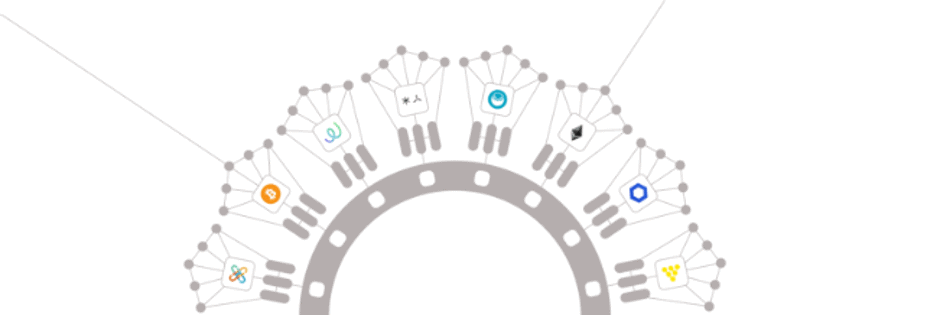
    Polkadot ($DOT) refers to itself as a next-generation blockchain protocol that connects multiple blockchains into one network. As we’ve seen in a previous article on the hottest blockchain projects in China, Polkadot and its Co-creator Gavin Wood are highly regarded by the Chinese cryptocurrency community, who are heavily invested in this project. Polkadot is also now gaining a lot of interest in the West because of its listing on major exchanges such as Binance, OKEx and Kraken.

    The purpose of Polkadot is to enable blockchain networks to improve scalability, optimise themselves for specific use cases, work and communicate together, self-govern, and upgrade without the need for hard forks. In this article, we look at Polkadot’s current status, its role in Decentralised Finance (DeFi), the $DOT token and more.

    Here’s our video explaining what is Polkadot in less than 2 minutes!

    https://www.youtube.com/watch?v=2FyLxZezPmk&t=2s

    Background

    Polkadot was launched in 2016 and is run by the Web3 Foundation, which strives to build a free and decentralized web. However, the foundation had made a contract with Parity Technologies to build its protocol. Its Founders are Gavin Wood, Peter Czaban, and Robert Habermeier. Gavin Wood, in particular, is also one of the Co-founders of Ethereum, thus bringing a sense of legitimacy and confidence in the eyes of a lot of cryptocurrency enthusiasts, especially from the Chinese audience.

    The team has extensive experience with distributed ledger systems, blockchain protocols (particularly Ethereum), cryptography, and wallet technology. Despite the lead developer being Parity Technologies, multiple independent teams have contributed to the development of Polkadot.

    What Is Polkadot?

    Polkadot is a sharded bridge-like protocol, which focuses on maintaining communication, value transfer, and pooling the security of blockchains. It allows blockchains to operate with each other in a parallel manner by unifying them into one network. The unification compounds the strengths of different blockchains and mitigates their weaknesses.

    According to the team, Polkadot is a project by developers for developers. It is aimed at connecting public and private chains, oracles, DApps, and services to seamlessly work side by side. And thus, it facilitates the connection of different independent blockchains together into a single Web3 Internet.

    Polkadot’s Building Blocks

    Polkadot is built on Substrate blockchain building framework that is derived from Parity’s experience with Ethereum, Bitcoin, and enterprise blockchains. The protocol’s state machine is compiled with WebAssembly (WASM) – a high performance virtual environment.

    Furthermore, Polkadot uses libp2p for peer discovery and communication. It is coded with C++, Rust and Golang for wide developer accessibility.

    Polkadot Governance Model

    Polkadot governance model is on-chain and well defined. It is designed to include all stakeholders in a governance council. The users can participate in the system’s decision-making by simply holding the native $DOT token. Currently, Polkadot’s Council and Technical Committee are in place, so the project and its direction is completely in the hands of $DOT holders. Governance proposals are submitted by the Council, the Technical Committee or $DOT holders. There are then voted on by the $DOT holding public.

    Status of the Polkadot Network

    Polkadot has been increasing the size of its validator sets. Now there are 274 validators operated by around 200 independant operators and backed by over 7,000 individual nominating accounts.

    This year, Polkadot launched Westend, their main long-term valueless testnet. They have also launched 2 versions of Rococo- which are Polkadot’s short-term parachains public testnets.

    Rococo

    Rococo is a public testnet aimed at testing the parachains consensus process, together with parachains built by the community and their interactions with each other.

    Rococo v1 is the latest version released on 22nd December 2020.

    PolkaBrige

    PolkaBrige is a decentralised application (dApp) platform. It also comes with its own decentralised exchange (DEX) known as PolkaBrige DEX which allows users to directly swap tokens on Polkadot to other tokens on other blockchain platforms such as Ethereum, Binance Smart Chain etc.

    To meet the yield farming craze, Polkabrige also has a smart farming mechanism which allows liquidity providers to earn more rewards.

    Advantages of Polkadot

    The Polkadot project is set to revolutionize blockchain technology by offering a bridge-like framework that provides the following advantages:

    1.       Limitless Scalability – Polkadot can support an infinite number of blockchains and allow them to connect together. These are known as para-chains.

    2.       Adaptable Consensus Mechanism – As different blockchains run on different consensus mechanisms, the Polkadot platform provides an open and adaptable consensus mechanism to host them.

    3.       Cross-Chain Transactions – The framework can support the transfer of value between different blockchains. It’s necessary for interoperability and true integration.

    4.       Defined Governance Mechanism – It has a defined governance mechanism, which eliminates a major problem faced by other blockchains.

    5.       Upgradeability – Polkadot can support upgrades, without having to resort to drastic hard forks to implement change.

    6.       Pooled Security – The blockchains connecting with Polkadot can be secured by a unifying security umbrella. This can help protect small chains that don’t have effective security bootstrapping.

    7. Low transaction fees– Polkadot claims it has lower transaction fees compared to Ethereum.

    Polkadot Token ($DOT)

    The Polkadot token, denoted by the ticker symbol $DOT, is the native asset of the Polkadot platform. It serves three main functions: governance, staking, and bonding. It has a total supply of 10 million DOT.

    Governance

    As mentioned before, DOT holders have the right to govern the platform. When we say ‘right’ it doesn’t mean that they are given privileges by someone. But rather, it is embedded in the protocol of Polkadot that DOT holders inherently have governance capabilities. These capabilities include changing the network fees, auctions, as well as the schedule for adding parachains — parallelized chains that execute parallel to Polkadot’s Relay Chain. Furthermore, holders also have influence over upgrades, bug fixes, and other system maintenance.

    Staking

    Decentralized networks require consensus mechanisms to ensure that only valid transactions are confirmed. Polkadot utilizes NPoS (Nominated Proof of Stake) as its algorithm for validation. And, DOT holders have the option to participate in this essential network operation.

    Basically, holders will be rewarded for staking their DOT in the protocol in exchange for risking their holdings for the validation of the network. This also serves as a disincentive for bad actors to participate in the network, as they are likely to lose their stake if they ‘misbehave’.

    The requirement for participating largely depends on the staking duration and the total number of tokens staked.

    However, it has been discovered by the Polkadot Team that some nominators are not receiving their rewards. The Team is currently working on a solution but this will take time. Meanwhile, the Team recommends those staking with less than 200 $DOT who do not have the opportunity to bond more should move to staking on cryptocurrency exchanges. At present, the following exchanges offer staking-as-a-service for Polkadot: Kraken, Huobi, MXC, and KuCoin.

    Bonding

    The last use case for the DOT token is bonding — this is the process of tying up DOT in order to add new parachains. It is an extension of the functionality of proof of stake.

    DOT 100x redenomination

    After the Council and Technical Committee was put into place, there was a community-run poll to determine how many Plancks should be considered as being one DOT token. Plancks are the smallest unit of exchange in Polkadot, this value does not change, rather it was how many Plancks comprise one DOT which was voted upon. It was decided that one DOT will now be denominated by 1e10 plancks instead of 1e12 plancks. So the new version of $DOT will be 100x smaller than the old $DOT.

    This redenomination will occur on 21st August 2020 at around 13:15 (UTC), specifically at block number 1,248,328. When this occurs, users do not have to do anything because it is only a front-end change. Also, most exchanges such as Binance or Kraken will automatically multiply users’ DOT deposits after the redenomination, i.e. if you deposited 10 old $DOT before the redenomination, you will automatically be credited with 1,000 new $DOT after the redenomination. And to protect users in anticipation of this, users will not be able to withdraw new $DOT until after the redenomination.

    Users have to meantime, bear in mind that some exchanges e.g. OKEx, MXC etc. offer trading pairs in OLD $DOT, whereas others e.g. Binance and Kraken offer trading pairs in NEW $DOT. $DOT holders and traders should check with the exchange they are trading on to see what their policies are for $DOT.

    Projects Built On Polkadot

    The Polkadot ecosystem has an enormous outreach and usage. There are currently 188 projects building on it. This includes crypto-projects related to DeFi, cryptocurrency wallets, infrastructure projects, tokens, Oracle, DAO, privacy, exchange, gaming, IoT, scaling, etc.

    A few well-known projects being built on the Polkadot protocol are Chainlink, Ankr, Celer Network, Akropolis, Ocean Protocol, 0x Protocol, imToken, etc.

    Polkadot’s Role in DeFi Projects

    The Decentralized Finance (DeFi) field relies on composability, cross-chain communication, value transfers, and protocols integrating with each other. It’s practically the entire rationale behind the Polkadot project. And as such many, DeFi projects utilize Polkadot.

    For instance, the DeFi automation and aggregation-based Akropolis project relies on integrations with Maker, Compound, Curve and dYdX,. They have collaborated and contributed greatly to the Polkadot ecosystem.

    Polkadot’s Similarities with Upcoming Ethereum 2.0

    The Ethereum 2.0 Phase 0 mainnet is expected to be launched in November 2020. It will introduce the highly anticipated staking mechanism. However, its full deployment won’t be complete until a few years. Polkadot, as it appears, has an incredible similarity with Eth2.

    For instance, both blockchains support sharding, meaning that they execute processing in parallel by allowing individual shards to divide the workload and communicate with each other. They both also implement hybrid consensus models, staking mechanisms, and state-transition functions.

    Conclusion

    Polkadot is fast gaining traction in the DeFi field and the wider crypto community. Owing to the easy integration, available grants, and wide composability, Polkadot’s projects are rapidly gaining value and the Polkadot association appears to have a positive influence on the project’s token price.

    As the ecosystem further matures, it is likely to become an integral part of the blockchain field and smart contracts platform.

    Decentralised Finance (DeFi) series: tutorials, guides and more

    With content for both beginners and more advanced users, check out our YouTube DeFi series containing tutorials on the ESSENTIAL TOOLS you need for trading in the DeFi space e.g. MetaMask and Uniswap. As well as a deep dive into popular DeFi topics such as decentralized exchanges, borrowing-lending platforms and NFT marketplaces

    The DeFi series on this website also covers topics not explored on YouTube. For an introduction on what is DeFi, check out Decentralized Finance (DeFi) Overview: A guide to the HOTTEST trend in cryptocurrency

    Tutorials and guides for the ESSENTIAL DEFI TOOLS:

    More videos and articles are coming soon as part of our DeFi series, so be sure to SUBSCRIBE to our Youtube channel so you can be notified as soon as they come out!

    Disclaimer: Cryptocurrency trading involves significant risks and may result in the loss of your capital. You should carefully consider whether trading cryptocurrencies is right for you in light of your financial condition and ability to bear financial risks. Cryptocurrency prices are highly volatile and can fluctuate widely in a short period of time. As such, trading cryptocurrencies may not be suitable for everyone. Additionally, storing cryptocurrencies on a centralized exchange carries inherent risks, including the potential for loss due to hacking, exchange collapse, or other security breaches. We strongly advise that you seek independent professional advice before engaging in any cryptocurrency trading activities and carefully consider the security measures in place when choosing or storing your cryptocurrencies on a cryptocurrency exchange.

  • DODOEx ($DODO): A Revolutionary On-Chain Liquidity Provider

    DODOEx ($DODO): A Revolutionary On-Chain Liquidity Provider

    DODO Exchange ($DODO) is a platform that supplies on-chain liquidity in order to support the Proactive Market Maker algorithm (PMM) to provide everyone with pure and contract-fillable liquidity on the blockchain.

    Overview

    The dawn of decentralized exchanges (DEXs) and decentralized finance (DeFi) brought with it automated market-making (AMM). Unlike in centralized exchanges, AMM doesn’t rely on buyers and sellers for a trade to take place. Instead, smart contracts sit at the center of the trade with liquidity pools providing the reserves.

    Unfortunately, in the DeFi scene, the AMM approach has faced challenges as to how to address issues such as slippage and impermanent loss effectively. As a result, platforms such as DODOEx are using a fined-tuned formula known as proactive market maker (PMM) which provides minimum slippage and improved fund utilization. Here, we take a close look at DODOEx, its contribution to the DeFi world, as well as what makes it unique.

    Background

    DODOEx, founded by three veterans in the blockchain industry, who has huge influencing power in China’s DeFi Community – Mingda Lei, Qi Wang and Diane Dai.

    Mingda Lei, he is the architect behind this new market-making algorithm for the protocol. He was a Physics PhD dropout from Peking University. He used to worked for a China-based DeFi project called DDEX as the key developer of the project. The second co-founder is Qi Wang. He is the founder of DOS Network, a China-based layer two oracle project. Before entering into the crypto industry, Wang used to worked as a software developer for firms like Pure Storage and Oracle. The third co-founder, Diane Dai, she started the first subscription-based WeChat channel that focuses on DeFi in China called DeFi Labs.

    Apart from the influencing team, DODOEx is also backed by many prominent investors such as Framework Ventures, DeFiance Capital, Pantera Capital, Binance Labs, Coinbase Ventures, Alameda Research, SevenX Ventures and more.

    What is DODOEx?

    Simply put, DODOEx is a decentralized liquidity provider using a new market making strategy. Notably, the new algorithm differs greatly from the AMM approach common with popular DEXs and/or DeFi platforms such as Uniswap and Curve.Finance.

    For example, instead of spreading funds uniformly over a price range, PMM allocates funds with close respect to market prices. One disadvantage of equally allocating funds is that only those funds with a close connection with the market price get utilized in trades. Therefore, in an AMM scenario, there’s a huge difference between the liquidity provided and the liquidity that is actually in use.

    DODO Exchange
    DODO Exchange (Image credit: DODO Exchange Website)

    How DODOEx Uses PMM to Beat AMM

    Compared to Uniswap’s AMM, DODOEx’s PPM has a better trading amount-vs-price curve. Why? Because, being a proactive formula, it reacts to the changes in the market price to effectively shift the price curve in a similar direction. Consequently, the section around the market price is considerably flat, ensuring sustained liquidity provision and utilization.

    DODOEx-Proactive Market Maker
    DODOEx – Proactive Market Maker (Image credit: “DODO: A Revolution in On-Chain Liquidity” Medium Article)

    Furthermore, apart from shifting the curve, DODOEx unlinks the base currency from the quote currency in a trading pair. Interestingly, this results in less risk and allows liquidity providers (LPs) to use the token at their disposal.

    For instance, if it’s an ETH-DAI trading pair, the LP has to deposit either ETH and DAI. Under these circumstances, DODOEx presents numerous advantages to traders and LPs

    Advantages of DODOEx to Traders

    • Although the protocol is decentralized, DODOEx traders have enough liquidity close to what is offered by centralized platforms.
    • There’s a possibility of having price differences between other exchanges and DODOEx which can be commercialized by arbitrageurs.
    • Liquidations, auctions, and other on-chain activities powered by smart contracts can utilize liquidity from DODOEx.

    Advantages of Using DODOEx as an LP

    • By unlinking the base and quote tokens, LPs can use any asset type at their disposal.
    • No minimum restrictions on deposits.
    • LPs share the network’s transaction fees.
    • LPs don’t incur price risks when depositing their own tokens.
    • They can use their coins to create trading pairs.

    DODOEx’s Native Token ($DODO)

    DODO is an ERC-20 token and forms DODOEx’s native currency. DODO is the platform’s governance token. DODOEx’s governance structure consists of three decentralized autonomous organizations (DAO); admin, risk control, and earn.

    The admin DAO is responsible for overseeing all the decisions made on the DODOEx ecosystem. Being the administrator, it has a considerable influence on the other DAOs.

    The risk control DAO, as the name suggests, deals with the system’s risk features. Earn, on the other hand, governs how incentives are shared on the platform.

    DODO token distribution
    DODO Token Distribution (Image credit: “Announcing the DODO Token and Initial DODO Offering” Medium Article)

    DODO’s total supply is 1,000,000,000 tokens which are allocated to the core team (15%), investors (16%), initial liquidity provision (1%), operations/marketing (8%), and lastly, the DODOEx community takes 60%.

    DODO’s Initial DODO Offering (IDO)

    The IDO was held on 29 September 2020 on DODO Exchange platform. DODO Exchange has listed the DODO-USDT trading pair. 1% of the total DODO supply is locked in the DODO liquidity pool and the initial offering price is $0.10 per token.

    Earning DODO: Staking and Mining

    The DODOEx system provides two ways to earn DODO tokens; staking and mining.

    Staking

    This involves locking your present DODO token holding and acquiring more tokens in the process. This can be done by:

    • Accessing the exchange through app.dodex.io.
    • Connecting your wallet through MetaMask.
    • Click “mining” on the upper far right corner.
    • Select DODO.
    • Click stake (note that there’s no way to edit the stake or unstake amount. Therefore, you can either stake or unstake your entire DODO balance).
    • Confirm your option on the exchange and on the wallet.

    Mining DODO 

    It involves providing liquidity in any supported trading pair using the pool tab. To access the pool option,

    • Visit app.dodoex.io.
    • Connect your wallet through MetaMask.
    • Select “Exchange” from the top right.
    • Click on “pool” and select your preferred pair. Note that you can deposit any coin on the trading pair. For example, if it’s the ETH-UDSC pair, you can deposit either ETH or USDC.
    • Click “Deposit,” define the token amount you wish to deposit, and select “Confirm.”
    • Access your wallet to confirm the transaction after which you click the “mining” button on the top right corner.
    • Approve the transaction and confirm it in the popup window that appears. In effect, another approval is required since you are now dealing with DLP tokens allocated from depositing your cryptocurrency on the above steps.
    • In the last step, confirm and stake.

    Core Components of the DODO Contract Framework

    A set of smart contracts powers the DODOEx protocol. However, for optimal interaction, these smart contracts are divided into three core components. They include:

    The Core – This holds all the ecosystem’s data and logic. It consists of the transparent proxy contract and the logic implementation contract.

    DODO contract framework
    DODO Contract Framework (Image credit: DODOEx ‘Smart Contract Framework’ Github)

    The Entrance – The entrance contract helps in streamlining activities on the transparent proxy contract, which is associated with oracles and fine-tuning parameters. Consequently, it helps mitigate the losses for users.

    The Helper – This section of the DODOEx ecosystem holds contracts that are meant to help remove the complexity of the platform away from its users.

    Conclusion

    The network’s next-generation liquidity provision algorithm ensures high fund utilization and ensures LPs don’t lose value between depositing and withdrawing, commonly known as impermanent loss.

    In addition, DODOEx is beneficial to both traders and liquidity providers. For example, it provides enough liquidity for traders and LPs share a section of the system’s transaction. Also, DODO mining and staking enable investors to increase their token holdings.

    Decentralised Finance (DeFi) series: tutorials, guides and more

    With content for both beginners and more advanced users, check out our YouTube DeFi series containing tutorials on the ESSENTIAL TOOLS you need for trading in the DeFi space e.g. MetaMask and Uniswap. As well as a deep dive into popular DeFi topics such as decentralized exchanges, borrowing-lending platforms and NFT marketplaces

    The DeFi series on this website also covers topics not explored on YouTube. For an introduction on what is DeFi, check out Decentralized Finance (DeFi) Overview: A guide to the HOTTEST trend in cryptocurrency

    Tutorials and guides for the ESSENTIAL DEFI TOOLS:

    More videos and articles are coming soon as part of our DeFi series, so be sure to SUBSCRIBE to our Youtube channel so you can be notified as soon as they come out!

    Disclaimer: Cryptocurrency trading involves significant risks and may result in the loss of your capital. You should carefully consider whether trading cryptocurrencies is right for you in light of your financial condition and ability to bear financial risks. Cryptocurrency prices are highly volatile and can fluctuate widely in a short period of time. As such, trading cryptocurrencies may not be suitable for everyone. Additionally, storing cryptocurrencies on a centralized exchange carries inherent risks, including the potential for loss due to hacking, exchange collapse, or other security breaches. We strongly advise that you seek independent professional advice before engaging in any cryptocurrency trading activities and carefully consider the security measures in place when choosing or storing your cryptocurrencies on a cryptocurrency exchange.

  • Reef Finance ($REEF): The All-In-One Defi Platform

    Reef Finance ($REEF): The All-In-One Defi Platform

    In the last months, we have witnessed the crypto space and blockchain industry go beyond the norm. With more decentralized finance (DeFi) projects than ever, it is clear that the next target should be greater adoption. However, the complexity of dealing with multiple (d)Apps interfaces in order to access a wide array of services, inevitably narrows down the number of participants. Reef Finance is built to change that.

    The way Reef Finance works is by reuniting all blockchain services together in a single, unified interface. This makes the whole DeFi user experience seamless and convenient. In just a single dApp, anyone can buy crypto, perform trades, stake assets, take loans, farm, manage their portfolio and more without any fuss.

    Tackling Defi’s Fragmentation

    What Denko Mancheski, CEO of Reef Finance, and his team had in mind when they started working on the project, was to solve an inherent complexity. Mancheski believes that, while there have already been many useful innovations in crypto recently, mass adoption is still difficult to achieve. The reason he points out is the psychological barrier that dampens the DeFi communities’ growth. True enough, the DeFi space today seems very fragmented. There are features existing in a particular application that are unavailable in another, and there are contract functions that would complement each other, but only exist on separate platforms.

    The space offers promising products, but they are too overwhelming to spur adoption, especially for beginners. This is why Reef Finance’s goal has been, according to Mancheski, to “abstract away complexities” and try to “onboard a simple non-tech savvy user.”

    What is Reef Finance?

    Reef Finance (“Reef”) is a non-custodial multi-chain smart yield engine and liquidity aggregator. Powered by Polkadot, it enables cross-chain integrations across various DeFi protocols.

    Essentially, it makes Decentralized Finance much easier to access, with the ability to diversify a portfolio in a single click. It functions as a one-stop-shop for DeFi projects that users can access without having to switch from different applications, one after another. Within its interface users can access different exchanges and, through the help of smart contracts, Reef combines the liquidity of these markets. Furthermore, trading can be easily done on the platform. 

    Reef Finance is the first Polkadot project ever launched on Binance Launchpool. The farming started on December the 23rd and will continue for 30 days. The platform will be beginner-friendly and will launch in Q1 2021, while the protocol has recently been audited by Halborn.

    Why Polkadot?

    Reef’s deployment on the Polkadot ecosystem will benefit users in terms of transaction costs and speed. As it is well known to many, the ‘traffic’ on the Ethereum’s network has often resulted in skyrocketing fees and long transaction times. This will continue at least until Ethereum 2.0 is fully deployed, which isn’t likely to happen for a while. 

    Polkadot, on the other hand, doesn’t suffer from the same issues. Parachains’ independence on the network prevents network congestion. It also powers Reef’s cross-chain functionality through the ‘Bridge’ protocol. By implementing this blockchain innovation, Reef can rely on products and services from different networks into a single interface.

    The Reef platform is made of three major components that complement each other.

    Global Liquidity Aggregator

    Reef offers a simil-exchange service linked to some of the biggest trading platforms in the space. The uniqueness here is that the aggregated liquidity goes through CEXs and DEXs. In this way, users can hedge the downsides of the two types of liquidity sources, among which trading fees and high slippage.

    Reef can access all the liquidity combined of CEXs and DEXs
    Reef can access all the liquidity combined of CEXs and DEXs

    The centralized exchange liquidity will be accessed through the use of brokerage services, such as Tagomi, Caspian or Quantreq. Conversely, decentralized liquidity will come from sources like on-chain order-books (0x) and AMMs (Uniswap, Balancer, Bancor….). Reef’s liquidity aggregation will also assist in protecting users from market manipulation and front-running attacks.

    All of this will make trading on Reef not only easy and affordable, but also diverse.

    Smart Yield Farming Aggregator

    Reef Yield Engine enables staking in multiple asset baskets which can be automated through the help of an AI that users can configure based on their financial needs. Users can decide how much to allocate to each basket and the operating system will dynamically rebalance and adjust them, moving portions of the allocations to other more convenient assets/pools.

    The purpose of the ‘Reef Intelligence Engine’ is to enable the AI to manage assets on user’s behalf. This helps automate the nitty-gritty of trading and staking for Reef’s newcomers. Planning a profitable allocation of assets according to each trader’s risk level has never been much easier in Defi. The engine is machine learning-powered, enabling its growth over time.

    Since the AI is data-driven, the information it holds is fed by an off-chain oracle (they have a partnership with Chainlink also). The oracle supplies data to proxy smart contracts that serve as the AI’s backbone. It monitors every pertinent information concerning services offered on the platform, whether they are social media data, latest news, or on-chain data.

    Reef also integrates with some Defi insurance protocols to provide coverages for its users.

    Smart Asset Management

    The third founding element of the platform is its asset management option. Users can seamlessly rebalance their allocations between their baskets through an easy UI accessible from mobile devices or computers. The AI engine will also make intelligent recommendations to help with taking decisions.

    The $REEF Token

    $REEF is the native, utility token of the Reef platform. It is mainly used to pay for transaction fees as well as support the protocol rewards structure.

    An important role for the platform is that of Network Collators. They assure that the network is healthy by keeping a copy of the full state of Parachains at a given time. They are similar to miners producing blocks, supporting the Polkadot blockchain. The Collators receive $REEF tokens as a reward for all basic operations such as processing transactions, deploying smart contracts, submitting a proposal and more.

    Staking and Governance

    Reef Protocol utilizes Polkadot’s Proof of Stake base consensus mechanism and it’s governed through a DAO structure. By holding and staking $REEF tokens, users can take part in important protocol decisions concerning the structure of the asset baskets, reserve limits, yield rewards, liquidity pools, and others.

    Stakers have the freedom to choose how they want to receive their rewards, whether in ETH/USDC or $REEF. Opting for the native token will lead to better rates.

    New Partnerships and roadmap

    Even though Reef Finance launched in late September, its development has been in progress for long. The project secured over 20 partnerships in 2020 and more are coming this year. Among them, important were those with Matic, Kava, Covalent, Bluzelle and Chainlink. Reef’s integration with Binance Access Api will also allow a FIAT ramp for cryptocurrency purchases along with a decentralized trading opportunity within their platform.

    In January, they secured a new partnership with OpenDefi, a platform that allows the tokenization of insured and physically backed real-world assets, held by custodians. Users can stake to receive instant loans against their assets and enjoy yield opportunities. More on the partnerships and on OpenDefi can be found here and here.

    Another notable collaboration is the one with Manta Network, a cross-chain privacy devoted Defi platform and price-stable Dex. Reef users will be able to access the liquidity offered by Manta Network Dex, reinforcing the core aspect of Reef Finance: liquidity aggregation.

    On January the 20th a two-week “zero gas fee” initiative started on OpenOcean, a trading platform, which has given traders the opportunity to receive a refund for all the fees spent while trading $REEF. The offer was limited to a total of 40,000 $REEF.

    The official Roadmap is constantly updated and more information on future news can be found on Reef Finance’s Medium page. This project is definitely one of the most anticipated and rumored in 2021!

    Conclusion

    DeFi innovation has to attract a lot more people to keep creating a vibrant and supportive community. After all, it is adoption that helps sustaining all these blockchain developments in the long run. Simplifying access to multiple DeFi products and creating a unified platform is exactly what the space needs today.

    Reef Finance’s target to abstract (?) DeFi looks promising. Not only do they make it easier for users to tap into other exchanges, but the platform also introduced AI technology to make it convenient for traders to manage their assets. The project may be young, but it has the tools users need to efficiently and profitably take control of their funds.

    Our interview with Denko Mancheski, CEO of Reef Finance

    Decentralised Finance (DeFi) series: tutorials, guides and more

    With content for both beginners and more advanced users, check out our YouTube DeFi series containing tutorials on the ESSENTIAL TOOLS you need for trading in the DeFi space e.g. MetaMask and Uniswap. As well as a deep dive into popular DeFi topics such as decentralized exchanges, borrowing-lending platforms and NFT marketplaces

    The DeFi series on this website also covers topics not explored on YouTube. For an introduction on what is DeFi, check out Decentralized Finance (DeFi) Overview: A guide to the HOTTEST trend in cryptocurrency

    Tutorials and guides for the ESSENTIAL DEFI TOOLS:

    More videos and articles are coming soon as part of our DeFi series, so be sure to SUBSCRIBE to our Youtube channel so you can be notified as soon as they come out!

    Disclaimer: Cryptocurrency trading involves significant risks and may result in the loss of your capital. You should carefully consider whether trading cryptocurrencies is right for you in light of your financial condition and ability to bear financial risks. Cryptocurrency prices are highly volatile and can fluctuate widely in a short period of time. As such, trading cryptocurrencies may not be suitable for everyone. Additionally, storing cryptocurrencies on a centralized exchange carries inherent risks, including the potential for loss due to hacking, exchange collapse, or other security breaches. We strongly advise that you seek independent professional advice before engaging in any cryptocurrency trading activities and carefully consider the security measures in place when choosing or storing your cryptocurrencies on a cryptocurrency exchange.
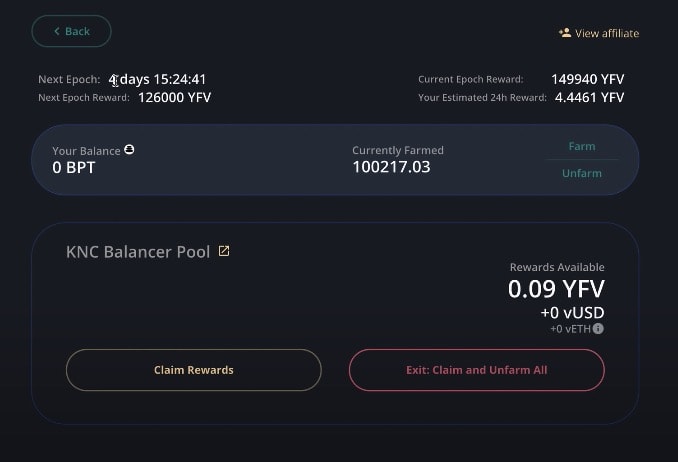
  • Unbound Finance (UNB/UND): unlocking liquidity from AMM pools

    Unbound Finance (UNB/UND): unlocking liquidity from AMM pools

    Unbound Finance (UNB/UND) is a decentralised protocol that aims to unlock liquidity from automated market maker (AMM) pools. This allows users to instantly obtain crypto credit lines, as well as providing high-yield earning opportunities.

    Background

    Unbound Finance was launched in October 2020 by a publicly known team. It’s currently in the testnet phase and no token sale has been conducted yet. The team has claimed that they have major exchanges’ CEOs onboard as angels and currently working on audits for mainnet launch in the near future. It’s supported by Tomo Chain, Zilliqa, Frontier, Fuse Network, Enjin, among others.

    What is Unbound Finance?

    Unbound Finance is a decentralized protocol slated to unlock more use cases for liquidity pool tokens from the AMM market. Unbound is aiming to unleash the potential of these powerful assets and promote their further usage in DeFi protocols, without the need to redeem those liquidity pools tokens. It will also enable minting of a decentralized collateralized stablecoin called UND, synthetic Ethereum, and other synthetic assets with LPTs as collateral.

    It’s essentially a derivative layer of automated market makers (AMMs) or orderbook-less decentralized exchanges (DEXes) tasked with ‘unlocking’ the total value locked (TVL) in DeFi protocols. This mechanism can retrieve liquidity from DEXs like Uniswap, Balancer, Bancor, Curve, etc.

    According to the official documents, it will be debt and liquidation-free thanks to the use of high-quality liquidity pairs, large collateral ratios, and backup funds.

    Synthetic Assets

    Having introduced the term Synthetic assets, it’s a good idea to clarify what they mean. Synthetics are, as the name dictates, not the real thing but a copy of the original. It means that it is a representative of the underlying asset.

    Generally, this is accomplished by tracking the price of an asset through on-chain oracles, which allows for their continuous availability and 24/7 trading, as well as usage in protocols. Synthetic assets can range from cryptocurrencies, fiat, stocks, index funds, precious metals, foods, bonds, and many more. If anything has a price in the market, it can be turned into a synthetic asset.

    Aims And Objectives

    The protocol is trying to become the primary source of liquidity provision for Liquidity Pool tokens (LPTs) in order to bring existing liquidity pools into active usage, act as an LPT treasury, mint and manage the synthetic assets tracking the price of an underlying, establish LPT role as collateral, create pools of liquidity pools, develop instruments for margin trades and yield compounding, and safeguard against loan liquidations.

    Fees

    Unbound Finance charges a fee for minting assets. Fees will be distributed as follows:

    • 20% SAFU fund-
    • 40% UND-DAI liquidity pool
    • 20% team fund: this will be for further development of the project.

    Unbound Finance Services

    There are three primary services provided by the protocol. These include minting, unlocking, and earning services.

    Minting

    Unbound Finance allows users to mint the UND stablecoin and other synthetic assets by providing their LPT tokens as collateral. This allows them to put the value of their LPTs to use without having to liquidate them in a convenient manner, allowing them to access the funds immediately. The users are charged a minting fee and can only generate the synthetics according to the Loan-to-Value (LTV) ratio. 

    Unlocking

    After the users return their borrowed funds, the UND or synthetics are burned and the collateral is released. Since the contracts are perpetual and devoid of an expiry date, the users can return the funds at any time without any deadline. There is no fee charged by the protocol for unlocking collateral.

    Earning

    Another service provided by the platform is the earning facility, where the liquidity providers are given rewards for providing liquidity to the platform pools. The rewards are competitive, variable, and derived largely from the initial mint transaction fees.

    Unbound Finance Tokens (UNB/UND)

    The primary token of the platform is the Unbound Finance (UNB) token, used for governance purposes and user participation. It can be used to signal intent on important parameters and tuning the performance of the protocol. UNB is an inflationary token and users staking the it will receive rewards to offset the yearly inflation of 4%.

    The second token type on the protocol is the synthetics, minted from depositing LPT collateral and being withdrawn/burned once the borrowed amount has been successfully repaid. They don’t have a fixed cap and their actual amount in circulation will remain variable.

    Unbound Finance – Supported Liquidity Pools

    Unbound Finance is currently available on testnet only, but supports the following:

    • Uniswap
    • Balancer
    • Bancor
    • Mooniswap
    • Curve.Fi
    • Kyber

    In the future, the liquidity pools of Dodo, Fulcrum, 0x, and Black Hole will be made available too.

    Here’s their tutorial on how to use to the Unbound Finance testnet.

    Conclusions

    The first decentralized orderbook-less exchange was Bancor. And since then, DEXs have exploded in numbers and currently compete well against their centralized counterparts. However, the users providing the liquidity and getting the LPT tokens are stuck with an asset, which ironically isn’t liquid by itself. Unbound Finance seems to be the likely answer to address the shortcomings of LPT tokens.

    Their further inclusion in the DeFi protocols and newfound uses will surely help boost liquidity and derivatives trading. The promise of no debt and no liquidation is another bonus point, as users can make use of the capital borrowed against collateral, without any fear of losing them. The perpetuity of the contracts allows the borrowed amount to be paid at any time.

    Even though Unbound Finance is in its infancy and available only on testnet. The concept and the premise are powerful. Its execution remains to be seen, but if successful, it will be the first of its kind to allow users to mint assets against liquidity pool tokens (LPTs). Hence, it’s likely to set the tone for the upcoming projects and the integrations within the existing ones.

    Disclaimer: Cryptocurrency trading involves significant risks and may result in the loss of your capital. You should carefully consider whether trading cryptocurrencies is right for you in light of your financial condition and ability to bear financial risks. Cryptocurrency prices are highly volatile and can fluctuate widely in a short period of time. As such, trading cryptocurrencies may not be suitable for everyone. Additionally, storing cryptocurrencies on a centralized exchange carries inherent risks, including the potential for loss due to hacking, exchange collapse, or other security breaches. We strongly advise that you seek independent professional advice before engaging in any cryptocurrency trading activities and carefully consider the security measures in place when choosing or storing your cryptocurrencies on a cryptocurrency exchange.