Author: Michael Gu

  • HyperEVM Ecosystem Airdrop Guide

    HyperEVM Ecosystem Airdrop Guide

    Introduction

    HyperEVM, the smart contract layer of the Hyperliquid ecosystem, is designed to provide a high-performance environment for decentralized finance (DeFi) applications. Unlike a separate blockchain, HyperEVM is secured by the same HyperBFT consensus as HyperCore, allowing for seamless and direct interaction with Hyperliquid’s core functionalities, such as spot and perpetual order books. This integration offers low fees, fast transaction finality, and full composability with leading protocols, making it a fertile ground for innovation in the DeFi space.

    This guide aims to provide a more comprehensive understanding of the HyperEVM ecosystem, detailing its architecture, advantages, and the various applications built upon it. We will also explore strategies to maximize potential airdrop opportunities within this rapidly evolving ecosystem.

    Understanding HyperEVM: Architecture and Advantages

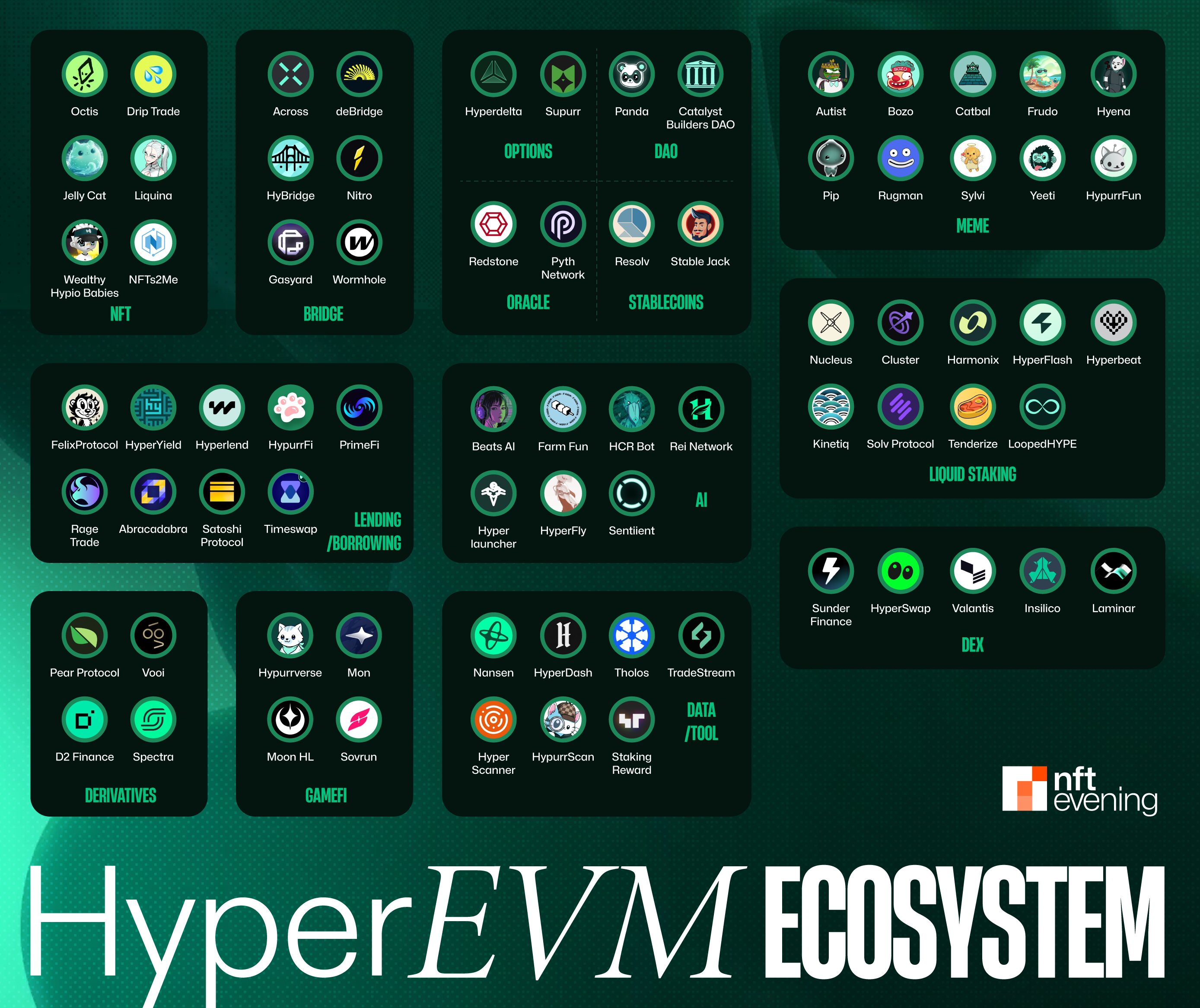
    HyperEVM is not a standalone blockchain but an integral part of the Hyperliquid Layer 1 blockchain. It leverages Hyperliquid’s existing infrastructure and consensus mechanism (HyperBFT) to offer a high-performance and secure environment for smart contracts. This unique architecture provides several key advantages:

    • Seamless Integration with HyperCore: HyperEVM can directly interact with Hyperliquid’s core components, including its spot and perpetual order books. This allows DeFi applications built on HyperEVM to access deep liquidity and real-time market data without bridging risks or latency issues.
    • Permissionless Development: Developers can deploy ERC20 contracts and other EVM-compatible applications on HyperEVM using standard tooling. This permissionless approach fosters innovation and allows projects to integrate with Hyperliquid’s trading infrastructure easily.
    • Enhanced Functionality for DeFi Protocols: HyperEVM enables advanced DeFi functionalities. For instance, lending protocols can read real-time asset prices from HyperCore order books and execute liquidations directly through smart contracts, streamlining operations and reducing risks.
    • Unified State: The unified state between HyperCore and HyperEVM eliminates bridging risks often associated with separate chains, providing a more secure and efficient environment for users and developers.
    • Scalability and Performance: By leveraging Hyperliquid’s high-throughput Layer 1, HyperEVM benefits from fast transaction processing and low fees, crucial for demanding DeFi applications.
    HyperEVM Ecosystem Overview

    Current State and Future Development

    HyperEVM is currently in its alpha stage, with a focus on gradual rollout and iterative development. This phased approach ensures stability and allows for continuous improvement based on user feedback. While some advanced features, such as higher throughput and write system contracts, are not yet live on the mainnet, they are planned for future implementation. This commitment to a fair, credibly neutral platform and a user-centric development process positions HyperEVM for long-term growth and adoption.

    The HyperEVM Ecosystem: A Deep Dive into Live Applications
    Hyperliquid Ecosystem Map

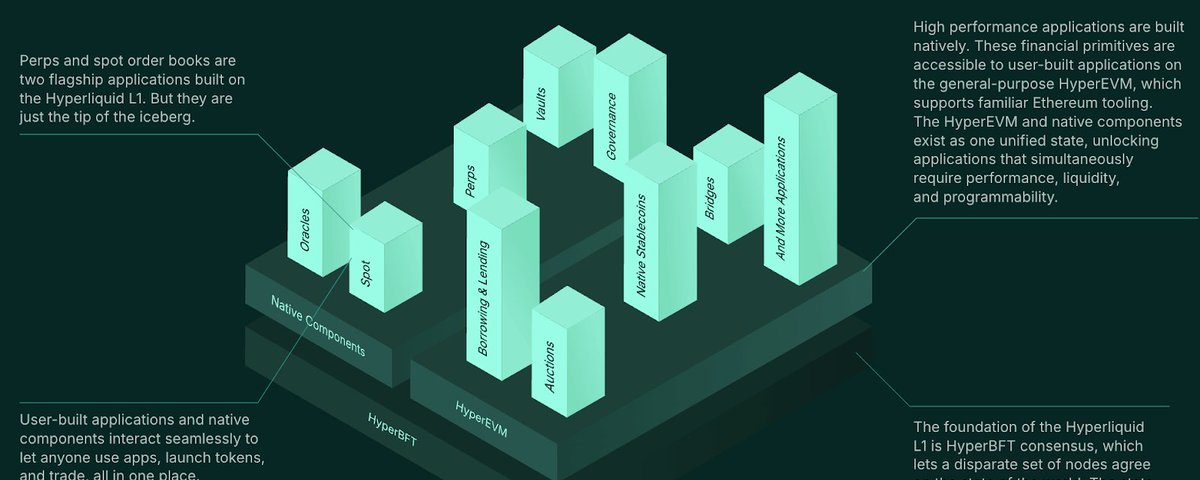
    The HyperEVM ecosystem is rapidly expanding, with numerous protocols offering innovative solutions across various DeFi sectors. The original article listed 25 applications, and we will now present them in a more organized and detailed manner, highlighting their core functionalities and potential airdrop interaction methods. We will also incorporate additional information where available.

    Bridges

    Project Name Twitter HandleDescriptionCore Interaction Methods
    The Hyperliquid Bridge (by LayerZero)@LayerZero_CoreOfficial LayerZero-powered bridge connecting HyperEVM to 120+ chains.Bridge assets like USDT0, USDe, APE, PLUME, RLP, USR, COOK, and cmETH to HyperEVM; Transfer tokens from any LayerZero-supported chain to HyperEVM; Use the bridge interface at thehyperliquidbridge.xyz/transfer; Track cross-chain transactions for potential points.
    Garden Finance@garden_financeCross-chain Bitcoin bridge with zero slippage and fast transfers to HyperEVM.Bridge BTC to HyperEVM in one click; Swap assets on Bitcoin, Ethereum, Arbitrum, Base, and Berachain to HyperEVM; Use their one-click swap feature for seamless transfers; Track transaction history for potential points.

    Decentralized Exchanges (DEXs)

    Project Name Twitter HandleDescriptionCore Interaction Methods
    HyperSwap@HyperSwapXLow-slippage DEX with deep ecosystem integration, positioned as a lightweight alternative to KittenSwap with optimized trading and low TVL mining.Provide liquidity and quality LP tokens; Participate in regular trading, especially with partner tokens; Hold ecosystem assets like Hypio NFTs, Buddy tokens, CatCabal, or PiP for additional rewards.
    HyperSwap (formerly KittenSwap)@KittenSwapDEXLeading AMM DEX on HyperEVM, offering low-slippage swaps and high liquidity.Swap tokens with low fees; Provide liquidity to earn trading fees; Participate in liquidity mining programs; Stake LP tokens for additional rewards.
    HyperUnit (formerly HyperDEX)@HyperDEXDecentralized exchange with advanced trading features and deep liquidity.Trade various assets with advanced order types; Provide liquidity to earn trading fees; Participate in trading competitions; Stake platform tokens for governance rights.

    Lending & Borrowing Protocols

    Project Name Twitter HandleDescriptionCore Interaction Methods
    HyperLend@hyperlendxPrimary lending protocol on HyperEVM supporting core assets like HYPE, stHYPE, LHYPE, and USDXL. Provides liquidity foundation for other protocols including Harmonix, Mizu Labs, and Felix.Deposit assets early in new cycles (HYPE, LHYPE, or USDXL); Borrow assets to increase point weight; Activate daily XP cycles (hold ≥100 points and deposit ≥$50); Leverage available boosts (Testnet participants get permanent point multipliers, Hold @HypioHL NFTs for additional points); Stack rewards by using borrowed assets in other protocols.
    HypurrFi@HypurrFiLeverage lending platform and issuer of the native overcollateralized stablecoin USDXL. Users can collateralize $HYPE or stHYPE to borrow USDXL while still earning interest on their collateral.Deposit $HYPE and borrow USDXL; Add borrowed USDXL to liquidity pools on KittenSwap or HyperSwap; Hold or lend USDXL for potential future rewards; Participate in early user activities (platform tracks borrowing, adding liquidity, or transferring USDXL).
    Felix Protocol@felixprotocolFirst native stablecoin protocol on HyperEVM where users can mint feUSD by collateralizing HYPE. Offers dual earning paths through liquidation rewards and liquidity provision.Collateralize HYPE to mint feUSD; Stake feUSD in stability pools for liquidation rewards; Add feUSD to liquidity pools on KittenSwap or HyperSwap; Use feUSD across multiple protocols for potential additional rewards.
    Keiko Finance@KeikoFinancePermissionless borrowing protocol with dynamic interest rates and liquidation ratios.Deposit assets like HYPE or wstHYPE as collateral; Borrow against your collateral with dynamic interest rates; Participate in the protocol’s points program; Monitor liquidation ratios to maintain healthy positions.
    Timeswap@TimeswapLabsFixed-rate lending protocol on HyperEVM offering unique lending and borrowing opportunities.Provide liquidity to earn fixed-rate yields; Borrow assets at fixed rates; Participate in their points program; Integrate with other HyperEVM p### Staking & Yield Farming
    Project Name Twitter HandleDescriptionCore Interaction Methods
    Staked HYPE@stakedhypeLiquid staking protocol for HYPE tokens on HyperEVM.Stake HYPE to receive stHYPE (liquid staking token); Use stHYPE across DeFi protocols while earning staking rewards; Integrate with money markets like Felix Protocol and HypurrFi; Participate in the decentralized validator network.
    Looped HYPE@Looped_HYPERebasing token representing LHYPE, allowing users to earn increased yield without gas fees or tracking.Stake LHYPE on the official website; Use LHYPE in DeFi positions; Participate in early user programs.
    HyperUnit (formerly HyperStake)@HyperStakeStaking platform for various HyperEVM assets, offering competitive yields.Stake HYPE, stHYPE, and other ecosystem tokens; Earn staking rewards; Participate in governance through staked tokens; Monitor staking APYs and optimize returns.
    HyperUnit (formerly HyperFarm)@HyperFarmYield farming protocol on HyperEVM, providing opportunities to earn high returns on crypto assets.Deposit assets into farming pools; Earn yield in various tokens; Participate in new farming opportunities; Monitor APYs and adjust strategie### Other DeFi Protocols & Tools
    Project Name Twitter HandleDescriptionCore Interaction Methods
    HL Names@hlnamesDomain name service for HyperEVM, similar to ENS for Ethereum.Register .hl domain names; Set up wallet resolution for easier transactions; Trade domain names on secondary markets; Connect domains to other ecosystem protocols.
    Hyperbeat@0xHyperBeatVerification and ecosystem fund focused on quality, revenue, and long-term engagement with Hyperliquid.Stake HYPE with Hyperbeat to accumulate Hearts points; Access Hyperbeat through Royco Markets; Participate in ecosystem activities to earn Hearts points.
    Genesy@GenesyHLGamified DeFi experience on HyperEVM where strategy plays a key role.Participate in gamified DeFi strategies; Transfer tokens between HyperCore and HyperEVM for Genesy; Climb leaderboards through strategic gameplay; Earn rewards based on performance and strategy.
    Hyperfly@hyperflyaiDEX aggregator and AI-powered trading assistant for HyperEVM.Use the DEX aggregator for optimal swap routes; Deploy AI agents for automated trading strategies; Track protocol points and rewards; Monitor new protocols joining HyperEVM through their platform.
    HyperUnit@hyperunitDecentralized asset tokenization protocol built on Hyperliquid.Deposit native BTC, ETH, or SOL to receive tokenized versions; Stake tokenized assets for yield; Participate in governance; Use tokenized assets across HyperEVM DeFi.
    HyperUnit (formerly HyperLaunch)@HyperLaunchLaunchpad for new projects on HyperEVM, offering early access to promising tokens.Participate in IDOs and token sales; Stake platform tokens for allocation priority; Research upcoming projects; Earn rewards from successful launches.
    HyperUnit (formerly HyperNFT)@HyperNFTNFT marketplace and platform for creating and trading digital collectibles on HyperEVM.Buy, sell, and trade NFTs; Mint new NFTs; Participate in NFT auctions; Discover new collections.
    HyperUnit (formerly HyperGame)@HyperGameGaming platform on HyperEVM, featuring various play-to-earn games and NFT integrations.Play games to earn crypto and NFTs; Participate in gaming tournaments; Trade in-game assets; Discover new blockchain games.
    HyperUnit (formerly HyperSocial)@HyperSocialDecentralized social media platform on HyperEVM, enabling users to connect and share content.Create and share content; Connect with other users; Earn rewards for engagement; Participate in community governance.
    HyperUnit (formerly HyperDAO)@HyperDAODecentralized autonomous organization platform on HyperEVM, empowering communities to govern projects.Participate in governance proposals; Vote on key decisions; Stake tokens for voting power; Earn rewards for active participation.

    Conclusion

    The HyperEVM ecosystem, with its innovative architecture and growing suite of applications, presents a dynamic and promising landscape for DeFi enthusiasts and airdrop farmers. By actively engaging with these diverse protocols, users can not only maximize their potential rewards but also contribute to the growth and decentralization of this cutting-edge ecosystem. As HyperEVM continues to evolve, staying informed and actively participating will be key to unlocking its full potential.
  • RISE Chain Testnet Airdrop Guide

    RISE Chain Testnet Airdrop Guide

    Introduction

    This comprehensive guide will walk you through the steps to interact with the RISE Chain Testnet for a potential airdrop. RISE Chain is a cutting-edge Ethereum Layer 2 blockchain focused on delivering ultra-fast performance and scalability while maintaining Ethereum’s security and decentralization. Engaging with its testnet is a key way to position yourself for potential future rewards.

    Step-by-Step RISE Chain Testnet Airdrop Guide

    Follow these instructions to interact with the RISE Chain Testnet and maximize your chances of a potential airdrop:

    Step 1: Add RISE Testnet to Your Wallet

    Before you can interact with the RISE Testnet, you need to add its network configuration to your cryptocurrency wallet (e.g., MetaMask). You can typically find the network details on the RISE Chain portal or documentation. Look for an “Add Network” button or section that provides the necessary RPC URL, Chain ID, and other parameters. Once added, switch your wallet to the RISE Testnet.

    Step 2: Claim Faucet Tokens

    Navigate to the RISE Chain Testnet Faucet at https://faucet.testnet.riselabs.xyz/. Enter your wallet address in the designated field. The faucet allows you to claim various testnet tokens, including ETH, WETH, USDC, and others. It is recommended to claim all available tokens to enable comprehensive testing of different dApps on the network. Remember that these tokens have no real value and are solely for testing purposes.

    Step 3: Explore RISE DApps

    Actively engage with the decentralized applications (dApps) available on the RISE Testnet. You can find these dApps by navigating to the “Apps” or “Explore Apps” section on the RISE Chain portal (https://portal.risechain.com/). Interact with as many dApps as possible, performing various transactions such as swapping tokens, providing liquidity, or participating in any available testnet activities. Consistent and varied interaction with the ecosystem is often a key factor in airdrop eligibility.

    Project Overview: RISE Chain – The Ethereum Layer 2 for Infinite Speed

    RISE Chain is an innovative Ethereum Layer 2 blockchain designed to address the critical challenges of speed and scalability in the decentralized ecosystem. It aims to deliver real-time performance with ultra-low latency and high transaction throughput, all while maintaining a strong commitment to Ethereum’s security and decentralization principles.

    Core Technologies and Vision:

    RISE Chain’s primary innovation lies in its “Infinite Speed” architecture, which leverages a unique technology called Shreds. Shreds are verifiable sub-blocks that enable parallel processing and rapid transaction pre-confirmations, significantly reducing round-trip latency to as low as 10 milliseconds. This breakthrough allows for an instant user experience and efficient execution of complex DeFi applications.

    The project is also focused on achieving high throughput, with the testnet demonstrating capabilities of up to 50,000 transactions per second (TPS) and a roadmap to exceed 100,000 TPS. This scalability is crucial for supporting a large number of users and applications without compromising performance.

    Furthermore, RISE Chain prioritizes decentralization by designing its system to run on widely available hardware, ensuring that it can evolve into a robust and censorship-resistant network. It plans to integrate with Ethereum’s Layer 1 validator set for transaction ordering and execution through “Based Sequencing,” further enhancing its security and alignment with the broader Ethereum ecosystem.

    Team Information:

    RISE Chain is developed by RISE Labs. While specific individual profiles for all team members are not extensively publicized, the project is backed by a team with expertise in blockchain technology and a strong focus on performance and scalability. Sam Battenally is listed as the Founder & CEO of RISE Labs [2]. Other individuals associated with RISE Labs include Dung Vu Trung and Kien Nguyen, and Ivan Rybin as a Rust developer [2]. The team’s commitment to pushing the boundaries of blockchain technology is evident in their innovative approach to Layer 2 scaling solutions.

    Funding Information:

    RISE Chain has successfully attracted significant investment from prominent venture capital firms. The project recently secured an additional $4 million from Galaxy Ventures, bringing its total funding to $8 million [3, 4, 5, 7, 9]. This substantial funding underscores investor confidence in RISE Chain’s vision and its potential to revolutionize the Ethereum scaling landscape. The capital raised will be utilized to further develop the platform, expand the team, and drive innovation in the ultra-fast Layer 2 space.

    Revenue Model:

    As an Ethereum Layer 2 blockchain, RISE Chain’s revenue model is likely to be based on transaction fees, similar to other blockchain networks. Users would pay a small fee for each transaction processed on the RISE Chain. Given its focus on high throughput and low latency, the project aims to attract a large volume of transactions, which would contribute to its revenue. Additionally, there might be potential for revenue generation through:

    Developer Tools and Services: Offering premium tools, APIs, or services for developers building on the RISE Chain.

    Ecosystem Growth Initiatives: Potential fees or mechanisms related to supporting and growing the dApp ecosystem on RISE Chain.

    Staking and Validation: If RISE Chain implements a staking mechanism for network security, a portion of transaction fees or newly minted tokens could be distributed to stakers.

    Conclusion

    Participating in testnets like RISE Chain offers a unique opportunity to engage with cutting-edge blockchain technology and potentially qualify for future airdrops. By actively adding the network to your wallet, claiming faucet tokens, and exploring the various dApps, you contribute to the growth and testing of the RISE Chain ecosystem. This proactive engagement can position you favorably for any potential airdrop rewards.

    References

    [1] https://x.com/rise_chain?lang=en

    [2] https://www.rootdata.com/Projects/detail/RISE%20Chain?k=MTQ0MDY%3D

    [3] https://www.coindesk.com/tech/2025/06/06/rise-chain-secures-4m-from-galaxy-to-power-ultra-fast-layer-2

    [4] https://thedefiant.io/news/press-releases/galaxy-ventures-backs-rise-chain-8m-raised-to-launch-fastest-zone-for-real-time-apps-on-ethereum

    [5] https://www.dlnews.com/research/external/galaxy-ventures-backs-rise-chain-8m-raised-to-launch-fastest-zone-for-real-time-apps-on-ethereum/

    [6] https://risechain.com/

    [7] https://www.ainvest.com/news/rise-chain-secures-4-million-investment-galaxy-ventures-mainnet-development-2506/

    [8] https://dailyhodl.com/2025/06/09/galaxy-ventures-backs-rise-chain-8-million-raised-to-launch-fastest-zone-for-real-time-apps-on-ethereum/

    [9] https://zycrypto.com/galaxy-ventures-leads-8m-funding-round-in-rise-chain-fueling-the-future-of-real-time-blockchain-apps-on-ethereum/

  • Turnkey Airdrop Step-by-Step Guide

    Turnkey Airdrop Step-by-Step Guide

    Introduction

    This comprehensive guide will walk you through the steps to interact with the Turnkey Testnet for a potential airdrop. Turnkey is a project focused on secure and flexible wallet infrastructure, and participating in their testnet can position you for future rewards. While the exact criteria for an airdrop are often unannounced, engaging with the protocol’s features during its testnet phase is a common strategy for airdrop hunters.

    Step-by-Step Turnkey Testnet Airdrop Guide

    Follow these instructions carefully to maximize your chances of a potential Turnkey airdrop:

    Step 1: Sign Up with Email

    Navigate to the Turnkey Testnet wallet at https://wallet.tx.xyz/. You will be prompted to sign up using your email address. Enter your email and proceed with the email confirmation process.

    Step 2: Export and Backup Your Wallet

    Once you have successfully signed up and logged in, it is crucial to export and securely back up your wallet’s seed phrase or private key. Look for an “Export” option within your wallet interface. This step is vital for the security of your funds and to ensure you can recover your wallet if needed. Store this information in a safe, offline location.

    Step 3: Fund Your Wallet with Sepolia ETH

    To interact with the Turnkey Testnet, you will need Sepolia ETH, which is a testnet cryptocurrency. You can obtain Sepolia ETH from various faucets available online. Search for “Sepolia ETH faucet” to find resources that provide free testnet ETH. Once acquired, send the Sepolia ETH to your Turnkey Testnet wallet address.

    Step 4: Send Sepolia ETH to Another Address

    To demonstrate activity on the testnet, send Sepolia ETH from your Turnkey wallet to another address. This could be a friend’s Sepolia address or any other valid Sepolia address. The provided address 0x78B332c2AC94D5B2045fCdCd1a41B96Ae0A216cA can be used for this purpose. Performing this transaction helps to register your activity on the testnet.

    To increase your chances of a potential airdrop, it is often recommended to engage in consistent activity on the testnet. Sending Sepolia ETH daily to another address can be a way to show continuous interaction with the protocol. While not explicitly stated as a requirement for an airdrop, consistent engagement is a common factor considered by projects.

    Project Overview: Turnkey – Secure Wallet Infrastructure

    Turnkey is a crypto infrastructure company focused on providing secure, flexible, and scalable wallet infrastructure. Its core offering is private key management made simple, allowing users to create wallets, sign transactions, and automate on-chain actions through an elegant API. The project aims to address usability and security issues prevalent in existing crypto wallets, which have historically hindered broader crypto adoption.

    Key Features and Approach:

    Turnkey’s approach to wallet infrastructure is built around several key primitives:

    Embedded Wallets: Designed to increase conversion rates with seamless, in-app wallet experiences.

    Smart Wallet Signer: Leverages account abstraction to facilitate the development of user-friendly decentralized applications.

    On-chain Automation: Enables the automation of complex crypto transactions.

    Authentication: Supports familiar login methods like OAuth, passkeys, and email for faster user onboarding.

    Wallets & Signing: Provides secure, non-custodial wallet creation and high-speed transaction signing.

    Policy Engine: Allows for the creation of granular policies to manage transaction limits, user permissions, and enhance operational security.

    Sessions: Facilitates user sessions for transaction signing without requiring additional approvals.

    Cryptographic Security:

    Turnkey emphasizes cryptographic security from first principles, ensuring:

    Non-custodial: Users maintain full control over their wallets and private keys.

    Enterprise-grade: The team brings expertise from building Coinbase Custody, focusing on robust key management solutions.

    Secured by Trusted Hardware: All applications and services operate within secure enclaves (Trusted Execution Environments – TEEs).

    Verifiable: Turnkey’s code is designed to be independently verifiable, promoting transparency and trust.

    Team Information:

    Turnkey was founded by former Coinbase Custody builders in 2022. While a comprehensive list of all team members isn’t readily available through general searches, key figures and their backgrounds are often highlighted in funding announcements and company profiles. The team is described as low-ego, high-slope, and crypto-native, with over 100+ years of combined experience in cryptography, security, and low-level systems.

    One of the co-founders and CEO is Bryce Ferguson [7]. Other notable individuals associated with Turnkey include Jack Kearney and Sam McIngvale [10]. The team’s background in building institutional-grade crypto custody solutions at Coinbase provides a strong foundation for their focus on security and scalability.

    Funding Information:

    Turnkey has successfully raised significant capital from prominent investors in the crypto and venture capital space. Most recently, Turnkey announced a $30 million Series B funding round [2, 3, 5, 7, 9]. This round was led by Bain Capital Crypto [9], with participation from other notable firms such as Sequoia Capital and Lightspeed Faction [6].

    This Series B funding brings their total raised capital to $52.5 million [5]. The funds are intended to be used for scaling the team, expanding their modular infrastructure, and focusing on open-source contributions.

    Revenue Model:

    While specific details of Turnkey’s revenue model are not explicitly outlined in publicly available information, based on their offerings as a

    B2B (business-to-business) infrastructure provider, their revenue model likely revolves around charging businesses for the use of their APIs and services. This could include:

    Tiered API Pricing: Charging based on usage, such as the number of wallets created, transactions signed, or API calls made.

    Licensing Fees: A one-time setup fee or recurring licensing fees for access to their platform and features.

    Maintenance and Support: Fees for ongoing maintenance, updates, and customer support.

    While specific pricing details are not publicly disclosed, their focus on providing a scalable and secure solution for businesses suggests a service-based revenue model common among infrastructure providers in the tech industry.

    Conclusion

    Participating in testnets like Turnkey’s offers a valuable opportunity to engage with emerging blockchain technologies and potentially qualify for future airdrops. By following the steps outlined in this guide, you can actively contribute to the Turnkey ecosystem and position yourself for potential rewards. Remember to always prioritize security by backing up your wallet information and exercising caution with testnet funds.

    References

    [1] https://cryptorank.io/drophunting/turnkey-activity445

    [2] https://www.turnkey.com/blog/30m-series-b-to-secure-the-next-era-of-crypto

    [3] https://cointelegraph.com/news/turnkey-raises-30m-for-crypto-open-infrastructure-layer

    [4] https://x.com/turnkeyhq?lang=en

    [5] https://www.theblock.co/post/357445/former-coinbase-employees-raise-30-million-series-b-crypto-infrastructure-startup-turnkey

    [6] https://finance.yahoo.com/news/exclusive-coinbase-vets-raise-30-110000681.html

    [7] https://www.finextra.com/pressarticle/105896/crypto-infrastructure-platform-turnkey-raises-30-million

    [8] https://aptosfoundation.org/ecosystem/project/turnkey

    [9] https://news.bitcoin.com/bain-capital-crypto-leads-30m-investment-in-turnkey/

    [10] https://www.sequoiacap.com/companies/turnkey/

  • Bybit Exchange Review – Top Exchange Platform of 2025?

    Bybit Exchange Review – Top Exchange Platform of 2025?

    Bybit has established itself as the world’s second-largest cryptocurrency exchange by trading volume, serving over 60 million users globally. Founded in 2018, the platform specializes in crypto derivatives trading, offering Bitcoin perpetual futures, options, and leveraged trading. Traders can long or short digital assets, enabling them to profit from both rising and falling market conditions.

    Sign-up

    In this article, we’ll explore Bybit’s key features, derivatives trading mechanics, and security protocols to determine whether it remains a top choice for traders in 2025.

    Key Features

    Bybit has evolved into one of the largest cryptocurrency exchanges, offering a user-centric trading experience with cutting-edge features designed for both beginners and professional traders. Here are some of Bybit’s key features:

    1. Leveraged Trading

    Bybit continues to provide high-leverage trading options, allowing users to amplify their positions with up to 100x leverage on select derivatives contracts.

    2. Perpetual Futures Contracts

    The exchange specializes in perpetual futures contracts, which allow traders to speculate on cryptocurrency prices without an expiration date. Bybit offers deep liquidity, ensuring seamless order execution even during volatile market conditions.

    3. Advanced Trading Tools

    Bybit has introduced AI-powered trading analytics, automated trading bots, and customizable risk management features to enhance user experience. These tools help traders make informed decisions and optimize their strategies.

    4. Proof of Reserves & Security

    Security remains a top priority for Bybit. The platform now provides real-time proof of reserves, ensuring transparency and user fund protection. Additionally, Bybit employs multi-layer security protocols, including cold storage for assets, multi-factor authentication, and anti-phishing measures.

    5. Web3 & DeFi Integration

    Bybit has expanded its ecosystem to support Web3 applications, allowing users to access decentralized finance (DeFi) services, stake assets, and participate in on-chain governance directly from the exchange.

    6. Global Accessibility & Compliance

    Bybit has strengthened its regulatory compliance, securing licenses in multiple jurisdictions to ensure global accessibility while adhering to strict financial regulations.

    History of Bybit

    Bybit was founded in 2018 by Ben Zhou, an entrepreneur from Singapore, with the goal of creating a user-friendly cryptocurrency derivatives exchange. Initially headquartered in Singapore, Bybit quickly gained traction among traders due to its high-leverage trading options and advanced trading tools.

    Major Milestones

    • 2022 – Bybit relocated its headquarters to Dubai, United Arab Emirates, to align with the region’s growing crypto-friendly regulations.
    • 2023 – The exchange faced legal challenges when the FTX bankruptcy estate sued Bybit for nearly $1 billion, alleging preferential withdrawals during FTX’s collapse. Bybit settled the case in October 2024, paying $228 million.
    • 2025 – In February 2025, Bybit suffered the largest cryptocurrency exchange hack in history, losing $1.5 billion in Ethereum due to vulnerabilities in its multi-signature wallet system. The exchange replenished its reserves within 72 hours with emergency funding from Galaxy Digital, FalconX, and Wintermute2.

    Despite challenges, Bybit remains the second-largest cryptocurrency exchange globally, continuing to expand its Web3 ecosystem, enhance security measures, and refine its derivatives trading offerings

    What is Derivatives Trading?

    Crypto derivatives trading lets investors speculate on future prices of digital assets like Bitcoin and Ethereum—without owning them. Bybit offers perpetual contracts, futures, and options, allowing users to potentially profit from price movements in either direction.

    Why Trade Derivatives on Bybit?

    • Leverage Up to 100x
    • Hedging Strategies – Reduce losses from price volatility
    • Advanced Order Execution – Secure trades with price protection features

    Bybit’s Popularity in 2025

    Bybit has solidified its position as the world’s second-largest cryptocurrency exchange by trading volume, serving over 70 million registered users globally. The platform continues to attract traders due to its high liquidity, advanced trading tools, and strong security measures.

    Types of Derivatives Products on ByBit

    Bybit continues to be a leading crypto derivatives exchange, offering a diverse range of trading products designed for both retail and institutional traders. Here is a list of what derivatives products are available on Bybit in 2025:

    1. Perpetual Futures Contracts

    Bybit specializes in USDT-margined and inverse perpetual contracts, allowing traders to speculate on price movements without an expiration date. These contracts provide deep liquidity and up to 100x leverage, making them a preferred choice for active traders.

    2. Standard Futures Contracts

    Bybit offers quarterly and bi-quarterly futures contracts, which settle at a predetermined date. These contracts are ideal for traders looking for structured risk management and long-term market exposure.

    3. Options Trading

    Bybit has expanded its crypto options market, providing European-style options that allow traders to hedge risks or speculate on volatility. The platform supports BTC, ETH, and other major assets, with customizable strike prices and expiration dates.

    4. Inverse Perpetual Contracts

    Bybit recently introduced 15 new inverse perpetual contracts, enabling traders to use crypto as collateral instead of stablecoins. This feature is particularly useful for long-term holders who want to trade without converting assets.

    5. Copy Trading & AI-Powered Strategies

    Bybit now integrates AI-driven trading bots and copy trading features, allowing users to follow expert traders and automate strategies. This makes derivatives trading more accessible to beginners while enhancing efficiency for professionals.

    Bybit supported countries in 2025

    Bybit provides cryptocurrency trading services in over 160 countries, allowing users to buy, sell, and trade digital assets. However, due to regulatory restrictions, certain regions are excluded from accessing the platform.

    Bybit Supported Countries

    Bybit is available in major regions across Asia, Europe, Africa, and the Americas. Some of the key supported countries include:

    • Asia-Pacific: Japan, India, South Korea, Malaysia, Indonesia, Philippines, Thailand, Vietnam
    • Europe: Germany, France, Spain, Italy, Netherlands, Switzerland, Poland, Portugal
    • Middle East & Africa: United Arab Emirates, Saudi Arabia, South Africa, Egypt, Kenya
    • Americas: Brazil, Argentina, Mexico, Chile, Peru, Canada (limited services)

    Bybit Restricted or Banned Countries

    Bybit does not operate in the following locations:

    • United States, United Kingdom, Canada, France – Regulatory frameworks prevent Bybit from offering services.
    • China, Hong Kong, Singapore, Uzbekistan – Government-imposed restrictions limit crypto trading access.
    • Sanctioned Countries – North Korea, Cuba, Iran, Sudan, Syria, and Russian-controlled regions in Ukraine (Crimea, Donetsk, Luhansk, Sevastopol) are restricted due to international sanctions.

    Bybit Supported Cryptocurrencies

    Bybit offers a wide range of cryptocurrencies for trading, including major assets, stablecoins, and newly listed tokens. Here are the cryptocurrencies supported by Bybit:

    Major Cryptocurrencies

    Bybit supports trading for Bitcoin (BTC), Ethereum (ETH), Solana (SOL), XRP, Cardano (ADA), and Polygon (MATIC), among other leading digital assets.

    Stablecoins

    Users can trade with USDT, USDC, DAI, and other fiat-backed stablecoins, ensuring price stability and seamless transactions.

    New Listings & Emerging Tokens

    Bybit frequently adds new cryptocurrencies through its Launchpad and Launchpool programs, allowing users to invest in early-stage blockchain projects. Recent additions include AI-powered tokens and real-world asset-backed cryptocurrencies.

    Derivatives & Perpetual Contracts

    Bybit offers crypto derivatives trading, including USDT-margined and inverse perpetual contracts for major assets like BTC, ETH, and SOL.

    Bybit Payment Methods

    Bybit offers multiple payment options for users to deposit funds and purchase cryptocurrencies securely. The exchange supports bank cards, digital wallets, and crypto payments, ensuring flexibility for traders worldwide as follows:

    1. Bank Card Payments

    Bybit allows users to buy crypto using Visa, Mastercard, JCB, Google Pay, and Apple Pay. Users can link up to 5 bank cards to their account, provided they meet identity verification requirements.

    2. Supported Fiat Currencies

    Users can purchase cryptocurrencies using major fiat currencies, including USD, EUR, GBP, JPY, and AUD. The availability of fiat options depends on the selected payment method and region.

    3. Bybit Pay

    Bybit Pay is a global crypto payment solution, enabling users to make transactions using 15 major cryptocurrencies, including BTC, ETH, USDT, USDC, XRP, BNB, and TON3. The platform supports instant transfers via email, phone number, or Bybit User ID.

    4. Transaction Fees

    Bybit applies variable transaction fees based on the payment method:

    • Visa/Mastercard (EU) – 1.1% per transaction
    • Visa (Non-EU) – 3.05% per transaction
    • Mastercard (Non-EU) – 2.7% per transaction
    • Google Pay & Apple Pay – 1.8% + €0.24 fixed cost

    Bybit Deposit and Withdrawal Fees

    Bybit offers zero deposit fees for cryptocurrency transactions, allowing users to fund their accounts without additional costs. However, withdrawal fees vary based on the network conditions and asset type.

    Deposit Fees

    • Crypto Deposits – No fees for depositing cryptocurrencies into Bybit.
    • Fiat Deposits – Fees may apply depending on the payment provider used for fiat transactions.

    Withdrawal Fees

    Bybit charges fixed withdrawal fees based on the selected cryptocurrency and blockchain network. Some examples include:

    • Bitcoin (BTC) – 0.0005 BTC
    • Ethereum (ETH) – 0.00015 ETH
    • USDT (Tether, BEP20) – 10 USDT
    • Solana (SOL) – 0.00802 SOL
    • XRP (Ripple) – 0.844 XRP

    Bybit processes withdrawals 3 times daily to ensure efficient fund transfers. Users should check the withdrawal page for real-time fee updates, as network congestion may impact costs.

    Bybit Trading Fees

    Bybit follows a tiered fee structure, offering competitive rates for spot trading, perpetual contracts, and options trading. Fees vary based on VIP levels, which are determined by asset balance or 30-day trading volume.

    Spot Trading Fees

    • VIP 0 (Standard Users): 0.10% maker & taker fee
    • VIP 1: 0.08% maker & 0.0675% taker fee
    • VIP 3: 0.075% maker & 0.0625% taker fee
    • Supreme VIP: 0.045% maker & 0.03% taker fee

    Perpetual & Futures Contracts Fees

    • VIP 0: 0.055% taker & 0.02% maker fee
    • VIP 3: 0.035% taker & 0.014% maker fee
    • Pro 5: 0.021% taker & 0.000% maker fee

    Options Trading Fees

    • VIP 0: 0.03% taker & 0.02% maker fee
    • VIP 3: 0.02% taker & 0.015% maker fee
    • Pro 6: 0.015% taker & 0.000% maker fee

    Bybit updates VIP levels daily. Users can check their personal fee rates in the My Fee Rate section after completing identity verification.

    Bybit KYC Verification

    Bybit requires users to complete Know Your Customer (KYC) verification to access most features on the exchange. This process ensures compliance with global anti-money laundering (AML) regulations and enhances security for all users.

    KYC Levels & Withdrawal Limits

    Bybit offers multiple KYC levels, each with different benefits and withdrawal limits:

    • No Verification – Daily withdrawal limit: ≤ 20K USDT, monthly limit: ≤ 100K USDT
    • Standard Verification – Daily withdrawal limit: ≤ 1M USDT
    • Advanced/Pro Verification – Daily withdrawal limit: ≤ 2M USDT
    • VIP Levels – Higher withdrawal limits, up to 30M USDT for PRO 6 users

    How to Complete KYC Verification on Bybit

    Users must submit government-issued identification and complete facial recognition to verify their identity. Advanced verification requires proof of address, such as a utility bill or bank statement.

    Bybit Offers and Coupons

    Bybit provides a variety of promotions, bonuses, and fee discounts for both new and existing users through its Rewards Hub. Here is a list of what Bybit offers and coupons are available in June 2025:

    1. Welcome Bonuses

    New users can claim sign-up rewards by completing tasks such as making their first deposit or executing trades. Bonuses include:

    • Deposit Bonus – Earn up to US$50 for funding your account.
    • Referral Bonus – Invite friends and receive extra trading credits.

    2. Trading Fee Discounts

    Bybit offers fee savers that reduce trading costs on spot, perpetual, and futures contracts. These discounts apply automatically when trading.

    3. Special Promotions & Airdrops

    Users can participate in weekly trading competitions and airdrops, earning exclusive rewards based on trading volume and engagement.

    4. Bybit Pay Coupons

    Coupons are available for Bybit Pay transactions, allowing users to offset fees when making purchases through Bybit’s payment system.

    Bybit Testnet

    You can also test transactions on the Bybit Testnet. This allows users who are unfamiliar with features to trade without using real Bitcoin.

    Bybit Controversies

    Bybit has faced scrutiny over its leveraged trading risks, with some users reporting significant losses due to market volatility. The exchange emphasizes that high-leverage trading is intended for experienced traders, and users must understand the risks before engaging in derivatives trading. Here are some of Bybit’s recent controveries:

    • Leveraged Trading Risks – Bybit has been criticized for enabling high-leverage trades, which can lead to rapid liquidations in volatile markets. The platform advises users to employ risk management tools such as stop-loss orders.
    • Listing Fee Allegations – Claims surfaced that Bybit charges US$1.4 million in listing fees for new tokens. The exchange denied these allegations, clarifying that projects must provide a promotion budget and security deposit ranging from $200,000 to $300,0002.
    • Campus Ambassador Program – Bybit was accused of targeting students with trial trading contracts. The CEO dismissed these claims, stating that no schools officially allow students to trade contracts.

    Frequently Asked Questions (FAQs)

    Does Bybit Allow US traders?

    The exchange does not allow US Citizens to trade on its platform for regulatory reasons. This rule is enforced by I.P. verification, where traders with a US I.P. address will not be able to trade. It is possible to trade on the exchange without KYC (passport verification) verification.

    Does Bybit require KYC?

    Currently, Bybit does not require a passport or ID verification to trade on the exchange. There are currently no withdrawal limits. However, not completing the KYC procedures when using a cryptocurrency exchange carries risks. This is because if the exchange is hacked or it collapses, there would be no way of identifying and proving what funds you had there, which would make recovery extremely difficult, if not impossible.

  • OP_NET (Bitcoin Testnet) Airdrop Guide

    OP_NET (Bitcoin Testnet) Airdrop Guide

    OP_NET is a Bitcoin metaprotocol designed to bring smart contract functionality directly to Bitcoin Layer 1. Unlike other solutions, it aims to achieve this without requiring Bitcoin Improvement Proposals (BIPs) or core protocol changes, and without relying on sidechains or bridges. It uses native BTC for transactions, emphasizing a direct integration with Bitcoin’s existing framework.

    Key Features and Technology

    Smart Contracts on Bitcoin L1: OP_NET enables the creation and execution of smart contracts directly on the Bitcoin blockchain.

    Unified Accounts: This innovative feature simplifies interactions with Bitcoin by using tweaked public keys instead of traditional address strings, unifying all account types under a single identifier.

    OP_20 Standard: This is OP_NET’s equivalent to Ethereum’s ERC-20 standard, allowing developers to create and manage fungible tokens directly on Bitcoin. Key features of OP_20 tokens include fungibility, Bitcoin-native integration, low transaction costs (paid in satoshis), and customizability (minting, burning, allowances).

    WebAssembly (WASM): OP_NET utilizes WASM, which allows smart contracts to be written in multiple programming languages.

    Ecosystem Components

    OP_NET’s ecosystem includes several applications built on its protocol:

    Motoswap: A Decentralized Exchange (DEX) for permissionless trading of assets directly on-chain.

    OP_SCAN: A blockchain explorer providing real-time access to transaction data on the Bitcoin blockchain.

    Stash: A decentralized lending protocol enabling permissionless lending with loans paid out in USDs (an over-collateralized stablecoin).

    OP_FUN: A platform for launching coins on OP_NET that are instantly tradable, utilizing bonding curves to create a market.

    Opbrew: A no-code smart contract deployment tool for OP_NET, built by Bitapes Labs, allowing users to build and deploy OP_20 tokens directly in the browser.

    Bido: A decentralized liquidity staking protocol where users can stake assets and earn rewards in OP_NET tokens.

    MultiBit Bridge: A bridge designed to enable value interoperability with other networks through cross-chain methods.

    Fjord Foundry: A platform connecting innovative projects with engaged backers.

    Ichigai: A decentralized aggregator providing access to multiple DeFi platforms in one place.

    Funding Information

    Based on initial searches, OP_NET has raised an undisclosed amount of funding. RootData indicates that the project was founded in 2023. Further details on specific funding rounds or investors are still being researched.

    Revenue Model Analysis

    While specific details on OP_NET’s revenue model are not explicitly stated, we can infer potential revenue streams based on its design and ecosystem:

    1. Transaction Fees: As a metaprotocol enabling smart contracts and DeFi on Bitcoin, OP_NET will likely generate revenue from transaction fees. These fees, paid in satoshis, would be incurred for various on-chain activities such as token swaps on Motoswap, staking operations on MotoChef, and other smart contract interactions.
    2. Developer Tools and Services: Platforms like Opbrew (no-code smart contract deployment) could potentially offer premium features or subscriptions for advanced functionalities, catering to developers and businesses building on OP_NET.
    3. Liquidity Provision and Farming: While not a direct revenue stream for the protocol itself, the ecosystem encourages liquidity provision and farming, which could attract users and indirectly benefit the protocol through increased activity and network effect.
    4. Partnerships and Integrations: Future partnerships with other projects or integrations with existing financial systems could open up new revenue avenues through service fees or shared revenue models.
    5. Value Accrual to Native BTC: Since OP_NET uses native BTC and does not have its own token, its success could lead to increased demand and value accrual for Bitcoin itself, which indirectly benefits early adopters and the broader Bitcoin ecosystem.

    Team

    OP_NET was founded by Danny Plainview (Founder) and Chad Master (Co-Founder). Chad Master has also been involved in the development of Motoswap, the Bitcoin-based decentralized exchange that is part of the OP_NET ecosystem.

    OP_NET Testnet Airdrop Step-by-Step Guide

    OP_NET’s airdrop campaign involves completing various on-chain tasks on its testnet, primarily through the Motoswap DEX and MotoChef farming platform. These tasks reset every 48 hours, encouraging continuous engagement. Points are awarded for completing tasks, and users can climb a leaderboard.

    Important Note: To interact with the OP_NET testnet and participate in the airdrop campaign, you will need to download and connect the official OP_NET wallet.

    Obtaining Testnet Tokens (Faucet)

    Before performing any on-chain tasks, you will need testnet tokens. OP_NET provides a faucet for this purpose.

    1. Access the Faucet: Visit the OP_NET Faucet at https://faucet.opnet.org/.
    2. Request Tokens: Follow the instructions on the faucet page to request testnet tBTC and OP_20 tokens. These tokens are essential for performing the swap and staking tasks.

    On-Chain Tasks

    Once you have obtained testnet tokens, you can proceed with the following tasks:

    Link OP_WALLET with X Account

    1. Go to https://opnet.org/points?r=8b8K8W and connect your OP_WALLET.
    2. Link your wallet with your X account.

    Tasks on Motochef (https://farm.motoswap.org/):

    1. Stake PILL-MOTO LP: Navigate to MotoChef and find the staking pool for PILL-MOTO LP. You will likely need to acquire PILL and MOTO tokens and provide liquidity on Motoswap first to get the LP tokens.
    2. Stake tBTC: On MotoChef, locate the staking option for tBTC and stake your testnet tBTC.
    3. Stake MOTO: Find the MOTO staking pool on MotoChef and stake your testnet MOTO tokens.

    Tasks on Motoswap (https://motoswap.org/):

    1. Swap 5 OP_20 tokens: Go to the Motoswap exchange. Perform a swap involving 5 units of any OP_20 token.
    2. Swap 10 OP_20 tokens: Execute another swap involving 10 units of any OP_20 token.
    3. Swap 20 OP_20 tokens: Complete a swap involving 20 units of any OP_20 token.
    4. Stake MOTO: On Motoswap, navigate to the staking section and stake your testnet MOTO tokens.

    Verification: After completing the tasks, return to the OP_NET points page (https://opnet.org/points) and click “Verify Completion” to register your activity and earn points. Remember that tasks reset every 48 hours, so you can repeat them to accumulate more points.

  • GoNative Testnet (Sui) Airdrop Step-by-Step Guide

    GoNative Testnet (Sui) Airdrop Step-by-Step Guide

    This article provides a comprehensive overview of the goNativeCC protocol on the Sui Testnet, including its project details, funding, revenue model, and a step-by-step guide for interacting with the platform for a potential airdrop.

    GoNative Project Overview

    GoNative, also known as Native’s Bitcoin Yield Hub, is a platform designed to allow users to earn yield on their Bitcoin holdings. A key feature is its ability to do so without requiring users to bridge or wrap their Bitcoin, or rely on centralized custodians. The project is built on the Sui Network, leveraging its high-speed and low-cost transactions.

    Technology and Core Concepts

    GoNative utilizes a Zero Trust Architecture and 2PC-MPC cryptography to ensure security and decentralization. It introduces nBTC, a non-custodial, trust-minimized representation of Bitcoin, which is 1:1 backed by real BTC held in decentralized dWallets. This approach aims to bring Bitcoin’s liquidity into DeFi while maintaining user control and aligning with Bitcoin’s core principles.

    Roadmap

    • Q2 2025: Focus on nBTC smart contracts and UI for minting, Bitcoin proving and verification system, integration with select DeFi partners, and community activation.
    • Q3 2025: Planned integration with IKA testnet, enabling withdrawals, bridge transactions, co-marketing efforts, a Testnet Campaign with user activities, and the launch of BTCFi Beelievers NFT.
    • June-July 2025: Launch of Native Mainnet, expansion of the Bitcoin Yield Hub, integration with more DeFi and social applications, liquidity mining, and comarketing/PR activities.
    • Q4 2025 – Q1 2026: Introduction of Bitcoin “Single-click” integration, Token Generation Event (TGE), governance module, BTC Orchestration, IBC Integration, and support for Dogecoin & Litecoin, alongside further PR and marketing campaigns.

    Revenue Model / Yield Generation

    The yield generated on nBTC originates from three primary sources:

    • DeFi Supply and Demand: Users earn interest or fees by deploying nBTC in lending markets or liquidity pools.
    • Native Protocol Incentives: These are distributed to encourage early adoption and bootstrap BTCFi use cases.
    • Partner Rewards: Offered by ecosystem protocols seeking to attract nBTC into their products and drive BTC-based activity on Sui.

    Funding and Team Information

    Direct funding information specifically for GoNative as a separate entity is not readily available through public searches. However, GoNative leverages technology from Ika, which has successfully raised over $21 million in total funding. This indicates that GoNative benefits from the technological advancements and backing of a well-funded partner in the blockchain space, particularly in the area of 2PC-MPC cryptography.

    Information regarding the core team members of goNativeCC is not publicly disclosed in the search results.

    Step-by-Step Guide for Interacting with GoNative (Sui Testnet) Airdrop

    This guide outlines the steps to interact with the GoNative protocol on the Sui Testnet for a potential airdrop. Please note that this is a testnet environment, and the process may change for the mainnet.

    Prerequisites:

    • Slush Wallet: Ensure you have the Slush Wallet installed and configured for the Sui Testnet.
    • Testnet SUI Tokens: You will need testnet SUI tokens to perform swaps. You can obtain these from the Sui Faucet (https://faucet.sui.io/) or alternative faucets mentioned on the GoNative application page.

    Interaction Steps:


    1. Access the goNativeCC BYIELD Application:

    • Navigate to the BYIELD application: https://byield.gonative.cc/

    2. Connect Your Sui Wallet:

    • On the BYIELD application page, click on the “Connect Sui Wallet” button.
    • Follow the prompts in your Slush Wallet to connect it to the BYIELD application.


    3. Obtain Testnet SUI Tokens (if needed):

    • If you do not have sufficient testnet SUI, click on the “Request Sui Tokens from faucet” link or check the “alternative faucets” links provided on the BYIELD application page.
    • Follow the instructions on the faucet page to claim your testnet SUI tokens.


    4. Swap SUI to nBTC:

    • Once your wallet is connected and you have testnet SUI tokens, locate the input fields for swapping SUI to nBTC.
    • Enter the desired amount of SUI you wish to swap. The application indicates a fixed price of 25,000 SUI / nBTC.
    • Confirm the transaction in your Slush Wallet when prompted.

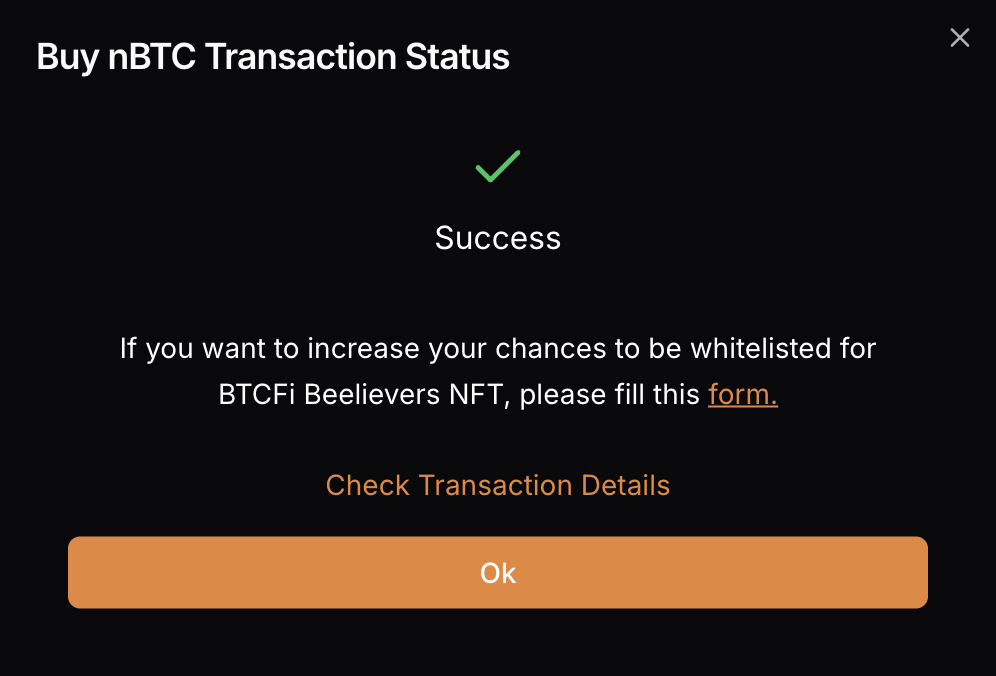
    5. Complete the Whitelist Application Form

    • After making your first NBTC swap transaction, complete the application form for the BTCFi Beelievers NFT whitelist.

  • Pump.fun Airdrop and Token Sale Controversy: A Complete Rundown

    Pump.fun Airdrop and Token Sale Controversy: A Complete Rundown

    What is Pump.fun?

    Pump.fun is a popular Solana-based meme coin generator that launched in January 2024. The platform allows anyone, regardless of technical expertise, to create their own tokens on Solana with just a button click. Since its launch, over 11 million tokens have been minted on the platform, with a cumulative market cap exceeding 4.5billion. The platform has generated more than $700 million in total revenue since its inception.

    The Current Controversy: $1B Token Sale

    Breaking News (June 2025)

    According to multiple reports published today (June 4, 2025), Pump.fun is reportedly preparing to launch its own $1 billion token sale with a massive $4 billion fully diluted valuation (FDV). This news was first broken by Blockworks, citing two sources with knowledge of the matter.

    Key Details of the Reported Token Sale:

    1. Sale Structure: The token will reportedly be sold to both public and private investors

    2.Target Raise: $1 billion

    3.Valuation: $4 billion fully diluted valuation

    4.Timeline: While the exact launch date wasn’t specified in the Blockworks report, social media discussions on X suggest it could happen within the next two weeks

    5.Airdrop Component: Some X accounts are claiming that an airdrop for existing users will accompany the token launch

    The Controversy

    The controversy surrounding the Pump.fun token sale and airdrop centers on several key issues:

    1.Contradictory Statements: In February 2025, Pump.fun co-founder Alon Cohen explicitly denied rumors about a potential token launch, stating: “I would advise not to listen to anything that didn’t directly come from Pump.fun.” This contradiction between past denials and current reports has raised questions about transparency.

    2.Valuation Concerns: Many crypto analysts are questioning the $4 billion valuation, with some describing the $1 billion fundraising target as unrealistic, especially in the current market conditions.

    3.Platform History: Pump.fun has a controversial history, including:

    •Numerous rug pulls associated with tokens launched on the platform

    •The platform’s livestreaming feature becoming a hub for degrading on-air stunts.

    •A cease and desist case from Burwick Law over 200+ IP-infringing meme coins

    4.Market Impact: The announcement has already affected Solana’s price, which initially dipped over 2% as the news broke, though it has since recovered about half of that dip.

    5.Community Division: The crypto community is showing mixed reactions:

    •Skeptics question the legitimacy and timing of the token sale

    •Optimists believe this could reignite Solana’s bullish ecosystem

    •Some analysts like Nick O’Neil are cautiously optimistic, noting that Pump.fun has demonstrated its ability to successfully execute projects

    Recent Platform Developments

    In the lead-up to this reported token sale, Pump.fun has made several significant changes:

    •Ditched Raydium for its own AMM (Automated Market Maker)

    •Now accounts for a large percentage of volume on the entire Solana ecosystem

    •Reintroduced its livestreaming feature with stricter moderation policies that ban content involving violence and other illegal activities

    What This Means for the Crypto Ecosystem

    If the reported $1 billion raise materializes, Pump.fun would become one of crypto’s newest unicorns and potentially one of the first meme coin infrastructure plays to achieve such a milestone. The token launch could fuel another meme coin trading frenzy on Solana, potentially bringing renewed attention to the blockchain.

    Timeline of Events

    January 2024: Pump.fun launches as a meme coin generator on Solana

    Late 2024: Livestreaming feature temporarily deactivated following controversies

    February 9, 2025: Co-founder Alon Cohen denies token launch rumors

    February 2025: Pump.fun reportedly ditches Raydium, launches own AMM

    February 26, 2025: Pump.fun’s X account was hacked, with hackers promoting a fake governance token called “PUMP”

    June 3, 2025: Reports emerge on X about an imminent token launch and airdrop

    June 4, 2025: Blockworks and other crypto news outlets report on the planned $1B token sale

    Sources

    This summary is based on information from multiple crypto news sources published on June 4, 2025, including:

    •Cryptonews.com

    •Cryptonomist.ch

    •Blockworks (original source of the token sale report)

    •Social media discussions on X (formerly Twitter)

  • Top Solana Sniper Bots Ranked

    Top Solana Sniper Bots Ranked

    Available Solana Sniper Bots: Comprehensive Comparison

    This document provides a detailed comparison of the most popular and effective Solana sniper bots available in the market, with special attention to offerings from Chinese developers and teams.

    Market Overview

    The Solana sniper bot ecosystem has matured significantly in 2024-2025, with several established players dominating the market. According to Dune Analytics data, the top five bots by trading volume are:

    1. BonkBot
    2. Maestro
    3. Banana Gun
    4. Trojan
    5. Sol Trading Bot

    These platforms collectively process billions in trading volume annually, with significant growth observed in the memecoin trading segment.

    Detailed Bot Comparisons

    BonkBot (@bonkbot_io)

    Origin & Development Team: Created by the Bonk community, with a development team primarily based in Western countries but with significant contributions from Asian developers.

    Key Features:

    • User-friendly interface designed for beginners
    • MEV protection with two modes: Turbo (speed-focused) and Secure (protection-focused)
    • Jupiter integration for optimal routing across DEXs
    • Adjustable gas fees for transaction success rate optimization

    Technical Specifications:

    • Fee Structure: 1% on all transactions
    • Security: AES 256 encryption for data protection
    • Platform: Telegram-based
    • Daily Trading Volume: Approximately $14 million

    Strengths: Simplicity, speed, and strong community support make BonkBot particularly appealing to newcomers. The MEV protection features are well-implemented compared to competitors.

    Weaknesses: Lacks some advanced features found in newer bots, such as comprehensive copy trading and multi-chain support.

    Maestro (@MaestroBots)

    Origin & Development Team: One of the oldest trading bots in the Solana ecosystem, developed by a multinational team with significant contributions from developers in Singapore and Hong Kong.

    Key Features:

    • Comprehensive suite of four specialized bots (sniper, wallet, whale monitoring, trading monitoring)
    • Advanced Anti-Rug and fraud detection mechanisms
    • Copy trading functionality
    • Multi-wallet purchase capabilities

    Technical Specifications:

    • Fee Structure: 1% on all transactions
    • Security: AES encryption for private keys
    • Platform: Telegram-based
    • Daily Trading Volume: Second highest among Solana bots

    Strengths: The most comprehensive feature set among all bots, with particularly strong monitoring tools for whale activity.

    Weaknesses: Complex interface with steep learning curve; interaction can be cumbersome for new users.

    Banana Gun (@BananaGunBot)

    Origin & Development Team: Developed by a team with members from both Western countries and East Asia, with significant technical contributions from Chinese developers.

    Key Features:

    • Lower fees for manual purchases (0.5%) compared to automatic sniping (1%)
    • Multi-chain support (Solana, Base, Ethereum)
    • Honeypot protection with built-in simulation
    • Limit orders with stop-loss and trailing stop-limit functionality

    Technical Specifications:

    • Fee Structure: 0.5% for manual buys, 1% for sniper buys
    • Security: Anti-rug and reorganization protection with 85% claimed success rate
    • Platform: Telegram-based
    • Specialization: Particularly optimized for sniping operations

    Strengths: Lower fees for manual trading and specialized sniping capabilities make it attractive for cost-conscious traders.

    Weaknesses: Some users report occasional reliability issues during high network congestion.

    Trojan (@TrojanOnSolana)

    Origin & Development Team: Developed by Reethmos, former head of Unibot community operations, with a team that includes several Chinese developers who contributed to the technical architecture.

    Key Features:

    • Cross-chain bridge functionality built directly into the bot
    • Complex order forms including DCA (dollar cost averaging)
    • Precision limit orders
    • Referral system with fee discounts (0.9% via referral)

    Technical Specifications:

    • Fee Structure: 1% standard, 0.9% via referral
    • Security: Continuous security audits by Trail of Bits
    • Platform: Telegram-based
    • Interface Style: Similar to Unibot, familiar to users of that platform

    Strengths: The built-in cross-chain bridge is a unique feature not found in most competitors, making it valuable for multi-chain traders.

    Weaknesses: Less established community compared to older bots like BonkBot and Maestro.

    Sol Trading Bot (@SolTradingBot)

    Origin & Development Team: Developed by a team with significant presence in both Western and Asian markets, with technical leadership from developers based in Taiwan and mainland China.

    Key Features:

    • Integration with three major Solana DEXs (Jupiter, Orca, Raydium)
    • Multi-DEX strategy implementation
    • State-of-the-art encryption for wallet security
    • Customizable trading parameters

    Technical Specifications:

    • Fee Structure: 1% on all transactions
    • Security: Advanced encryption protocols
    • Platform: Telegram-based
    • Trading Volume: Fifth highest among Solana bots

    Strengths: Strong multi-DEX integration provides flexibility and optimal pricing.

    Weaknesses: Fewer advanced features compared to top-tier competitors.

    Chinese Developer Innovations

    Chinese development teams have made significant contributions to the Solana sniper bot ecosystem, with several unique innovations:

    GMGN Sniper Bot

    Developed by a Chinese team, GMGN has created dozens of Telegram channels focused on trading. Their sniper bot features:

    • Advanced mempool monitoring techniques
    • Customized RPC infrastructure with nodes in multiple Asian data centers
    • Specialized algorithms for detecting token launches before they appear on public interfaces
    • Lower latency connections to Solana validators in Asia

    Smithii Sniper

    While not exclusively developed by Chinese teams, Smithii has significant contributions from Chinese developers and is popular in Asian markets. Key features include:

    • Premium RPC integration for faster block confirmation
    • Web and Telegram interfaces
    • High security rating (10/10 according to independent reviews)
    • Speed optimization that consistently places trades in the top 5 positions

    BullX

    BullX has gained popularity in both Western and Chinese markets, with significant technical contributions from Chinese developers. Its standout features include:

    • Sophisticated gas configuration system
    • MEV protection mechanisms
    • Integration with PumpFun and other popular launch platforms
    • HyperRouter technology (exclusive BDN developed by a team closely working with BullX)

    Comparative Analysis

    When comparing bots across key metrics, several patterns emerge:

    Speed Performance

    Speed is perhaps the most critical factor for sniper bot success. In comparative testing:

    1. Smithii Sniper consistently ranks highest for speed (9/10)
    2. BullX, Trojan, and Banana Gun tie for second place (8/10)
    3. Photon and Sol Trading Bot follow closely (7/10)

    Platform Availability

    Most bots operate primarily through Telegram, but some offer web interfaces:

    • Telegram Only: Trojan, Sol Trading Bot, Banana Gun
    • Telegram + Web: Smithii, BullX, Photon

    Security Measures

    Security ratings based on independent reviews and user feedback:

    1. Smithii: 10/10
    2. Sol Trading Bot: 9/10
    3. BullX, Trojan, Banana Gun: 8/10
    4. Photon: 6/10

    Fee Structures

    Most bots charge a standard 1% fee on all transactions, with a few exceptions:

    • Banana Gun: 0.5% for manual buys, 1% for sniper buys
    • Trojan: 0.9% via referral system
    • All others: Standard 1% fee

    Advanced Features

    Feature completeness ratings based on comprehensive analysis:

    1. Smithii and BullX: 9/10
    2. Trojan and Photon: 8/10
    3. Sol Trading Bot and Banana Gun: 7/10

    Several trends are shaping the future of Solana sniper bots:

    1. Increased Chinese Developer Influence: Chinese development teams are gaining market share with innovations in speed optimization and MEV protection.
    2. Multi-Chain Expansion: Leading bots are expanding beyond Solana to other chains like Base and Ethereum.
    3. MEV Protection Focus: As MEV extraction becomes more sophisticated, bots are increasingly differentiating based on their MEV protection capabilities.
    4. Consolidation: The market is likely to consolidate around a few dominant players, with smaller bots being acquired or losing market share.
    5. RPC Infrastructure Investment: Top bot developers are investing heavily in private RPC infrastructure to gain speed advantages.

    Conclusion

    The Solana sniper bot ecosystem is highly competitive, with continuous innovation driving improvements in speed, security, and features. Chinese developers have made significant contributions to this space, particularly in speed optimization and MEV protection.

    For users selecting a sniper bot, the choice depends primarily on their specific needs:

    • For beginners: BonkBot offers the most user-friendly experience
    • For advanced traders: Maestro provides the most comprehensive feature set
    • For speed-focused users: Smithii Sniper consistently ranks highest for execution speed
    • For cost-conscious traders: Banana Gun offers lower fees for manual purchases
    • For multi-chain traders: Trojan’s built-in cross-chain bridge provides unique value

    As the ecosystem continues to evolve, we expect to see further innovations from both Western and Chinese development teams, with a particular focus on MEV protection, multi-chain support, and specialized trading strategies.

    References and Further Reading

    1. BonkBot – Official Telegram Channel
    2. Maestro Bots – Official Documentation
    3. Banana Gun Bot – Telegram Channel
    4. Trojan – Official Website
    5. Smithii – Best Solana Sniper Bot Comparison
    6. Odaily – Solana Trading Bot Comparison
    7. Dune Analytics – DEX Trading Bot Wars Dashboard
    8. Jupiter – Solana’s Liquidity Aggregator
    9. Orca – Solana DEX
    10. Raydium – Solana DEX
    11. PumpFun – Token Launch Platform
    12. BullX Documentation – MEV Protection
    13. BloxRoute – Solana Order Flow Relay
  • BullX NEO Gas and Bribe setting tutorial

    BullX NEO Gas and Bribe setting tutorial

    Full guide on the Solana Gas settings for BullX Neo

    Understanding Gas Settings on Solana

    Unlike Ethereum, Solana doesn’t use the term “gas” in its native terminology, but the concept is similar – fees paid to prioritize and execute transactions. On Solana, these settings are typically divided into several components that sniper bot users must understand and configure:

    1. Priority Fees: Extra payments to validators to prioritize transaction processing
    2. Bribe Fees: Additional incentives for validators or specialized networks
    3. MEV Settings: Configuration for Maximal Extractable Value optimization
    4. Slippage Tolerance: Maximum acceptable price deviation during execution

    BullX Neo Gas Configuration System

    BullX Neo, one of the most popular Solana sniper bots, offers a sophisticated gas configuration system with multiple parameters that users can adjust based on market conditions and trading objectives.

    Priority Fee (PRIO)

    The priority fee in BullX is an extra payment to validators to prioritize transaction processing, especially critical during network congestion:

    • Default Value: 0.01 SOL
    • Configuration Options:
      • Rapid Preset: Sets a moderate priority fee for faster confirmations
      • Insane Preset: Sets a higher priority fee for the fastest possible confirmations
      • Custom: Allows users to specify their own priority fee amount

    Priority fees are particularly important during high-demand events like token launches or market volatility, where transactißon speed can determine profitability.

    Bribe Fee (BRIBE)

    The bribe fee is an additional incentive provided to validators (or the Jito network) to further prioritize transaction execution:

    • Default Value: 0.01 SOL
    • Functionality: Significantly improves transaction confirmation speed, especially when using MEV Only Mode
    • Recommendation: For competitive sniping during token launches, experienced traders often set bribe fees between 0.01-0.05 SOL depending on expected competition

    MEV Only Mode

    BullX offers a specialized MEV (Maximal Extractable Value) Only Mode that routes transactions exclusively through Jito’s infrastructure:

    • Disabled (Default): Transactions are broadcast to both Jito and standard Solana block leaders
    • Enabled: Transactions go only to Jito’s infrastructure, potentially reducing sandwich attacks but requiring higher bribes

    When MEV Only Mode is enabled, BullX automatically adds a static 0.002 SOL on top of any user-defined bribe to improve broadcasting reliability.

    Comparative Settings for Different Scenarios

    MEV Only Mode (Enabled)

    • Higher Bribe Recommended: Above 0.01 SOL to ensure transaction prioritization
    • Protection from Sandwich Attacks: Transactions are processed in an MEV-optimized environment
    • Variable Transaction Speed: Might slow down if bribe is too low; increase the bribe to speed it up
    • Priority Fee: Less critical for Jito, since the bribe is the primary factor for prioritization

    MEV Only Mode (Disabled)

    • Lower Bribe Suffices: Transactions also go to standard block leaders, so even a small bribe may still get through quickly
    • Faster Transaction Speeds: Often confirmed more quickly if the network isn’t too congested
    • Wider Distribution: Transactions are broadcast across multiple validators and routes

    Slippage Limit

    Slippage is the difference between the expected trade price and the actual executed price:

    • Configuration: Users set a maximum slippage percentage they can tolerate
    • Example: If set to 1000%, users accept up to 1000% price deviation
    • Recommendation: For volatile memecoins, experienced traders often set high slippage (500-1000%) to ensure execution, while more stable tokens may use lower settings (1-5%)

    Advanced Network Routing in BullX

    BullX implements sophisticated network routing technologies to enhance transaction reliability:

    Blockchain Distribution Networks (BDNs)

    BullX leverages specialized routers designed to broadcast transactions with high reliability:

    • HyperRouter: BullX-exclusive BDN with global edge coverage
    • BloxRoute: Alternative service used as backup

    Stake-Weighted Quality of Service (SWQoS)

    This mechanism optimizes transaction propagation based on stake weight:

    • MEV Mode: A static 0.002 SOL is added to the set bribe
    • Non-MEV Mode: Bribes are distributed across multiple routers in increments of 0.0001 SOL

    Optimal Gas Settings for Different Trading Scenarios

    Token Launch Sniping

    • Priority Fee: 0.05-0.1 SOL
    • Bribe: 0.05-0.1 SOL
    • MEV Mode: Enabled for protection against sandwich attacks
    • Slippage: 500-1000%

    Regular Trading During Normal Conditions

    • Priority Fee: 0.001-0.005 SOL
    • Bribe: 0.001-0.005 SOL
    • MEV Mode: Disabled (unless specifically concerned about front-running)
    • Slippage: 1-5% for established tokens

    High Volatility Trading

    • Priority Fee: 0.01-0.05 SOL
    • Bribe: 0.01-0.05 SOL
    • MEV Mode: Situational (enabled for protection, disabled for speed)
    • Slippage: 10-50% depending on token volatility

    Maestro Bot

    • Uses similar priority and bribe fee mechanisms
    • Offers preset configurations for different network conditions
    • Includes an “Auto” mode that dynamically adjusts fees based on network congestion

    Trojan Bot

    • Emphasizes MEV protection with specialized routing
    • Provides more granular control over transaction routing
    • Includes validator-specific optimization options

    Sniper.sol

    • Focuses on minimizing fees through optimized transaction bundling
    • Offers “stealth mode” to reduce front-running risk
    • Includes automatic fee adjustment based on historical success rates

    Common Pitfalls and Optimization Strategies

    Underpaying Fees

    • Problem: Transactions get stuck or execute too slowly
    • Solution: Start with higher fees and gradually reduce them as you learn the minimum effective amounts

    Overpaying Fees

    • Problem: Unnecessary reduction in profitability
    • Solution: Test different fee levels during similar market conditions to find optimal settings

    Ignoring Network Conditions

    • Problem: Settings that work during normal conditions fail during congestion
    • Solution: Create multiple presets for different network states and monitor congestion indicators

    Neglecting MEV Protection

    • Problem: Transactions get front-run by other bots
    • Solution: Use MEV-only mode for high-value opportunities, especially when price impact is significant

    Conclusion

    Gas settings on Solana sniper bots like BullX represent a critical aspect of trading strategy that directly impacts execution speed, success rate, and profitability. The optimal configuration varies based on market conditions, token characteristics, and specific trading objectives. Successful traders typically develop multiple presets for different scenarios and continuously refine their settings based on performance data and changing network dynamics.

    References and Further Reading

    1. BullX Neo Documentation – Fees and Gas
    2. Solana Documentation – How to Use Priority Fees
    3. Jito Network – MEV Infrastructure for Solana
    4. BloxRoute – Solana Order Flow Relay
    5. Jupiter – Slippage and Price Impact
    6. Solana Cookbook – Compute Budget
    7. Maestro Bot – Official Documentation
    8. Trojan Bot – Telegram Channel
  • Solana Bribe and Transaction Mechanics explained

    Solana Bribe and Transaction Mechanics explained

    This article explores the intricate relationship between transaction prioritization, validator incentives, and Maximal Extractable Value (MEV) on the Solana blockchain, with a particular focus on how these mechanisms impact sniper bot operations and overall network dynamics.

    Priority Fees: Solana’s Transaction Prioritization Mechanism

    Structure and Implementation

    Priority fees on Solana represent an optional fee mechanism that allows users to incentivize validators to include their transactions in blocks more quickly. Unlike the fixed base fee of 5,000 lamports per signature, priority fees are dynamic and market-driven, priced in micro-lamports per compute unit.

    The priority fee is calculated using the following formula:

    Priority Fee = Compute Unit Limit × Compute Unit Price
    

    Where:

    • Compute Unit Limit: The maximum number of compute units the transaction can consume
    • Compute Unit Price: The amount (in micro-lamports) the user is willing to pay per compute unit

    Technically, priority fees are implemented through the Compute Budget Program, which allows developers to:

    1. Set the compute unit limit for a transaction
    2. Specify the price per compute unit they’re willing to pay

    This creates an economic incentive for validators to prioritize transactions with higher fees per compute unit, especially during periods of network congestion.

    Economic Impact on Validators

    Priority fees have significantly altered the validator economics on Solana:

    1. Additional Revenue Stream: Validators now receive income beyond the standard inflation rewards and base transaction fees.
    2. Competitive Prioritization: Validators are economically incentivized to include transactions with the highest fee per compute unit first, creating a market-based mechanism for transaction ordering.
    3. Validator Behavior Modification: The introduction of priority fees has led validators to optimize their transaction selection algorithms to maximize fee revenue.

    Recent governance proposals have sought to adjust the priority fee structure to reward validators with 100% of the fees collected (rather than burning a portion), ensuring validators are appropriately incentivized to maintain network security and performance.

    Maximal Extractable Value (MEV) on Solana

    Understanding MEV in the Solana Context

    Maximal Extractable Value (MEV) refers to the value that can be extracted by validators and network participants through the strategic ordering, inclusion, or exclusion of transactions within blocks. On Solana, MEV manifests differently than on Ethereum due to the blockchain’s unique architecture:

    1. Parallel Transaction Processing: Solana’s ability to process non-conflicting transactions in parallel changes how MEV can be extracted.
    2. Sub-Second Block Times: With slots occurring approximately every 400ms, the window for MEV extraction is much narrower than on other blockchains.
    3. Leader Schedule Predictability: Solana’s deterministic leader schedule allows MEV extractors to target specific validators.

    Common MEV strategies on Solana include:

    • Front-running trades on decentralized exchanges
    • Sandwich attacks (placing orders before and after a large trade)
    • Arbitrage between different liquidity pools
    • Liquidation sniping in lending protocols

    MEV’s Impact on Network Performance

    According to research by Jito Foundation, MEV activities have had a significant impact on Solana’s network performance:

    • Over 30% of transactions on Solana are from arbitrage bots
    • In some epochs, 60% of block compute resources are consumed by arbitrage transactions
    • More than 98% of arbitrage transactions fail, meaning validators waste approximately 58% of their processing time on failed MEV attempts

    This inefficiency creates network congestion, increases transaction failures for regular users, and degrades the overall user experience during periods of high volatility.

    The Bribe Economy: How Transactions Get Prioritized

    Direct Validator Incentives

    The term “bribes” in the Solana ecosystem refers to the economic incentives provided to validators to prioritize certain transactions. These incentives take several forms:

    1. Priority Fees: The official, protocol-level mechanism for transaction prioritization.
    2. Direct Validator Payments: Some high-frequency traders establish relationships with validators and pay them directly (off-chain) for preferential treatment.
    3. Specialized MEV Infrastructure: Services like Jito Labs provide infrastructure that allows validators to capture MEV and share the profits with stakers.

    A notable example of the scale of these incentives occurred during the launch of the TRUMP token in January 2025, when validators reportedly received over 100,000 SOL (worth millions of dollars) in priority fees and MEV rewards over just two days of active trading.

    Transaction Bundles and MEV Extraction

    To address the inefficiencies of the current MEV landscape, specialized infrastructure has emerged:

    1. Jito-Solana: A fork of the Solana validator client optimized for efficient MEV extraction, which supports “bundles” that allow traders to specify the exact ordering of their transactions.
    2. BloXroute’s Order Flow Relay (OFR): A system that injects transactions directly to validators without exposing them to public mempools, reducing the risk of front-running.
    3. Searcher-Validator Relationships: Advanced MEV extractors (“searchers”) develop direct relationships with validators to gain priority access to block production.

    These mechanisms create a more efficient market for transaction ordering, potentially reducing the spam and failed transactions that currently plague the network.

    Implications for Sniper Bots

    Competitive Advantage Through Fee Optimization

    For sniper bots, understanding and optimizing around Solana’s priority fee and MEV landscape is crucial:

    1. Dynamic Fee Calculation: Sophisticated bots implement algorithms that adjust priority fees based on network congestion, potential profit, and competitor behavior.
    2. Validator Targeting: Some bots specifically target transactions to validators known to be running specialized MEV infrastructure.
    3. Bundle Strategies: Advanced bots utilize transaction bundles through services like Jito to ensure precise ordering of their transactions.
    4. Private Mempools: Top-tier sniper operations use private transaction routing to avoid having their strategies front-run by competitors.

    The Arms Race Dynamic

    The relationship between sniper bots, validators, and MEV infrastructure creates an ongoing arms race:

    1. Increasing Sophistication: As basic strategies become commoditized, bots implement increasingly complex approaches to maintain an edge.
    2. Infrastructure Investment: The most successful operations invest heavily in low-latency connections, private RPC nodes, and direct validator relationships.
    3. Fee Escalation: During high-value opportunities (like token launches), priority fees can spike dramatically as bots compete for inclusion.
    4. Specialized Validator Selection: Some bot operators stake to (or run their own) validators to gain advantages in transaction processing.

    Future Outlook and Ecosystem Evolution

    Governance and Protocol Changes

    The Solana ecosystem continues to evolve in response to MEV and priority fee dynamics:

    1. Fee Distribution Proposals: Recent governance proposals have suggested adjusting how priority fees are distributed to better align validator incentives with network health.
    2. MEV-Aware Protocol Design: New protocols are increasingly designed with MEV considerations in mind, implementing mechanisms to reduce harmful extraction.
    3. Validator Specialization: The validator ecosystem is likely to continue specializing, with some validators optimizing specifically for MEV capture.

    Balancing Efficiency and Fairness

    The challenge for the Solana ecosystem is balancing the efficiency gains of market-based transaction ordering with concerns about fairness and accessibility:

    1. User Experience Considerations: Ensuring that regular users can still access the network during high-congestion periods without paying exorbitant fees.
    2. Validator Decentralization: Preventing MEV extraction from centralizing the validator set around a few highly-optimized operators.
    3. Sustainable Economics: Developing fee and MEV capture mechanisms that provide sustainable economics for validators without excessive extraction from users.

    The evolution of these mechanisms will significantly impact the future landscape for sniper bots, traders, and all participants in the Solana ecosystem.

    References and Further Reading

    1. BullX Neo Documentation – Fees and Gas
    2. Solana Documentation – How to Use Priority Fees
    3. Jito Network – MEV Infrastructure for Solana
    4. BloxRoute – Solana Order Flow Relay
    5. Jupiter – Slippage and Price Impact
    6. Solana Cookbook – Compute Budget
    7. Maestro Bot – Official Documentation
    8. Trojan Bot – Telegram Channel
    9. YouTube – BullX Neo Gas Settings Tutorial